A tax advisor in Dubai Marina told me last month she fields the same question daily: "If I get the digital nomad visa, I don't pay any tax, right?"
Her answer: "Depends what you mean by tax. And depends if you actually become a tax resident. And depends if your home country agrees."
Dubai markets itself as 0% personal income tax. That's accurate. But "no income tax" and "no tax obligations anywhere" are entirely different things.
Let's start with what's true about Dubai's tax situation, then dig into what nobody mentions until you're already committed.
What Zero Income Tax Actually Means
UAE—Dubai included—charges 0% personal income tax. Employment income, investment gains, dividends, capital appreciation: none of it gets taxed at the personal level in the UAE.
This is real. It's not a loophole. It's been this way since the UAE was founded. Oil revenue funds the government, not personal income taxes.
Corporate tax launched in June 2023 at 9% on profits over 375,000 AED (roughly $102,000). But that's for UAE companies. Not personal income. If you're employed remotely by a US company while living in Dubai, corporate tax doesn't touch you.
The Virtual Working Program—Dubai's digital nomad visa—costs around $611 (2,243.89 AED). Valid one year. Renewable once. You get Emirates ID, can open resident bank accounts, rent apartments long-term.
Minimum income requirement: $3,500 monthly ($42,000 annually). Some sources cite $5,000 for the Dubai-specific program versus $3,500 for the broader UAE version. Verify which you're applying through.
Zero income tax on that $42,000. Or $100,000. Or $500,000. The rate stays 0%.
That part is straightforward.
The Tax Residency Certificate Problem
Here's where it gets complicated.
Having a visa doesn't automatically make you a UAE tax resident. The visa gives you legal residency. Tax residency is separate.
Under Cabinet Decision No. 85 of 2022 (effective March 2023), UAE tax residency requires one of:
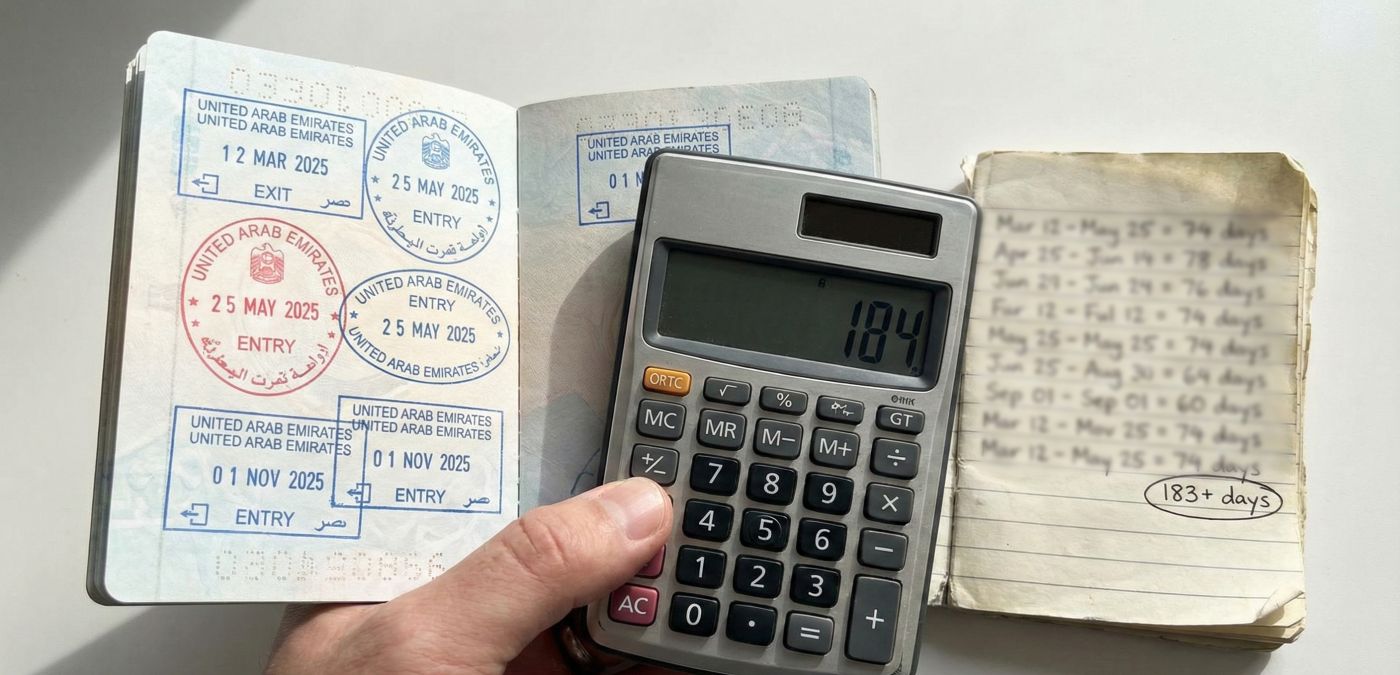
Option 1: 183 days physically present Spend 183+ days in UAE during a calendar year. Standard rule globally.
Option 2: 90 days with residence Have UAE residence permit AND spend 90+ days in UAE within any consecutive 12-month period.
This second option is newer. Makes it easier to claim UAE tax residency without spending half the year there.
But—and this matters—you still need to not be tax resident somewhere else.
The problem: Most countries use 183-day rules too. If you're in Dubai 120 days, where are you the other 245 days? If it's mostly in one country, that country probably claims you as tax resident.
Digital nomad bouncing between countries? Then maybe the 90-day UAE rule works. But your home country might still claim you based on "center of vital interests"—family, bank accounts, property ownership, economic ties.
The UAE Tax Residency Certificate (TRC) costs 1,000 AED ($273). Takes about 3 days to process online through Federal Tax Authority website. But getting the certificate doesn't force other countries to recognize it.
According to Blevins Franks—a cross-border wealth management firm with offices throughout UAE—high-net-worth individuals need comprehensive planning because "the Spanish tax regime is quite different from the UK's, and currently includes an annual wealth tax that doesn't exist in most other countries."
Wait, why are they talking about Spanish tax when discussing Dubai? Because UAE tax residency doesn't automatically sever ties with your previous country.
Your Home Country Doesn't Automatically Let Go
This is the part that catches people.
American software engineer moves to Dubai. Gets digital nomad visa. Spends 120 days in UAE, 60 days traveling Asia, 185 days back in California visiting family.
UAE says: "You didn't hit 183 days here. You're not automatically a UAE tax resident."
California says: "You spent 185 days here. Plus you kept your apartment, your bank accounts, your car registration. You're still a California tax resident."
Result: Not a UAE tax resident. Still a California tax resident. Still paying California income tax despite having Dubai visa.
Or: French consultant gets Dubai visa. Spends exactly 184 days in UAE. Gets Tax Residency Certificate. Returns to France and files as UAE resident.
France says: "Your spouse and children live in Paris. Your business is registered in France. You manage everything from Paris when you're here. Your center of vital interests is France. We're taxing your worldwide income regardless of that UAE certificate."
The UAE can't force France to recognize the certificate if France decides your economic life centers in France.
Real Costs Nobody Budgets For
Let's talk about what isn't zero in Dubai.
Setting up costs:
- Digital nomad visa application: $611
- Health insurance (mandatory): $1,200-3,000 annually
- Apartment deposit (typically 5% + first rent): $5,000-15,000 depending on area
- Bank account fees: $200-500 setup plus ongoing monthly fees
- Professional tax advice: $1,500-3,000 to structure properly
Living costs: Monthly rent in Dubai Marina or JBR: $2,000-4,000 for 1-bedroom Groceries: $400-600 Utilities: $150-250 Transportation: $200-400 Meals out: $500-800
Total monthly: $3,250-6,050
On $3,500 monthly income (the minimum), rent alone consumes 57-114% of your earnings. That's why the minimum exists—it screens for people who can actually afford Dubai.
The 5% VAT: Introduced January 2018. Not 0%. Restaurants, hotels, services, most goods: 5% VAT applies. Real estate transactions: 4% transfer fee in Dubai plus 5% on annual rental value.
It's not income tax. But it's not zero taxation either.

The Free Zone Company Trap
Marketing pitch: "Set up a company in a Dubai free zone. Pay 0% corporate tax. Run your business tax-free."
Reality is messier.
Free zones like IFZA (International Free Zone Authority) offer:
- 100% foreign ownership
- 0% corporate tax (though the new 9% tax might apply depending on structure)
- No currency restrictions
- Fast setup
Cost to establish: 72,000 AED minimum ($19,600). Annual renewal: 15,000-30,000 AED ($4,100-8,200).
Sounds good until you factor in:
Banking challenges: UAE banks are choosy. They ask:
- Why Dubai specifically?
- Where are your customers?
- What's your business model?
- Where do you physically live?
Answer "I'm a digital nomad, live nowhere specific, picked Dubai for tax" and you often get rejected.
Alternatives: Wise Business, PayPal, other fintechs. But these have limits. Not full banking relationships. Can't get merchant accounts easily. Transaction caps exist.
Your home country's CFC rules: If you're American, British, Canadian, Australian—most developed countries—Controlled Foreign Corporation rules apply.
You control a Dubai company. You manage it remotely. No employees in Dubai. No office in Dubai. No real substance there.
US IRS says: "That's a CFC. We're attributing those profits to you personally. You're paying US tax rates."
The 0% Dubai corporate tax becomes irrelevant because your home country taxes it anyway.
Portuguese digital nomad with Dubai company? EU CFC rules were supposed to not apply between EU countries, but Dubai isn't EU. Portugal can argue CFC rules apply.
From Relocate&Save (which specializes in UAE relocations): "At the IFZA, you can open a company online, have non-resident directors and open a bank account quickly with the appropriate assistance. However...we would like to point out the risks in the IFZA, where there are low cost advisors that do not meet many of the requirements demanded by the Emirati financial authority. This can lead to serious problems such as the blocking of bank accounts."
Translation: Cheap company formation services cut corners. Accounts get frozen. Deals with that mess afterward.
When Dubai Actually Works
Despite complications, specific situations win clearly.
Scenario 1: High earner willing to commit Senior developer earning $180,000 from US remote job. Relocates entirely to Dubai. Sells or rents out home country property. Closes bank accounts there. Spends 190+ days in Dubai. Gets UAE Tax Residency Certificate. Severs ties properly with home country.
Savings: Whatever their home country would have taxed. Could be $50,000-70,000 annually.
Worth it? If they actually want to live in Dubai, yes. But you're restructuring your entire life around tax savings. That's not for everyone.
Scenario 2: Crypto trader with serious gains Trader with $2 million in crypto profits. No capital gains tax in UAE.
Most countries tax crypto gains. UAE doesn't. In September 2021, UAE exempted crypto transactions in free zones from taxation.
Someone holding $2M in crypto gains pays 0% in UAE versus potentially $400,000-600,000 in countries with 20-30% capital gains rates.
This makes financial sense. But: You need to actually establish UAE tax residency. And you can't just show up for a month, cash out, leave. Your home country will argue you weren't genuinely UAE resident when the gains occurred.
Scenario 3: Corporate executive on expat package Company transfers executive to Dubai office. Two-year assignment. Employer handles visa, housing, insurance.
Executive earning €250,000. UAE tax: €0. Home country tax (if properly handled): €0 or minimal.
Two years saving €80,000-100,000 annually in income tax: €160,000-200,000 total savings.
This is the demographic Dubai targets. Employed professionals with company support. Not solo digital nomads trying to piece together structure themselves.
What Americans Face Specifically
US citizens have extra layers.
United States taxes based on citizenship. Not residence. Living in Dubai doesn't eliminate US tax obligations.
Foreign Earned Income Exclusion (FEIE): Excludes first $126,500 (2024 amount, $130,000 for 2025) if you qualify.
Two tests:
- Physical Presence: 330 days outside US in any 12-month period
- Bona Fide Residence: Full calendar year as resident of another country
Most Americans in Dubai qualify via physical presence test. This excludes most or all federal income tax.
Self-employment tax: Still owe ~15.3% on net self-employment income. No way around this. FEIE doesn't cover it.
Freelancer earning $80,000:
- FEIE excludes $80,000 from income tax
- Still owe $11,000-12,000 in self-employment tax
- Plus state tax if home state has "sticky" residency (California, Virginia, New Mexico, South Carolina)
California especially problematic. Doesn't recognize FEIE for state purposes. Treats you as resident until you prove otherwise:
- Close bank accounts
- Cancel driver's license
- Change voter registration
- Sell property or establish rental
- File formal abandonment
Even with Dubai visa and UAE tax residency certificate, California can still claim you if ties remain.
FBAR and FATCA: If foreign accounts exceed $10,000 at any point, file FBAR (FinCEN Report 114). If foreign financial assets exceed $200,000 (or $300,000 mid-year), file Form 8938.
Penalties for non-compliance: Brutal. $10,000+ per violation. Sometimes more than account value.
Dubai banks report US account holder information to IRS under FATCA. They know what you have there.
The Property Purchase Angle
Some people hear: "Buy property in Dubai. Get investor visa. Become tax resident."
Minimum investment: $275,000 (per Relocate&Save) for property investor visa.
This gets you residency visa. Not automatic tax residency. You still need 183 days present, or 90 days with proper structuring.
The property itself generates rental income if you lease it. That rental income:
- In UAE: Taxed 0% personally
- In your home country: Depends on tax treaty. US taxes worldwide income. UK taxes worldwide rental income for residents. Most countries do.
Dubai rental yields: 5-8% gross typically. After service charges, property management, void periods: 3-5% net often.
On $275,000 investment, that's $8,250-13,750 annually. Not life-changing. And taxed in most home countries unless you're genuinely UAE tax resident and treaty protects you.
Processing Times and Realities
Digital nomad visa processing: 5-7 business days officially. Sometimes longer.
Once approved, you get entry permit. Come to Dubai. Then:
- Apply for Emirates ID (1-2 weeks)
- Medical exam (same day, results in days)
- Finalize residency stamping
Total: 2-3 weeks after arrival to have everything finalized.
But Emirates ID is what unlocks everything. Banking. Long-term leases. Resident services. Without it, you're in limbo.
People arrive expecting immediate banking. Reality: Emirates ID takes 10-14 days. Then bank appointments. Then account approval (if you get approved—not guaranteed). Actual banking access: 3-4 weeks after arrival sometimes.
Budget for month one living on foreign credit cards and cash.

The Enforcement Question
Does UAE check if you're actually spending 90/183 days?
Immigration tracks entries and exits. The data exists. They can see your visa activation date, every border crossing, total days present.
Do they actively enforce minimum stay requirements for visa holders? Not systematically currently. But capacity exists.
Digital nomad gets one-year visa. Uses it for 40 days total. Tries to renew. Immigration officer looks at travel history. Asks: "You barely used this visa. Why renew?"
Or worse: Applies for Tax Residency Certificate without meeting day requirements. UAE might issue it (bureaucratic gaps exist). Home country challenges it, asks for entry/exit stamps. Math doesn't add up. Home country rejects UAE tax residency claim.
System has holes now. Enforcement is weak. Doesn't mean it stays that way.
The Honest ROI Calculation
Digital nomad earning $60,000 annually:
Staying in home country (assume 25% total tax): Tax: $15,000 Net: $45,000
Moving to Dubai: Visa: $611 Insurance: $2,000 Setup costs: $3,000 (first year) Tax advice: $2,000 Higher cost of living: $1,000/month × 12 = $12,000 extra Total additional costs: $19,611
Income tax saved: $15,000 Net benefit: -$4,611
You're paying $4,611 to live in Dubai versus your home country. For first year. Not saving money on taxes.
Year two and beyond: Setup costs drop. Break even if Dubai lifestyle costs stay similar to home country. But Dubai is expensive. Most people spend more there than they would elsewhere.
High earner ($200,000) changes the math:
Tax saved (assume 35% rate): $70,000 Additional costs: $25,000 (higher lifestyle) Net benefit: $45,000
At this income level, Dubai makes financial sense. Below $100,000? Questionable unless you specifically want Dubai lifestyle.
When It Makes Sense
Dubai works if:
- You earn $100,000+ and can genuinely establish UAE tax residency (90 or 183 days)
- You sever ties with home country properly
- You want to actually live in Dubai for lifestyle reasons, not just tax
- You have clear exit strategy if laws change
- You're comfortable with heat (May-September average 38-42°C)
- You don't mind expensive cost of living
- Your home country's tax system makes savings significant
Dubai doesn't work if:
- You earn under $60,000 (lifestyle costs eat the savings)
- You can't actually spend 90-183 days there
- Your home country has sticky residency (California, France without proper exit)
- You want cheap living (Southeast Asia is better)
- You need to maintain strong ties to home country
- You're trying to maintain "nowhere residency" (doesn't work long-term)
Resources
Official sources:
- Federal Tax Authority (UAE): tax.gov.ae
- General Directorate of Residency and Foreigners Affairs Dubai (GDRFAD): amer.ae
- Cabinet Decision No. 85 of 2022 on tax residency: Available through Federal Tax Authority website
- Virtual Working Program info: GDRFAD portal
Professional guidance:
- Cross-border tax advisors with UAE + home country expertise
- Expect to pay $1,500-3,000 for comprehensive planning
- Dubai-based firms: Multiple options in Dubai Marina, Downtown, DIFC areas
- Verify they understand your home country's tax system specifically
What to watch for in advisors:
- Anyone promising "zero tax guaranteed" without asking detailed questions about your home country
- Anyone dismissing the need for Tax Residency Certificate
- Anyone saying "just get the visa, don't worry about the rest"
- Services offering free zone companies without discussing banking realities or CFC rules
Bottom Line
Dubai's 0% income tax is real. UAE doesn't tax personal income. That part is true.
Everything else requires careful structuring:
- Establishing actual UAE tax residency (90 or 183 days)
- Severing home country tax residency properly
- Getting home country to recognize UAE tax residency
- Maintaining proper documentation
- Understanding your specific home country's rules
- Actually wanting to live in Dubai (not just chasing tax savings)
For high earners ($100,000+) willing to genuinely relocate, the savings are substantial. $30,000-70,000+ annually is real money.
For moderate earners ($40,000-80,000), the math often doesn't work. Additional costs offset the tax savings. You're not living somewhere cheaper—you're living somewhere more expensive than most alternatives.
For Americans specifically, you're still filing US taxes. Still paying self-employment tax. Still dealing with FBAR/FATCA. Still potentially dealing with state taxes. Dubai helps, but doesn't eliminate US obligations.
Dubai isn't a magic tax wand. It's a jurisdiction with no income tax IF you structure properly AND actually live there AND your home country accepts it. Miss any of those conditions and you're paying for an expensive lifestyle without the tax benefits.
Note: UAE tax laws, visa policies, and international tax treaty interpretations change frequently. Cabinet Decision No. 85 of 2022 represented major changes to UAE tax residency rules. Corporate tax launched mid-2023. This article reflects rules as of late 2025, but verification with current official sources and qualified tax advisors in both UAE and your home jurisdiction is essential before making decisions.
⚠️ Important Note
Tax laws change frequently, and enforcement varies widely from one country—and even one region—to another. The examples in this article are for general information only and may not reflect your individual situation.
Before acting on anything related to visas, residency, or taxation, always confirm the current rules directly with the official tax authority (Federal Tax Authority in UAE) and speak with a licensed tax advisor who understands both UAE and your home country's tax systems.
Each person's tax outcome depends on factors such as your residency status, country of citizenship, home country's tax rules, income source, and how you structure your stay in UAE.
Use this guide as a starting point for research—not final advice. Always double-check the latest laws and get professional confirmation before making financial or immigration decisions.