Thailand has some of the best street food on the planet. It's also where plenty of tourists spend their first week glued to a toilet. The difference between these experiences comes down to knowing what locals know.
The Ice Myth
Everyone freaks out about ice in Thailand. "Don't get ice in your drink!"
Outdated advice. Most ice in Thailand now comes from factories that use purified water. The big tube-shaped ice with holes in the middle? That's factory ice. It's safe.
The blocks of ice vendors chip away at? Less certain. But honestly, in 2024, most places use factory ice.
Your bigger problem isn't the ice. It's everything else.
What Actually Gets You Sick
Raw vegetables: That papaya salad (som tam) is made with raw ingredients. The vegetables were washed in... what water? At a established restaurant, probably fine. Street cart? Maybe not.
Tap water: Bangkok's tap water is treated but not drinkable. The pipes are old, contamination happens. Brush teeth with bottled water. Don't drink from the tap.
Food sitting out: Thailand is hot. Really hot. Food sitting unrefrigerated breeds bacteria fast. Look for high turnover.
Your weakened system: Got off a 15-hour flight, jetlagged, dehydrated, stressed? Your immune system is compromised. Don't immediately hit the most adventurous street food.
Cross-contamination: Raw chicken next to ready-to-eat food. Money handling then food handling. These are where issues happen.
The Street Cart System
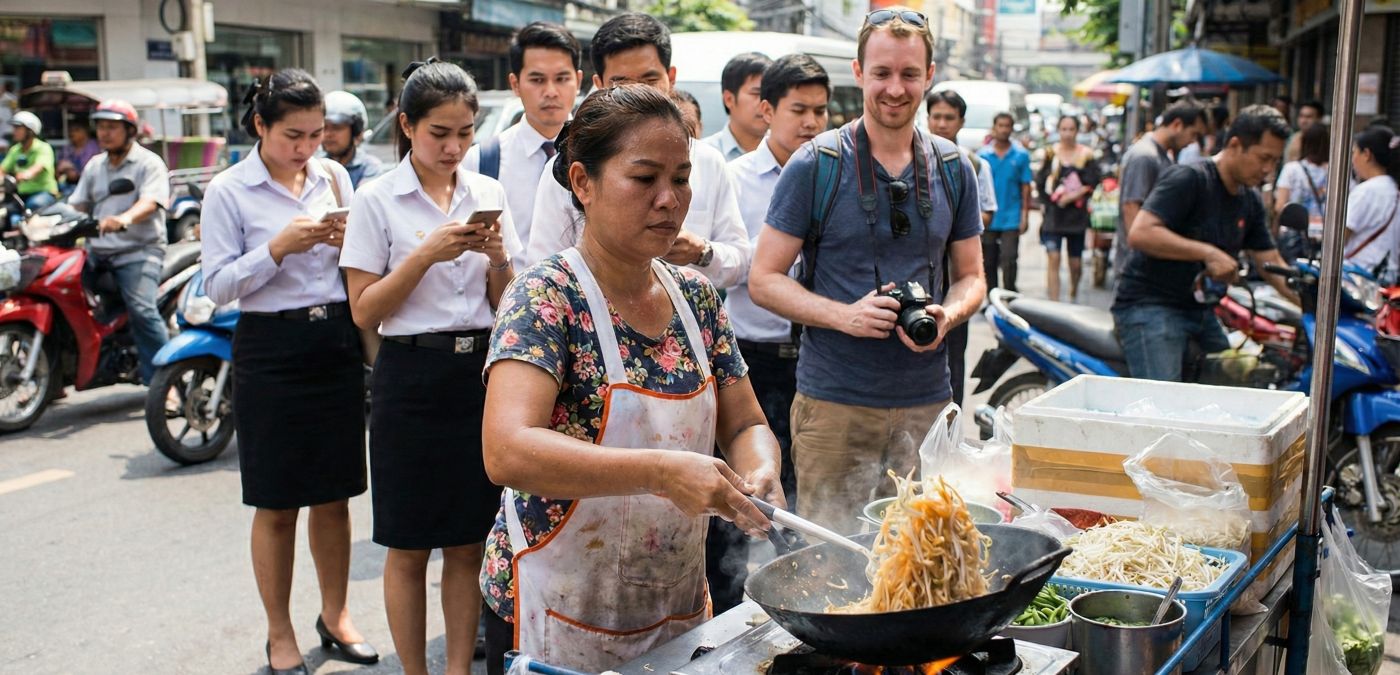
Thai street food carts are incredibly safe - when you know what to look for.
Green flags:
- Long line of locals waiting (especially office workers at lunch)
- Food being cooked to order right in front of you
- Visible cleanliness (cart is tidy, vendor looks clean)
- High heat cooking (wok on fire = bacteria dies)
- They're busy during normal meal times
- Meat is stored in ice or cooler
- Clean utensils and plates
Red flags:
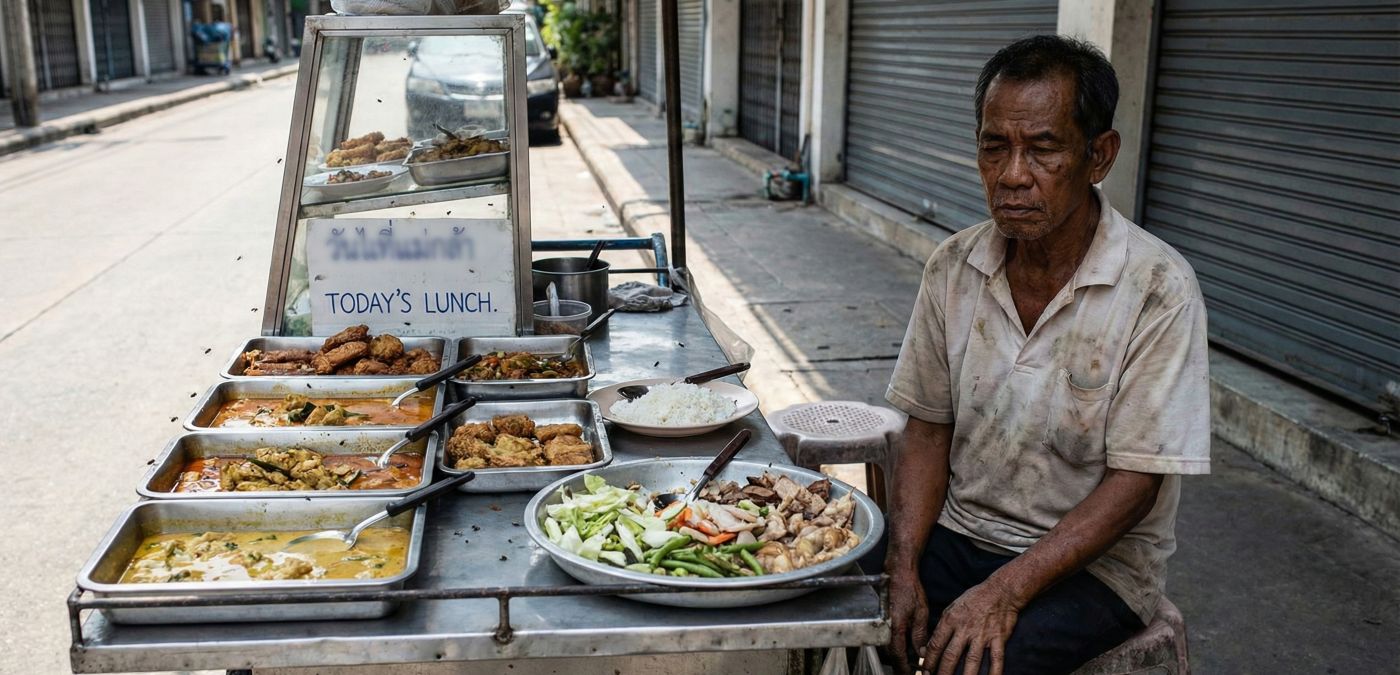
- Empty cart at meal times (why isn't anyone eating there?)
- Pre-cooked food sitting out for hours
- Flies all over everything
- No visible water source for washing
- Raw and cooked food touching
- Strong smell of spoiled food
- Vendor looks sick
Bangkok vs. Islands vs. North
Bangkok: Huge city, constant food turnover, lots of expats, food safety is generally good. Street food in touristy areas like Sukhumvit or Silom? Safer because they're used to foreigners. Local neighborhoods? Higher turnover often means fresher food.
Chiang Mai: Popular digital nomad spot, good infrastructure, lots of places cater to foreigners with sensitive stomachs. Generally safe. Night markets are usually fine.
Islands (Phuket, Koh Samui, Koh Phangan): Tourist areas are adapted to foreigners. Restaurants use filtered water. But get away from tourist zones, especially on smaller islands, and food safety drops. Limited refrigeration, longer supply chains, heat.
Pattaya: Tourist trap. Food safety is decent in established areas. Sketchy elsewhere.
Isaan (Northeast): Rural, hot, less tourism. Be more selective. Amazing food but your stomach needs to be ready.
Beach towns: Fresh seafood is great. Look for busy places. Stuff sitting out in the sun all day? Pass.
Specific Foods
Pad Thai: Safe. Cooked at high heat, made to order, noodles are boiled. One of the safest street foods.
Som Tam (Papaya Salad): Raw vegetables, often includes raw crab or fermented fish. This is where people get sick. Eat it at established restaurants when you're adapted.
Grilled meats (moo ping, gai yang): Generally safe. High heat kills bacteria. Fresh off the grill is fine.
Khao Pad (Fried Rice): Safe if cooked fresh. Sketchy if it's been sitting out.
Tom Yum/Tom Kha: Boiling soup, cooked to order. Safe.
Mango Sticky Rice: The mango was washed in tap water. The coconut milk sat out in heat. Sometimes fine, sometimes not.
Fresh fruit shakes: If they added ice (factory ice probably fine) and water (tap water not fine), you're rolling the dice.
Curries: Usually sitting in pots for hours. If the place is busy and making it throughout the day, fine. If it sat there since morning, questionable.
Satay: Fresh grilled meat on a stick. Safe.
Raw seafood/oysters: Only in places with visible refrigeration and high turnover.
The 7-Eleven Factor
7-Eleven is everywhere in Thailand and it's safe. The sandwiches, the pre-packaged food, the drinks - all fine. It's boring but reliable if you're sick or paranoid.
Market Food
Thai markets are incredible but overwhelming.
Morning markets (4-8am): Everything is freshest. This is when locals shop. Safest time.
Day markets: Hot, food sitting out, flies. Be selective. Look for vendors actively cooking.
Night markets: Tourist-friendly, fresh cooking, fun atmosphere. Generally safe. Stick to busy stalls with visible cooking.
Weekend markets (Chatuchak, etc): Massive, hot, crowded. The famous food sections have high turnover. Still avoid anything that's been sitting.
Regional Water Quality
Bangkok: Treated water, old pipes. Don't drink tap water. Bottled only.
Chiang Mai: Similar to Bangkok. Bottled water everywhere, cheap.
Islands: Water quality varies by island. Always bottled water. Some islands have sketchy water supplies.
Rural areas: Definitely bottled water only.
Nobody in Thailand drinks tap water. Bottled water is cheap and everywhere. Just do it.
Seafood Considerations
On the coast: Fresh seafood is amazing. Grilled fish, prawns, crab - go for it. Just look for places that are busy and storing seafood on ice.
In Bangkok: The seafood traveled. Cooked thoroughly is safer than raw. That said, Bangkok has great seafood restaurants with good supply chains.
Street cart seafood: If it smells fishy (not ocean-fresh), skip it. Fish should smell clean.
What Time Matters
Breakfast/Early Morning: Everything is fresh. Safest time for street food.
Lunch (11am-2pm): Peak traffic, high turnover, food being made constantly. Safe.
Afternoon (3-5pm): Slower period. Food might be sitting from lunch rush. Questionable.
Dinner (6-9pm): Busy again, fresh cooking. Safe at popular spots.
Late night: Depends. Some places make fresh food for the late crowd. Others are selling leftovers from dinner.
The Squat Toilet Connection
If a place has a squat toilet that's relatively clean, the food is probably fine. Locals use squat toilets. If locals eat there regularly, they maintain basic standards.
If the toilet is a horror show, imagine the kitchen.
Thai Pharmacy Runs
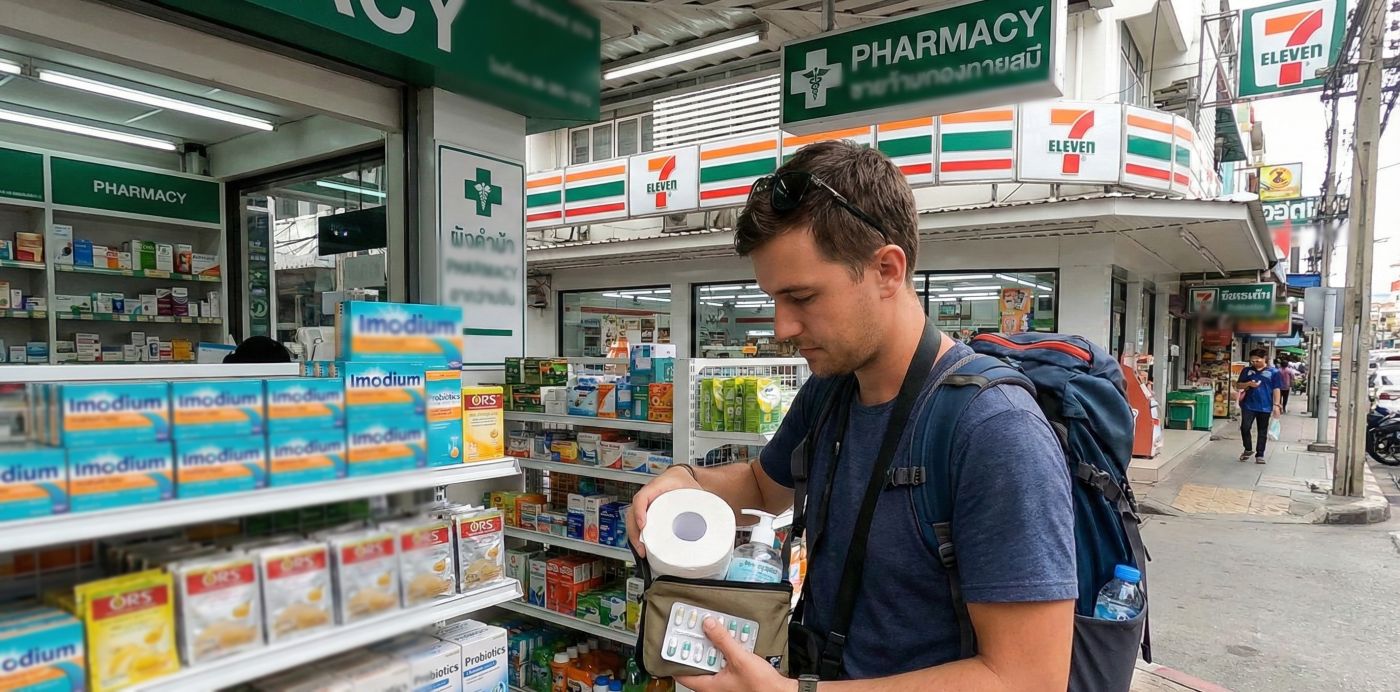
Every 7-Eleven area has a pharmacy nearby. They sell:
- Imodium/loperamide (stops diarrhea)
- Oral rehydration salts
- Probiotics
- Antibiotics (over the counter, though use carefully)
Getting sick isn't the end of the world. Thais deal with stomach issues too. Pharmacists know what to recommend.
Things Tourists Worry About Unnecessarily
- The plastic stools and street setup (doesn't correlate with safety)
- Spicy food (spice doesn't cause food poisoning)
- MSG (not harmful despite myths)
- Eating with your hands (just wash them first)
Things Tourists Should Actually Worry About
- Raw vegetables washed in tap water
- Food sitting out in 35°C heat for hours
- Seafood far from the ocean
- Fresh fruit already cut and washed
- Brushing teeth with tap water
- Smoothies with added water
My Actual Experience
Lived in Thailand for a year. Got sick exactly twice:
First time: Fancy rooftop restaurant in Bangkok. The salad. Of course.
Second time: Beach restaurant on Koh Phangan. The seafood pasta had been sitting out. Saw it, ordered it anyway, regretted it.
Never got sick from street food. Not once. Ate pad thai, grilled meats, fried rice hundreds of times from street carts with long lines. Zero issues.
The fancy places that look safe? Those got me.
Adaptation Timeline
Days 1-3: Jet lagged, vulnerable. Eat conservatively. Cooked food, bottled water, established restaurants.
Week 1: Start trying street food. Stick to obviously fresh, high-turnover places. Avoid raw vegetables and adventurous choices.
Weeks 2-4: Your stomach is adapting. Can handle more variety. Still avoid tap water and sketchy situations.
Month 2+: Can eat most places locals eat. Still use common sense. Still don't drink tap water.
The Squatty Potty Reality
You will probably get sick at some point. Not because Thailand is dirty - because you're introducing your system to new bacteria. Even locals get sick when they travel to new regions.
Keep toilet paper and hand sanitizer in your bag. Know where clean bathrooms are. Have pharmacy supplies ready.
It's not a personal failure. It's biology.
Restaurant Chains vs. Street Food
Chains (MK Restaurants, Fuji, etc): Standardized food safety, filtered water, refrigeration. Boring but reliable.
Street food: More variable but usually safe if you follow the guidelines. Way more delicious.
Local restaurants: Middle ground. Check reviews from other foreigners, look for busy places.
Don't Be That Person
The traveler who refuses to eat Thai food and only eats at McDonald's? Missing out completely.
The traveler who eats everything everywhere with zero caution? Spending half their trip sick.
Middle path: Be smart, watch for red flags, eat where locals eat, but give your body time to adapt.
Bottom Line
Thai street food is generally safe when you:
- Look for high turnover and busy spots
- Watch for visible cleanliness
- Avoid raw vegetables in sketchy situations
- Don't drink tap water (but ice is probably fine)
- Give yourself time to adapt
- Use common sense about food sitting in heat
The myth that Thai street food will definitely make you sick? False.
The myth that you can eat anything anywhere with zero risk? Also false.
Thailand has some of the best food on Earth. Learn the system, follow basic guidelines, and enjoy it.
And yes, the pad thai from that cart with the 30-person lunch line is absolutely worth it.