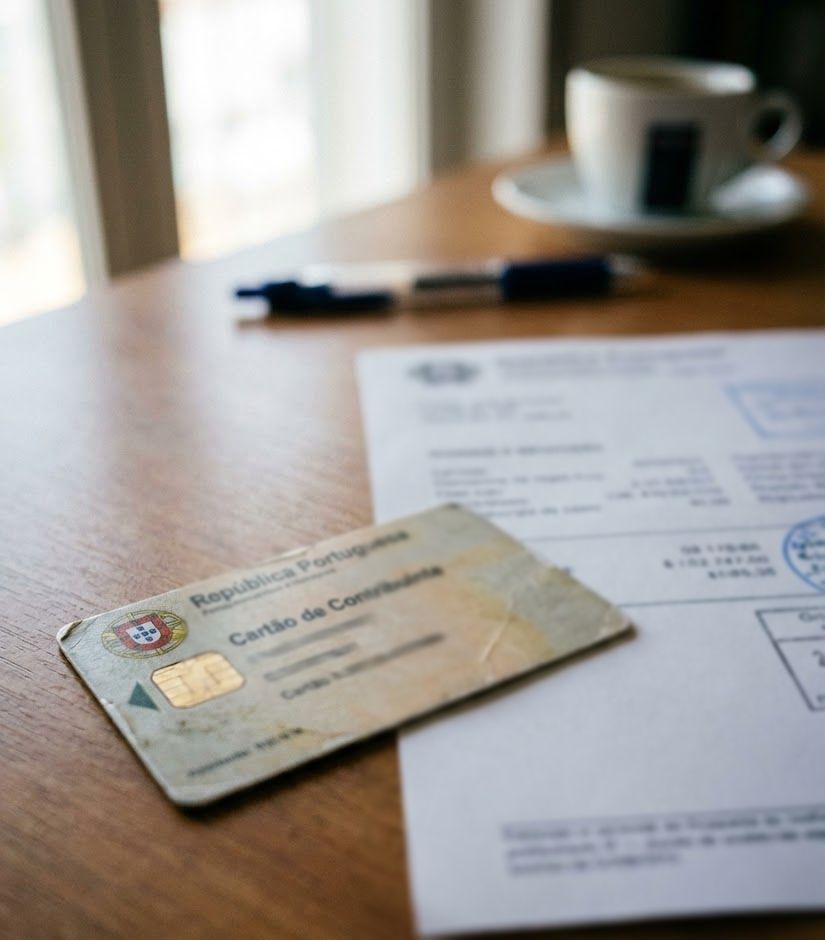
1 Got your NIF? Now register for NHR before March 31st. Miss the deadline? That's €20,640 in year one alone.
2 Living here costs €1,500/month rent. The tax mistakes? €3,000 to €50,000 each. Budget accordingly.
Last week, an American consultant living in Lisbon discovered he owed €47,000 in back taxes. His mistake? Assuming the NHR regime applied automatically when he moved in January 2024.
He's not alone. Based on conversations with tax attorneys and accountants in Porto and Lisbon, plus analysis of Autoridade Tributária (AT) rulings, these seven mistakes are costing foreigners between €3,000 and €50,000+ each.
Mistake #1: Missing the NHR Deadline (or Not Knowing It's Dead)
The Cost: €15,000-47,000 over 5 years
NHR (Non-Habitual Resident) regime closed to new applicants on January 1, 2024. Full stop.
But here's where people still mess up: If you became a Portuguese tax resident in 2023, you had until March 31, 2024, to apply for NHR. Miss that deadline? Gone forever.
Real case: Software developer from Berlin, arrived November 2023. Thought he'd apply "when things settled down." By April 2024, too late.
His numbers:
- Income 2024: €120,000
- Tax with NHR (20% flat): €24,000
- Tax without NHR (progressive): €44,640
- First-year loss: €20,640
How to avoid: The NHR window is closed for new residents. But if you're grandfathered in, protect your status:
- File your annual tax returns on time (March 31 - June 30)
- Maintain your tax residency properly
- Don't accidentally become resident somewhere else
- Keep proof of when you first registered
For new arrivals: The successor regime (IFICI - "Tax Incentive for Scientific Research and Innovation", Article 12-A of IRS Code) offers 10 years at 20% flat rate on eligible employment/self-employment income, plus specific foreign-source exemptions. If you became resident in 2024, you had until March 15, 2025 to register - check if you're still eligible.
Mistake #2: The Estonian/Dubai Company "Hack"
The Cost: €8,000-25,000 in penalties + full tax owed + possible criminal charges
Every Facebook group has someone preaching: "Set up an Estonian company, pay yourself dividends, save thousands!"
Portugal's CFC (Controlled Foreign Corporation) rules say otherwise. Article 66-B of the Corporate Tax Code makes this crystal clear: If you control a foreign company from Portugal, and that company is in a jurisdiction with tax less than 60% of Portuguese rates, it's taxed as Portuguese income.
Real case: Marketing consultant with Dubai freezone company, living in Porto:
- 2022-2023 unreported income: €180,000
- Portuguese tax owed: €76,000
- Penalties (30% minimum): €22,800
- Legal fees to resolve: €8,000
- Total cost: €106,800
Note: Portugal's mainland corporate tax is 21% (some sources show 20% proposed for 2025, verify current rate). Madeira and Azores have reduced rates. The CFC rules apply when foreign tax is less than 60% of what you'd pay in Portugal.
The AT is getting foreign account data through:
- CRS (Common Reporting Standard) - 100+ countries
- FATCA (for US persons)
- Direct agreements with UAE, Estonia, Cyprus
They know about your Wise account. They know about your Revolut business account. They definitely know about your Estonian company.
How to avoid:
- Report worldwide income
- If you have a foreign company, get proper tax advice
- Consider Portuguese company structure instead (might actually be cheaper)
- Or establish real substance abroad (real office, local directors, local employees)
Mistake #3: The 183-Day Miscalculation
The Cost: €12,000-35,000 in unexpected tax
Everyone knows the 183-day rule. Stay less than 183 days, you're not tax resident, right?
Wrong.
Article 16 of the Personal Income Tax Code has multiple tests:
- 183 days in Portugal (consecutive or not)
- Having a "habitual residence" on December 31st
- Spouse/children living in Portugal
- Being a crew member of Portuguese ships/aircraft
Real case: Digital nomad from California:
- Stayed 147 days in 2024
- Had year-long lease in Lisbon
- Left December 15th "to avoid residency"
- Result: Still tax resident due to "habitual residence"
- Tax on $95,000 income: €28,000
- Expected tax: $0
- Surprise bill: €28,000
The AT looks at:
- Rental contracts
- Utility bills
- Bank accounts
- Phone contracts
- Gym memberships
- Car registration
How to avoid:
- Count days properly (arrival and departure both count)
- Don't sign year-long leases if trying to avoid residency
- Document your time in other countries
- Consider the "split year" treatment if eligible
- Get a tax representative to clarify your status
Mistake #4: Crypto Trading While Misunderstanding the 365-Day Rule
The Cost: €5,000-150,000 in unexpected tax
Yes, Portugal has zero tax on crypto held over 365 days. Article 10(1)(b) of the IRS Code confirms this.
But the details matter:
- Must hold the SAME coins for 365 days
- Trading crypto-to-crypto might reset the clock (depends on classification)
- If classified as investment activity, some swaps may qualify for exemption
- If classified as business/professional activity, all trades are taxable
- Staking rewards are taxable immediately
- Mining is business income
- Day trading = professional activity (up to 48% tax)
Real case: Crypto trader from Netherlands:
- Portfolio value: €500,000
- Thought he was "holding long term"
- Reality: 47 trades in 2024, average holding 74 days
- Classification: Professional trader
- Tax bill: €178,000 (35.6% effective rate)
- Expected: €0
The AT issued Circular 7/2023 in October 2023 clarifying their stance. They're checking:
- Exchange data (Binance, Coinbase report to them)
- Bank transfers to crypto exchanges
- Blockchain analysis tools
How to avoid:
- Actually hold for 365+ days (set it and forget it)
- Track your holding periods meticulously
- Don't trade different pairs
- Keep staking rewards separate
- If day trading, accept you're running a business
- Consider a company structure for active trading
Mistake #5: Screwing Up Social Security Registration or Exemptions
The Cost: €3,000-18,000 in penalties + interest
Freelancers must register with Segurança Social when starting activity, but here's what confuses people: you get a 12-month contribution exemption from when you register. Miss the registration itself? That's where penalties hit. Register but don't know about the exemption? You're overpaying from day one.
Real case: Freelance designer from UK:
- Started activity January 2023
- Didn't register activity with Finanças and Segurança Social
- Discovered during tax audit May 2024
- Should have registered and claimed 12-month exemption
- Retroactive registration penalties: €1,285
- Lost exemption benefit worth: €4,284
- Interest on late filings: €514
- Total: €6,083
But worse: Some people register when they shouldn't.
Second case: Remote employee with German contract:
- Had A1 certificate from Germany
- Accountant said "register anyway to be safe"
- Paid Portuguese social security: €550/month
- Already paying German social security: €680/month
- Double-paid for 18 months: €9,900 wasted
- Refund possibility: Nearly zero
How to avoid:
- Register your activity immediately (get the 12-month exemption)
- EU citizens: Get A1 certificate from home country FIRST
- Americans: Use totalization agreement (file Form 8833)
- After exemption ends, contributions are mandatory
- Don't register if covered elsewhere (A1 holders)
- Keep proof of foreign coverage

Mistake #6: The Simplified Regime Trap
The Cost: €4,000-12,000 annually
The simplified regime (regime simplificado) automatically deducts 25% of income as expenses without receipts. Sounds great?
Not if your actual expenses are higher.
Real case: IT consultant from India:
- Gross income: €80,000
- Simplified regime deduction: €20,000
- Actual expenses: €31,000 (office, equipment, travel)
- Lost deduction: €11,000
- Extra tax paid: €4,180
You must choose your regime by:
- March 31st for existing taxpayers
- Within 30 days of starting activity for new ones
Can't change until next year. Choose wrong? Stuck.
How to avoid:
- Track expenses for 3 months before deciding
- If expenses consistently >25%, choose organized accounting
- If income >€200,000, simplified isn't available anyway
- Consider that organized accounting costs €200-400/month extra
- Factor in the hassle vs. savings
Mistake #7: Forgetting State Taxes From Home Country
The Cost: €8,000-45,000
Americans are famous for forgetting state taxes, but Canadians, Australians, and Germans have similar issues.
Real case: California software engineer in Lisbon:
- Assumed: "Foreign Earned Income Exclusion covers everything"
- Reality: California doesn't recognize FEIE
- California tax on $150,000: $13,000
- Didn't file California returns 2022-2023
- Penalties and interest: $4,700
- Total surprise bill: $30,700
California treats you as resident until you prove otherwise:
- Close bank accounts
- Cancel driver's license
- Change voter registration
- Sell property or rent it long-term
- File Form 3520 if keeping retirement accounts
How to avoid:
- Check if your home state/province has "sticky" residency rules
- File final resident returns
- Get tax domicile certificates from Portugal
- Some states require formal abandonment of residency
- Budget for potential state tax even after leaving
The Price of Prevention
Good tax advice costs:
- Initial consultation: €200-500
- Annual tax returns: €500-2,000
- Monthly accounting: €200-500
- Structure setup: €1,500-5,000
Seems expensive? The mistakes above average €23,000 each.
Where to Get Real Answers
Official Sources:
- Portal das Finanças: www.portaldasfinancas.gov.pt
- Tax law (CIRS): info.portaldasfinancas.gov.pt/pt/informacao_fiscal/codigos_tributarios
- Circular letters: Search "Ofício Circulado" + year
- Social Security: www.seg-social.pt
Finding Professional Help:
- Ordem dos Contabilistas Certificados (OCC): www.occ.pt
- Ordem dos Advogados: www.oa.pt
- American tax preparers in Portugal: Search "IRS Enrolled Agent Portugal"
Red Flags in Advisors:
- Promise tax rates that sound too good
- Don't mention CFC rules
- Claim "nobody gets caught"
- Can't cite specific tax code articles
- Don't ask about your specific situation
The Bottom Line
These seven mistakes account for roughly 80% of the tax disasters I hear about in expat groups. The patterns are:
- Assuming rules that benefit you apply automatically
- Believing strategies that work elsewhere work in Portugal
- Misunderstanding residency triggers
- Not tracking dates and deadlines properly
- Following Facebook advice instead of tax code
Portugal's tax system isn't impossibly complex, but it's unforgiving of assumptions. The AT has gotten aggressive about enforcement since 2023. They have data-sharing agreements. They check.
Get professional advice. Track everything. When in doubt, report it. The cost of compliance is nothing compared to the cost of mistakes.
Note: Tax laws change. This reflects rules as of January 2025, with IFICI offering 10 years at 20% flat rate. Corporate tax baseline is 21% mainland (check for 2025 updates). Crypto taxation depends on classification. Always verify current rates and deadlines. Get professional advice for your specific situation.
⚠️ Important Note
Tax laws change frequently, and enforcement varies widely from one country—and even one region—to another. The examples in this article are for general information only and may not reflect your individual situation.
Before acting on anything related to visas, residency, or taxation, always confirm the current rules directly with the official tax authority (e.g., SAT in Mexico, Agencia Tributaria in Spain, Revenue Department in Thailand, AT in Portugal) and speak with a licensed local tax advisor (asesor fiscal or accountant) who understands expat cases.
Each person’s tax outcome depends on factors such as your residency status, country of citizenship, income source, and local thresholds.
Use this guide as a starting point for research—not final advice. Always double-check the latest laws and get professional confirmation before making financial or immigration decisions.