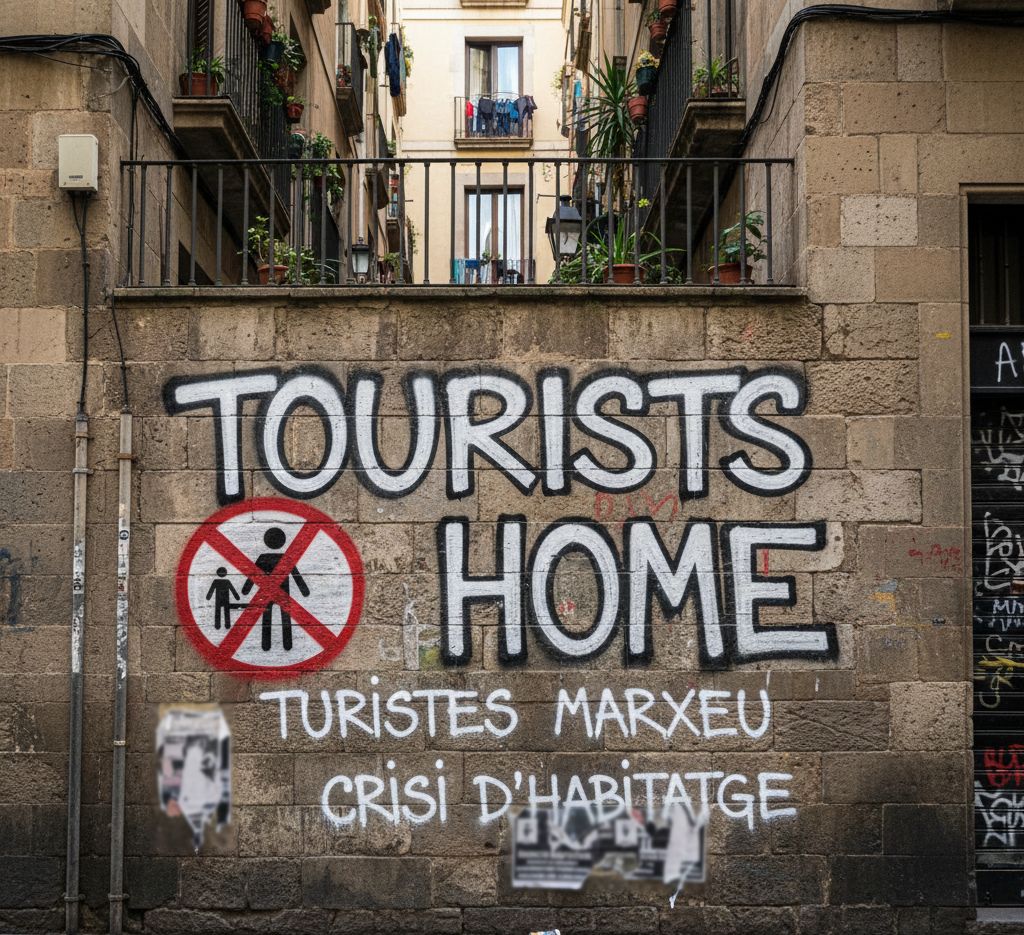
You'll see the graffiti. "Tourists Go Home." "Your Airbnb Kicks Out Families." Maybe you'll see a protest - they happen monthly now.
Let's talk about why Catalans are angry and what this means for where you should (and shouldn't) live.
The Number That Explains Everything
20,000.
That's how many housing units Airbnb removed from Barcelona's long-term rental market between 2015-2023.
My friend Jordi? Family lived in Gràcia for 4 generations. Landlord evicted them 2022 to convert the building to tourist apartments. Rent went from €800/month (family) to €200/night (tourists).
Jordi now lives in L'Hospitalet (technically not Barcelona, cheaper, longer commute). He's 38, works full-time as an engineer, and got pushed out of his childhood neighborhood.
You're reading this because you want to live in Barcelona. Fine. Just know: Every foreign remote worker paying €1,500/month makes it harder for locals earning €1,800/month to find housing.
I'm not saying don't come. I'm saying understand what your presence does.
Gràcia: Where I Live (And Watch Change Happen)
Rent: €900-1,500/month for 1-beds.
Ten years ago: Local Catalan neighborhood. Old ladies gossiping in plazas. Kids playing football. Festa Major in August - the whole neighborhood celebrating together.
Now: Every third shop is a boutique or cafe charging €4.50 for coffee. Half my building is Airbnbs. The old ladies moved away. The kids' families got priced out.
But here's the thing - Gràcia still works for long-term expats who integrate:
Lower Gràcia (near Diagonal): €1,200-1,500. More expensive, closer to metro, already gentrified.
Upper Gràcia (toward Park Güell): €900-1,200. Steep hills (you'll get fit), more local, better value.
My building: Mix of locals who bought decades ago and foreign renters like me. We coexist. I speak Catalan (badly), attend community meetings, shop at local stores. My neighbors tolerate me.
The foreigners who don't learn Spanish/Catalan, who order everything on Glovo, who never go to community events? Their neighbors hate them. Quietly, but hate them.
The hill problem: Park Güell area is STEEP. Not "European city steep." Steep steep. You'll Uber/metro everywhere or have massive calves. Choose.
Eixample: The €300/Month You're Wasting
Rent: €1,100-2,000/month for 1-beds.
Modernist architecture (Gaudí everywhere!), perfect grid layout, central, good metro, complete tourist trap.
Reality check: After 2 months living here, you'll stop looking at the buildings. You're paying €300-500/month premium to live in the postcard that you've stopped noticing.
Eixample Dreta (right/east side): €1,300-2,000
- Near Sagrada Familia = tourist hellscape
- Every restaurant has picture menus and 3-language staff
- You'll hear more English than Spanish or Catalan
Eixample Esquerra (left/west side): €1,100-1,700
- Gaixample (gay neighborhood) - vibrant, welcoming, good restaurants
- Slightly more local feel
- Still expensive but less touristy than Dreta
Who picks Eixample: First-timers who want pretty architecture and don't care about money. Corporate expats with housing packages. People staying <6 months who want easy mode.
Who leaves Eixample: Everyone after 6-12 months when they realize Gràcia or Poble exists at better prices with more character.
Poblenou: Tech Bros and €1,400 Studios
Rent: €1,000-1,600/month.
"Barcelona's creative district" - translation: warehouses turned coworking spaces, startups, expensive coffee, beach access.
22@ District (tech zone): Glass office buildings, modern apartments, zero soul, €1,200-1,600 1-beds.
Near beach (Rambla del Poblenou): €1,300-1,600, tourists in summer, actually nice in winter.
Interior Poblenou: €1,000-1,300, more residential, better value, still too expensive.
What happened: 2005: Industrial wasteland 2010: "Innovation district" declared 2015: Cool alternative to center 2020: Gentrified expensive tech hub 2025: Priced out most of the artists it was supposed to attract
Rent increased 60% since 2020. The "creatives" moved to Sants or left Barcelona entirely.
If you work in tech and need to be near startups, fine. Otherwise you're paying a premium for "former industrial cool" vibe that's mostly gone.
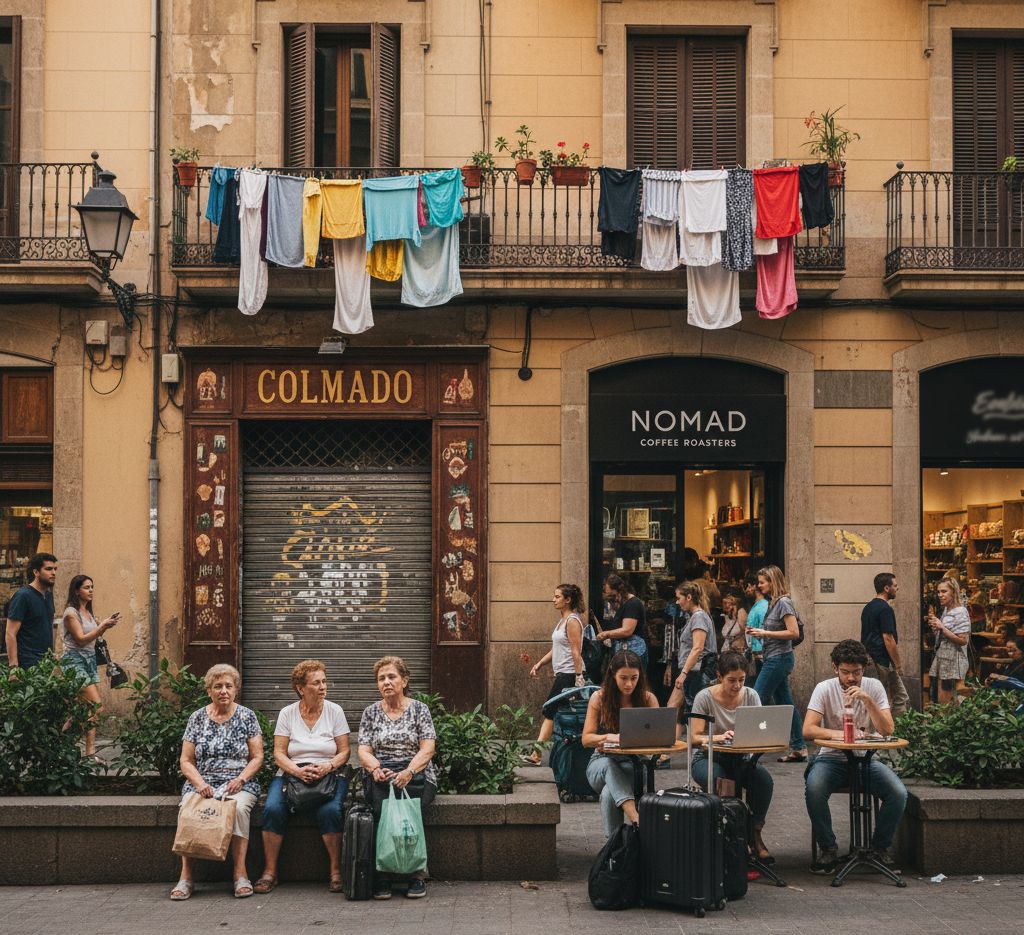
El Born / Gòtic: Just... Don't
Rent: €1,200-2,200/month for tiny medieval apartments.
The Gothic Quarter. Picasso Museum. Narrow streets. Tourist. Absolute. Maximum.
Why people think they want it: Instagram told them to. Medieval architecture. "Authentic Barcelona."
Why people leave: Pickpockets daily. Noise until 4am. No grocery stores (just tourist restaurants). Buildings are 500+ years old (stairs, no elevator, black mold, rats). Tourists EVERYWHERE.
I know two long-term residents in Born. TWO. Everyone else moved within a year.
Visit Born constantly. Drink at bars. See the museums. Do NOT live there unless you're running a tour company or hate sleep.
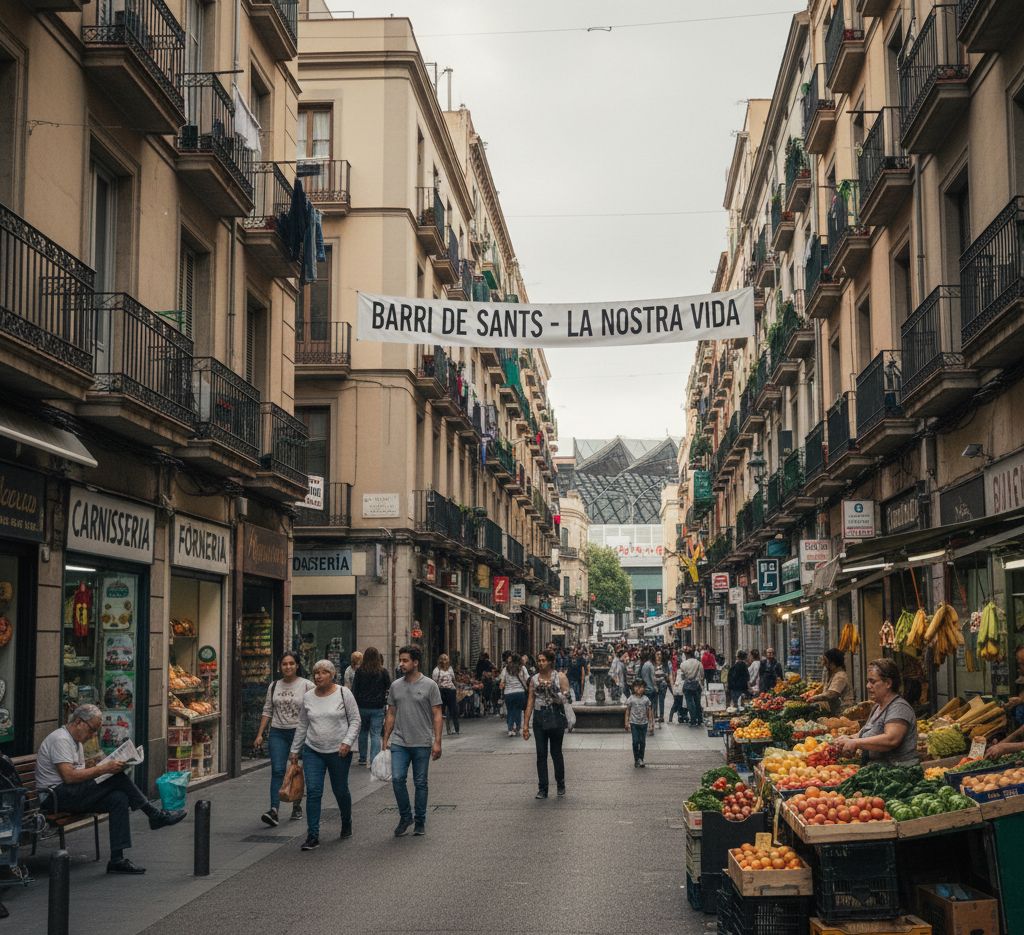
Sants: Where Catalans Actually Live
Rent: €850-1,300/month.
Working-class Barcelona. Where actual residents live. Zero Instagram appeal. Totally functional.
What you get:
- Real Barcelona life
- Sants train station (AVE to Madrid, airport train direct)
- Good metro (L1, L3, L5)
- Local markets
- Restaurants with menus only in Catalan/Spanish
- Cheaper rent
- Zero tourists
- Your neighbors will be actual Catalans
What you sacrifice:
- Cool factor (zero)
- English menus (rare)
- Expat community (small)
- Beach access (need metro)
Who thrives here: People staying 1+ years, Spanish speakers (or willing to learn), those wanting actual Catalan culture, budget-conscious, families.
Language requirement: High. This isn't expat-friendly. You'll learn Spanish fast because you have to.
I recommend Sants to every expat serious about staying long-term. Half ignore me and choose Gràcia/Eixample. The ones who listen thank me later.
The Housing Crisis Numbers
Rent increases 2019-2025:
- Gràcia: +55%
- Eixample: +48%
- Poblenou: +62%
- Born: +45%
- Sants: +38%
Average Barcelona salary: €1,800/month net Average rent for 1-bed: €1,200/month Math: Impossible
This is why locals are angry. This is why you see protests. This is why "Tourists Go Home" graffiti exists.
You didn't personally cause this. But you're part of the system that did.
What You Can Actually Do
If you're coming anyway (and you probably are), here's how to not be part of the problem:
1. Don't use Airbnb for long-term stays Short visit? Whatever. But month-to-month Airbnb? You're directly contributing to housing crisis.
2. Rent properly Find apartment through Idealista, Badi, local agents. Sign actual contracts. Pay normal rent, not tourist rates.
3. Learn Catalan or Spanish Not "Hola" and "Gracias." Actually learn. Take classes. Make effort. It matters enormously to locals.
4. Live in non-touristy neighborhoods Sants, outer Gràcia, Horta, Nou Barris - places where your rent isn't displacing locals.
5. Shop local Not tourist restaurants. Not chain stores. Local bakeries, markets, neighborhood spots.
6. Pay fairly Don't haggle with small vendors. Tip service workers. They're dealing with inflation while serving tourists.
7. Be humble You're a guest in someone else's city. They didn't ask you to come. Their rent doubled because people like you came. Act accordingly.
The Digital Nomad Visa Situation
Spain launched it 2023. Processing is SLOW (4-6 months). Requirements:
- Remote work for non-Spanish clients
- €2,000+/month income proof
- Health insurance
- Clean criminal record
- Lots of paperwork
Most digital nomads still just come on 90-day tourist visa, work quietly, don't mention it.
Getting caught working on tourist visa? Rare but happens. Deportation and ban possible.
The legal path exists now. It's just bureaucratically painful (this is Spain).
Cost Reality (Real Numbers)
Budget impossible: You need €2,000+/month minimum to live here comfortably.
Realistic comfortable ($2,800/month):
- Rent: €1,200 (Gràcia 1-bed)
- Food: €500 (mix cooking/eating out)
- Transport: €100 (metro + occasional Uber)
- Utilities: €150
- Coworking: €200
- Entertainment: €400
- Remaining: €250
That's almost $3,000/month for what used to cost $1,800 in 2019.
My Honest Recommendations
First 3 months: Gràcia or Eixample. Figure out the city from connected base.
Long-term (6+ months):
- Want integration: Sants
- Want balance: Gràcia
- Have money, don't care: Eixample or Poblenou
- Want beach: Poblenou (pay the premium)
Avoid living: Gòtic, Born, Barceloneta (tourist zones), anywhere on Airbnb long-term.
Language: Take this seriously. Catalans appreciate Catalan effort 10x more than Spanish. But Spanish is easier and more universally understood. Pick one, commit, learn it.
The Catalan Factor
Barcelona is capital of Catalonia. It's NOT just "Spain."
Catalans have their own:
- Language (Catalan, not Spanish)
- Culture
- History
- Political identity (independence movement is real)
What you must understand:
- Government/official stuff is in Catalan
- Many locals prefer speaking Catalan
- Catalonia != Spain to many people here
- Don't call it "Spanish culture" - it's Catalan culture
- September 11 (Diada) is Catalan National Day - respect it
Learn basic Catalan alongside Spanish. Even attempting "Bon dia" instead of "Buenos dias" will get you smiles.
Will You Love Barcelona?
You'll love it if:
- You value architecture/culture
- You're okay with crowds
- Budget is €2,500+/month
- You learn the language
- You're willing to integrate
- You can handle locals being cold initially
You'll hate it if:
- You need peace and quiet
- Budget is tight
- You want authentic "undiscovered" experience
- You expect everyone to speak English and be welcoming
- You're sensitive to being seen as part of the problem
Final Real Talk
Barcelona is beautiful, cultured, well-connected, and increasingly expensive and resentful of foreigners.
I've been here 8 years. I speak Catalan. I have local friends. I'm accepted-ish.
But I'm also aware that my presence (and every other expat's) contributed to locals being priced out.
Come if you want. Just know what you're walking into.
And please, for the love of god, don't live in a tourist Airbnb, learn the language, and shop at local stores.
Benvinguts a Barcelona. Try to not make it worse.
Updated: November 2025
Rent: €900-2,000 for 1-beds depending on area
Language: Catalan preferred, Spanish accepted, English expected by locals to at least try Visa: 90 days tourist, or apply for DN visa (slow)
Learn Catalan: "Bon dia" (good morning), "Gràcies" (thanks), "Ho sento" (sorry)