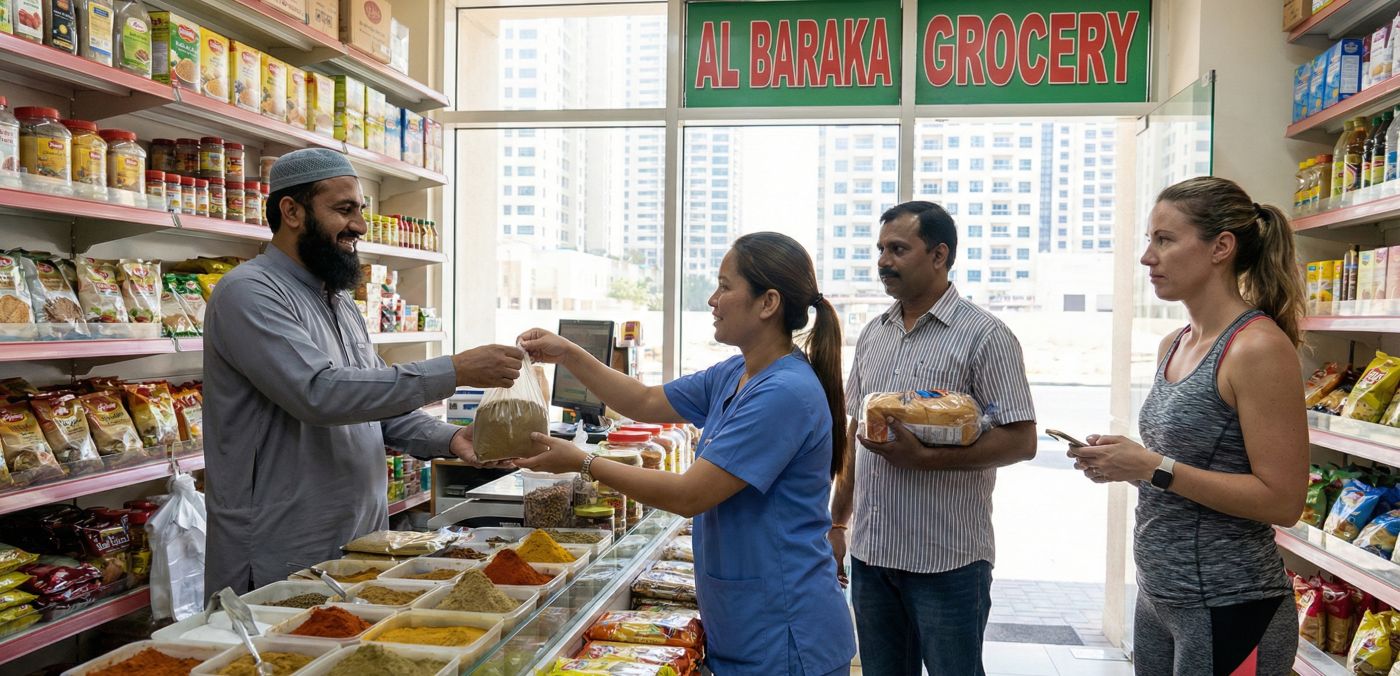
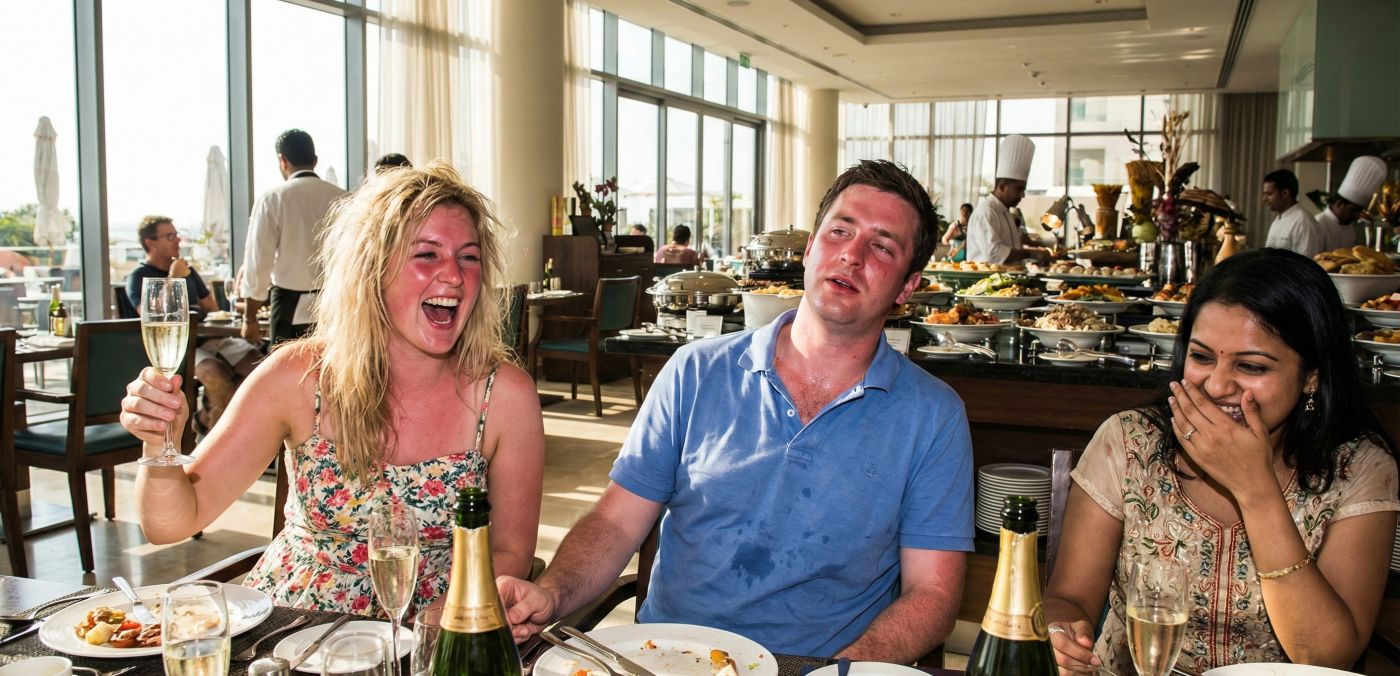
"Friday brunch" in Dubai isn't brunch. It's a four-hour alcoholic marathon disguised as a meal that costs a month's rent and ends with everyone pretending they didn't just spend 500 AED to blackout at 4 PM.
My first Dubai brunch was at Saffron. "It's reasonable," my colleague said. "Only 350 AED."
That's $95. For breakfast. At noon.
Four hours later, I understood. Dubai brunch isn't about food. It's about drinking alcohol in a city where alcohol is complicated, doing it before the sun sets, and justifying the expense as "networking."
Everyone's networking. Nobody remembers with whom.
The Delivery App Supremacy
Dubai has the most sophisticated delivery infrastructure on Earth. Not because of innovation. Because nobody wants to leave air conditioning.
The apps:
- Deliveroo (for when you want to feel British)
- Talabat (for everything, everywhere, always)
- Noon (for when Talabat is down)
- Careem Now (Uber's food attempt)
Delivery time: 20 minutes average. During 48°C summer. During sandstorms. During rain that floods everything.
The riders are heroes. They navigate Dubai's psychotic traffic with your soup. Tip them. They're the reason Dubai functions.
The Shawarma Class System
Dubai shawarma has rigid hierarchy:
- Street shawarma (5 AED): Might be cat, definitely delicious
- Lebanese shawarma (15 AED): Actual chicken, garlic sauce
- Syrian shawarma (20 AED): Beef option, pickles matter
- Gourmet shawarma (45 AED): Has arugula, defeats purpose
The best shawarma is from the shop that looks like health violation. Cafeteria on Al Dhiyafa Road. 5 AED. Questionable meat. Line of taxi drivers at 3 AM. Perfect.
The worst shawarma is anywhere with "artisanal" or "fusion." That's not shawarma. That's a wrap with identity crisis.
The Gold Cappuccino Situation
Dubai puts gold on everything. Gold pizza. Gold burger. Gold ice cream. Gold water.
It's actual gold leaf. It tastes like nothing. It costs everything. It comes out the same color.
"But why?" I asked.
"For Instagram," the waiter said, like that explained spending $30 on coffee with metal garnish.
Everyone orders it once. Posts it. Regrets it. The gold coffee economy runs on tourist shame.
The Food Court Ecosystem
Dubai Mall food court isn't food court. It's 50 restaurants pretending to be casual while charging restaurant prices.
The reality:
- Shake Shack line: 45 minutes, always
- Cheesecake Factory wait: 2 hours, for cheesecake
- Random Arabic place: No wait, best food
- Panda Express: Exists, confusingly
Cost: 60-80 AED for fast food. The same burger in America: $8. In Dubai: $20. The Dubai tax is real.
The Iftar Economics
During Ramadan, iftar buffets appear everywhere. All-you-can-eat feasts starting at sunset.
The prices:
- Local mosque: Free
- Budget hotel: 50 AED
- Five-star hotel: 250 AED
- Burj Al Arab: Your kidney
The food is identical. Dates, soup, everything fried, diabetes-level desserts. You're paying for location and Instagram potential.
The free mosque iftar is better. The community is real. The food has love. But no gold leaf.
Why Everyone Knows Ravi's
Ravi Restaurant in Satwa. Pakistani food. Plastic chairs. Fluorescent lights. Cash only.
The menu:
- Butter chicken: 18 AED
- Dal: 8 AED
- Naan: 2 AED
- Total meal: Under 30 AED
Every millionaire in Dubai eats at Ravi's. Every construction worker. Every expat eventually discovers it. It's the great equalizer.
No reservations. No ambiance. No Instagram potential. Just perfect Pakistani food that reminds you Dubai has soul underneath the gold leaf.
The Karak Chai Addiction
Karak chai isn't tea. It's sweet milk with tea flavoring, cardamom, and enough sugar to fuel a small city.
Price: 1-2 AED Availability: Every corner, every cafeteria, every parking lot
The hierarchy:
- Cafeteria karak: 1 AED, perfect
- Tea stall karak: 2 AED, also perfect
- Hotel karak: 15 AED, worse
- Starbucks "chai": 25 AED, not karak
Emiratis drink 5-10 daily. The sugar keeps you functional in heat. The cardamom makes you feel fancy. The addiction is immediate.
The Lebanese Supremacy
Dubai's best food is Lebanese. Not Emirati. Emiratis know this. Everyone knows this.
Every neighborhood has:
- Lebanese restaurant (good)
- Syrian restaurant (similar but different)
- Egyptian restaurant (cheaper)
- Actual Emirati restaurant (one, for tourists)
The Lebanese meal:
- Hummus (multiple types)
- Fattoush (salad that matters)
- Grilled meat (all of it)
- Bill that hurts
- Worth it
The Al Mallah Phenomenon
Al Mallah. Street food place that's been there forever. No delivery. No cards. No patience for your Instagram.
What they have:
- Falafel that ruins all other falafel
- Shawarma that's actually affordable
- Fresh juice that's actually fresh
- Attitude that's free
The owner yells at everyone equally. The food comes when it comes. You eat standing because there's nowhere to sit.
It's perfect. In a city of performance, Al Mallah doesn't perform.
The Supermarket Sushi Surprise
Dubai supermarket sushi is better than most restaurant sushi.
Carrefour sushi: Made fresh daily by Filipino sushi chefs Spinneys sushi: Actual Japanese people making it Waitrose sushi: Overpriced but reliable
Price: 30-50 AED for a decent box
The sushi restaurants charge 200 AED for the same fish. The supermarket doesn't have ambiance. It has fair prices.
The Indian Restaurant Reality
Dubai is 60% South Asian. The best food is Indian/Pakistani/Bangladeshi. Not in hotels. In Karama and Deira.
The tells of good Indian food:
- Plastic tablecloths
- Bollywood on TV
- No menu in English
- Taxi drivers eating there
- Under 20 AED per meal
York Hotel has butter chicken that makes you cry. Some bathroom in Deira has biryani that changes your life. The Taj Hotel has Indian food for 150 AED that's worse than both.
The Water Costs More Than Petrol
Restaurant water: 15-20 AED for Evian Petrol: 3 AED per liter
You pay more for French water than fossil fuel. This is Dubai economics.
The solution: "Regular water please." They bring local water for 5 AED. It's the same water. Different bottle. 10 AED savings.
Surviving Dubai Food
Dubai food rules:
- Brunch is alcoholism with eggs
- Delivery apps are infrastructure
- Best shawarma looks worst
- Gold leaf is for tourists
- Ravi's over Michelin
- Karak chai is mandatory
- Lebanese > everything
- Supermarket sushi is legitimate
- Indian in Karama, not hotels
- Water costs more than oil
Daily food cost: 50-100 AED eating locally. 200-500 AED eating "Dubai."
Dubai food is about extremes. 1 AED karak or 1000 AED gold steak. Ravi's plastic chairs or Burj Al Arab dress codes.
The residents eat at Ravi's, drink karak, get Lebanese delivery. The tourists eat gold, pay for water, Instagram everything.
After six months, you're at Ravi's at 2 AM with everyone else, wondering why you ever paid 50 AED for a burger.
Dubai food survival:
- Skip the gold everything
- Ravi's and Al Mallah for soul
- Karak chai for life
- Lebanese for dates
- Karama for real Indian
- Delivery for everything else
Note: Dubai food is performance art or plastic chairs. Nothing between.
Photo Sources:
- Dubai Friday brunch
- Search: "Dubai Friday brunch buffet" or "Dubai champagne brunch"
- Delivery apps
- Search: "Talabat Deliveroo Dubai" or "Dubai food apps"
- Shawarma stand
- Search: "Dubai street shawarma" or "cafeteria shawarma"
- Gold food
- Search: "Dubai gold cappuccino" or "gold leaf burger Dubai"
- Dubai Mall food court
- Search: "Dubai Mall food court crowds" or "Dubai Mall restaurants"
- Iftar buffet
- Search: "Dubai iftar tent" or "Ramadan buffet Dubai"
- Ravi Restaurant
- Search: "Ravi Restaurant Satwa" or "Ravi Pakistani Dubai"
- Karak chai
- Search: "karak chai cafeteria" or "UAE karak tea"
- Lebanese mezze
- Search: "Lebanese restaurant Dubai" or "mezze Dubai"
- Al Mallah
- Search: "Al Mallah Dubai" or "Al Mallah shawarma"
- Supermarket sushi
- Search: "Carrefour sushi Dubai" or "UAE supermarket sushi"
- Karama Indian restaurant
- Search: "Karama Indian restaurant" or "Dubai local Indian food"
- Water menu prices
- Search: "Dubai restaurant water expensive" or "Evian Dubai price"