
Two Americans sitting at a coworking space in Roma Norte last week. One's been here eight months. The other just arrived.
"You paying Mexican taxes?" the new arrival asks.
"Nah. I'm on tourist visa, working remotely. Mexico doesn't care."
This conversation happens constantly in Mexico City, Playa del Carmen, Guadalajara. Everyone repeating the same assumptions. Most of them wrong.
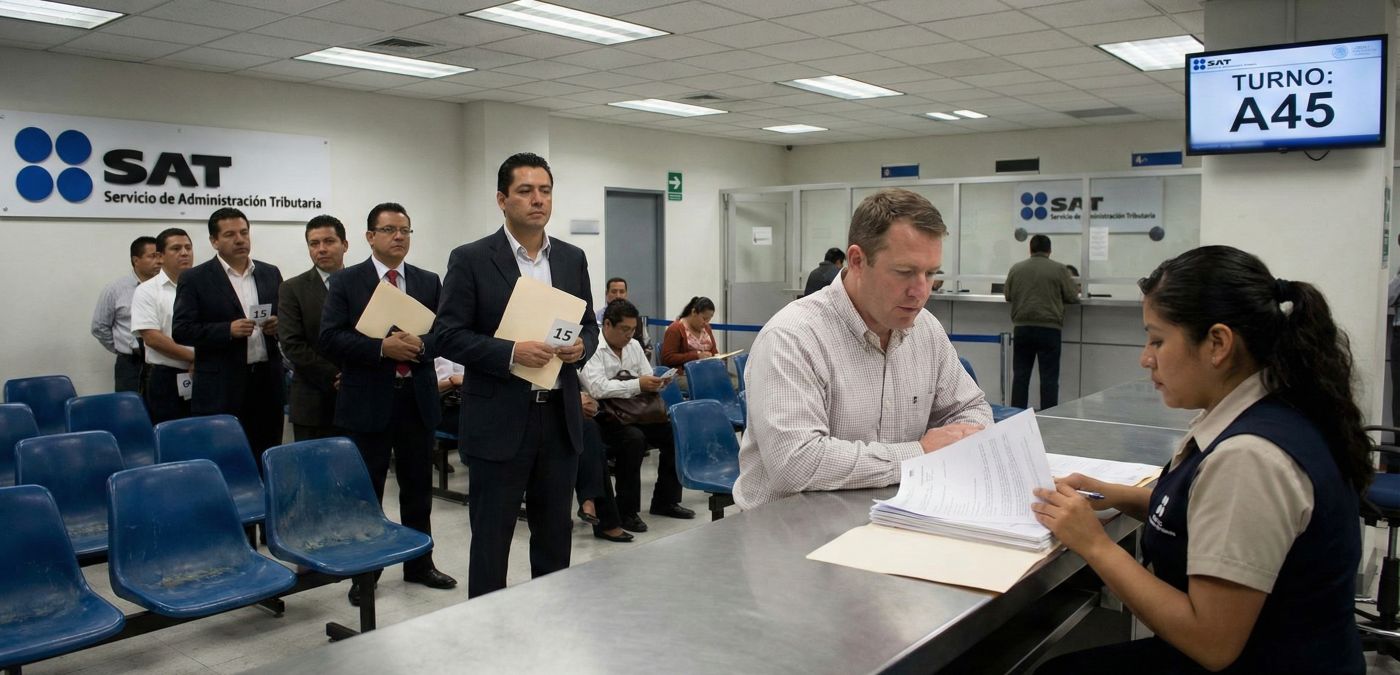
Mexico's tax authority—SAT (Servicio de Administración Tributaria)—cares more than people think. They're just slow. And when they do catch up, it's not gentle.
But there's another side to this. A legitimate tax regime most digital nomads have never heard of. RESICO. Régimen Simplificado de Confianza. Simplified Trust Regime. Been around since 2022. Offers rates as low as 1-2.5% on gross income.
Yes, 1-2.5%. Not a typo.
The catch? You need temporary or permanent residency. Can't do it on tourist visa. And you're officially registering with SAT. Which makes some people nervous.
The 183-Day Rule Everyone Ignores
Mexican tax law considers you a resident if:
More than 183 days in Mexico during a calendar year, OR Mexico is your "center of vital interests"
Center of vital interests means:
- Over 50% of your income comes from Mexican sources
- Your main professional activities happen in Mexico
- Mexico is your primary home base
Casey Leonard from Mexico Transitional Services told Mexico News Daily in 2023 that even though temporary and permanent residents are technically required to have RFC (tax ID), "foreigners often have to tell another white lie to convince officials to do the paperwork."
The system is weird. Enforcement inconsistent.
Residents are supposed to pay tax on worldwide income. Non-residents only on Mexican-source income.
In practice? According to Ricardo Peña, quoted in the same Mexico News Daily article, most digital nomads employed by US firms don't report their foreign income to SAT. He notes the US-Mexico tax treaty prevents double taxation, so they wouldn't owe Mexican taxes anyway. But they're technically required to report.
Peña's assessment: "I think the party will last for a couple more years."
Not exactly a long-term strategy.
What Actually Triggers Tax Resident Status
183 days in a year sounds clear. But SAT doesn't just count days.
They look at:
Where's your apartment lease? Where do you spend money? Mexican phone number? Mexican bank account? Kids in Mexican schools? Mexican car registration?
You can spend 150 days in Mexico City, 100 days in Thailand, 115 days bouncing around Latin America. Still get classified as Mexican tax resident if SAT decides Mexico is your base.
And once you're a resident for tax purposes, worldwide income becomes taxable in Mexico. Progressive rates from 1.92% to 35%.
On income over roughly $625,000, you're at 35%. That's not digital nomad friendly.
The Tourist Visa Fiction
The FMM (tourist card) allows up to 180 days. Doesn't authorize work. Even remote work.
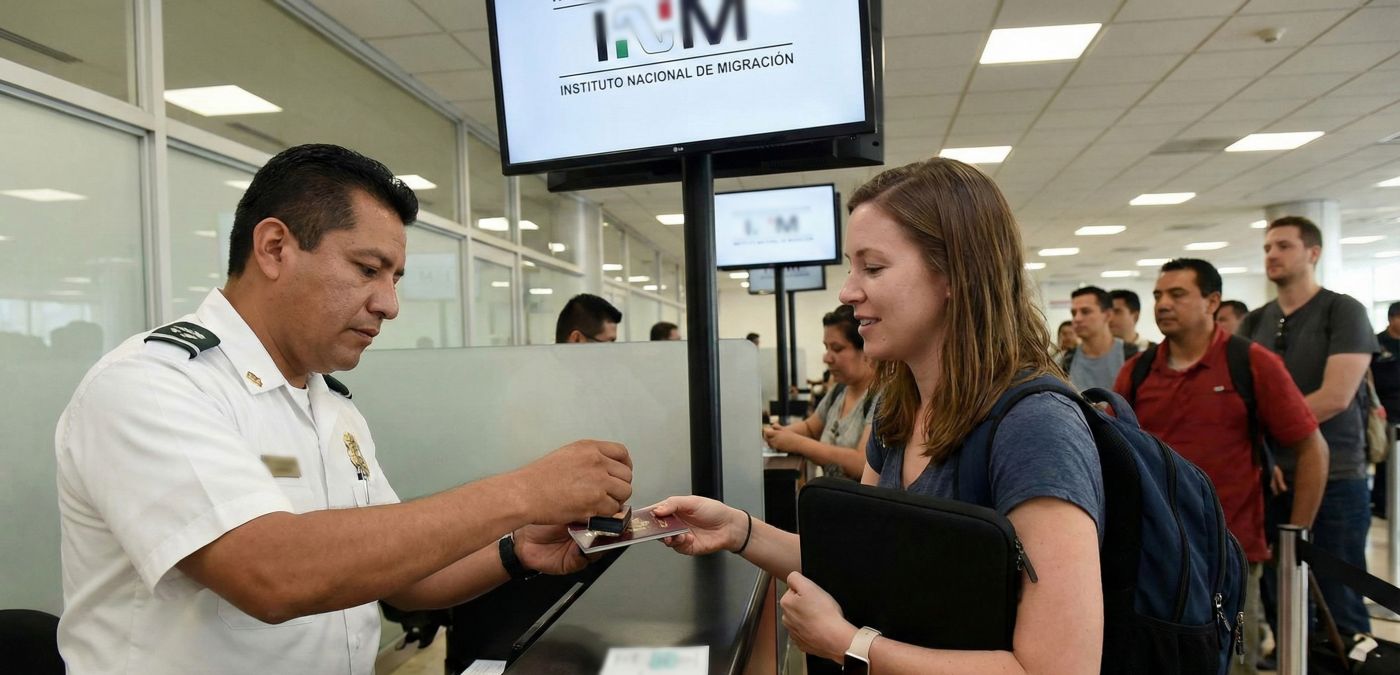
Immigration officers at the airport don't check your laptop. Don't ask what you do. Just stamp you in.
But the law is clear. Tourist visa prohibits any work activity. Including remote work for foreign companies.
Does SAT enforce this? Not really. Immigration doesn't coordinate well with tax authority. The systems don't talk to each other effectively.
Does that make it legal? No.
Could they enforce it later? Yes.
Risk assessment: Low currently. But not zero. And not unchanging.
RESICO: The Regime Nobody Talks About
Here's what actually exists.
RESICO launched January 2022. Designed for small businesses and individuals. Income cap: 3.5 million pesos annually (roughly $200,000).
Rates on gross income:
- Up to 300,000 pesos (~$17,000): 1%
- Up to 600,000 pesos (~$34,000): 1.1%
- Up to 1 million pesos (~$57,000): 1.5%
- Up to 2.5 million pesos (~$143,000): 2%
- Up to 3.5 million pesos (~$200,000): 2.5%
On gross. Not net.
Freelance consultant earning $60,000 annually pays 1.5% of $60,000 = $900 in Mexican income tax.
That's it. No deductions. No complicated calculations. Flat percentage on what you invoice and collect.
Compare to US federal taxes on same $60,000: Roughly $7,000-9,000 depending on deductions.
The Mexico number is lower. Significantly.
Requirements for RESICO
Must have temporary or permanent residency card Must register for RFC (tax ID) with SAT Annual income under 3.5 million pesos Provide services, operate business, or rent property Can't be majority shareholder in Mexican corporation Must issue electronic invoices (CFDI 4.0) File monthly payments
Can't do this on tourist visa. The residency requirement is non-negotiable.
What RESICO Actually Looks Like
You get temporary residency. Four-year visa. Renewable. Current financial requirement per 2025: $3,738/month income for past six months OR $73,258 in savings.
Apply at Mexican consulate before traveling. Get approval. Enter Mexico. Collect residence card.
Then register with SAT. Get RFC. Takes a week or two. Need address proof, residency card, passport.
Choose RESICO as your tax regime.
Start issuing electronic invoices through Mexican system. Every time you bill a client, generate CFDI 4.0 invoice through SAT-approved software.
Pay monthly. By 17th of following month. Based on income collected that month.
File annual return by April.
The Catches
Catch 1: Electronic invoicing
Every invoice must go through Mexican tax system. CFDI 4.0 format. SAT sees everything in real time.
For people used to PayPal → bank account with zero reporting, this feels intrusive.
Catch 2: RFC ties you to SAT
Once you have RFC and you're registered, SAT knows you exist. They can audit. They can request documentation. You're in the system.
Catch 3: Foreign clients need generic code
Your US or European clients aren't in Mexican tax system. You use generic RFC code for foreign customers. But you're still issuing official invoices.
Catch 4: Can't deduct expenses
RESICO taxes gross revenue. You earned $60,000, you pay tax on $60,000. Doesn't matter if $40,000 was expenses.
This works if you're high-margin service provider. Doesn't work if you're reselling products or running high-cost business.
The Math: RESICO vs. Hiding
Digital nomad earning $80,000/year from US clients.
Option A: Stay on tourist visa, don't report
- US taxes: ~$10,000-12,000
- Mexican taxes: $0 (unreported)
- Risk: Low currently, but exists
- Legal status: Technically violating tourist visa terms
Option B: Get residency, use RESICO
- US taxes: ~$10,000-12,000
- Mexican taxes: $1,200 (1.5% of $80k)
- Total: ~$11,200-13,200
- Risk: None, fully legal
- Status: Legitimate resident
Difference: $1,200 annually for legal clarity.
That's $100/month to sleep well.
The US Tax Situation
Americans still file US taxes regardless.
US taxes based on citizenship. Living in Mexico doesn't change that.
But Foreign Earned Income Exclusion (FEIE) excludes first $126,500 (2024 amount) if you qualify via physical presence test (330 days outside US in 12-month period) or bona fide residence test.
Most digital nomads in Mexico qualify for FEIE. Excludes most or all US federal income tax.
Still owe self-employment tax if self-employed. That's ~15% on net income. No way around that for Americans.
The RESICO tax (1-2.5%) doesn't eliminate US obligations. But under US-Mexico tax treaty, you can claim foreign tax credit for Mexican taxes paid. Since RESICO rates are so low, you'll still owe some US tax, but the treaty prevents double taxation on the same income.
Practically: Most US digital nomads in Mexico pay US self-employment tax, use FEIE to exclude income from federal income tax, pay small amount in RESICO to Mexico for legal residency status.
What About Just Not Reporting?
This is the honest question.
Mexico has 56% increase in foreign residents from 2021 to 2023 according to INEGI. Most are in Mexico City. Many are digital nomads.
SAT doesn't have resources to chase every American working from Condesa.
According to the Urban Institute's research published in 2025, "digital nomads don't pay income taxes to their host countries because they're still employed abroad, limiting their fiscal contributions to sales taxes and hospitality taxes."
The system has holes. Enforcement is weak. Coordination between immigration and tax authority is poor.
So yes, many people work remotely in Mexico without reporting. Without Mexican taxes. Without issues.
Does that make it legal? No.
Could it change? Yes.
SAT launched official English website. Mandatory RFC requirements exist. Digital reporting systems improving. The infrastructure for eventual enforcement is building.
Peña (the tax expert) said the party lasts "a couple more years." That was 2023.
When RESICO Makes Sense
High-margin service providers. Consultants, developers, designers, writers. People where revenue roughly equals income because expenses are minimal.
Someone billing $100,000/year with $10,000 in expenses. Under normal taxation, you'd pay tax on $90,000 net. Under RESICO, you pay 2% on $100,000 gross = $2,000.
Even though you're taxed on gross, the rate is so low it works out favorably.
But resellers? E-commerce? Businesses with 50%+ cost of goods sold? RESICO doesn't work. You're paying tax on revenue you're passing through to suppliers.
When It Doesn't
High-cost businesses. Dropshipping, physical products, anything with significant COGS.
Someone earning $200,000 in revenue but $150,000 in costs. Net income: $50,000.
Normal taxation: Pay tax on $50,000 net RESICO: Pay 2.5% on $200,000 gross = $5,000
RESICO looks good here too. But what if costs were $180,000?
Net income: $20,000 Normal taxation: Tax on $20,000 RESICO: Still $5,000
Now you're paying $5,000 tax on $20,000 profit. That's 25% effective rate. Not attractive.
RESICO works for services. Gets questionable for goods.
The Residency Application Reality
Temporary residency currently requires:
- $3,738/month income last 6 months, OR
- $73,258 in savings last 12 months
These amounts adjust annually with Mexican minimum wage. They're 300x and 5,000x daily minimum wage.
Applied at Mexican consulate outside Mexico. Processing takes 4-6 weeks typically. Some consulates backlogged 8-12 weeks.
Once approved, enter Mexico within 180 days. Collect residence card at immigration office. Card valid 1-4 years depending on what you applied for.
Cost: Around $200-300 in government fees plus travel to consulate if not local.
The card gives you legal residency. Opens banking (though still difficult). Allows RFC registration. Enables RESICO.
After four years on temporary residency, eligible for permanent residency. Permanent residency has no income requirements for renewal. Valid indefinitely. Still requires RFC and tax filing if you're earning income.
SAT Enforcement Reality
EscapeArtist (expat site) published article noting that SAT has become "one of the more aggressive countries in Latin America" for tax enforcement.
They note many of their clients in Mexico get audited annually. SAT denies expense deductions aggressively, especially payments to tax haven countries.
The article specifically mentions: "If you're a gringo or European, expect the Mexican SAT to be even more hostile."
Not exactly reassuring.
But context matters. Those clients are running substantial Mexican businesses. Real estate developers buying internationally. Large operations.
Not digital nomad billing $5,000/month from coworking space.
Scale matters. SAT focuses resources where money is. Twenty-something freelancer earning $60,000 remotely isn't their primary target. High-value real estate transactions are.
Doesn't mean you're invisible. Means you're probably not priority one.
The Honest Assessment
Mexico's tax situation for digital nomads is messy.
Tourist visa technically prohibits work. 183-day rule technically triggers tax residency. SAT technically requires worldwide income reporting.
Enforcement: Weak currently.
Most digital nomads operate in gray zone. Working on tourist visas. Not reporting to SAT. Not filing Mexican taxes. Not getting caught.
This works until it doesn't.
RESICO offers legitimate alternative. 1-2.5% tax rates are genuinely low. Electronic invoicing is annoying but manageable. Monthly filings are simple.
Trade-off: You're officially registered with SAT. You're in the system. You're visible. You're compliant.
For $1,000-2,000 annually, you get legal clarity and residency status.
For people planning 2+ years in Mexico, this math works.
For people bouncing through on six-month tourist visa, less compelling.
The decision isn't purely financial. It's risk tolerance. Some people sleep fine in gray zones. Others want everything documented and legal.
Neither choice is wrong. Both have consequences.
The party might last a couple more years. Or SAT might modernize enforcement next year. Nobody knows.
RESICO exists as legitimate option. Whether you use it depends on your situation, timeline, and comfort with ambiguity.
Key Facts:
- 183+ days in Mexico = tax resident (worldwide income taxable)
- Progressive rates: 1.92% to 35% depending on income
- RESICO: 1-2.5% on gross income (under ~$200k annually)
- RESICO requires temporary/permanent residency (can't do on tourist visa)
- Tourist visa technically prohibits all work (even remote)
- Enforcement currently weak but improving
- US-Mexico tax treaty prevents double taxation
- Temporary residency: $3,738/month income OR $73,258 savings required
Resources:
- Mexican Tax Authority (SAT): sat.gob.mx
- Temporary residency info: consulmex.sre.gob.mx
- RESICO guidance: Multiple accounting firms in CDMX, Guadalajara, Playa del Carmen specialize in expat taxes