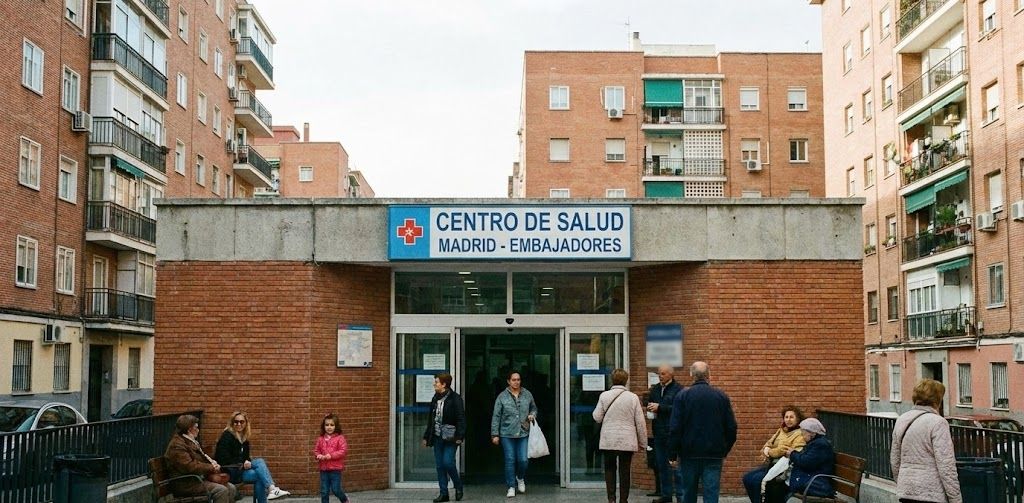
I went to the wrong facility and waited 6 hours. Here's what I should have done.
It was a Saturday afternoon in Madrid. I'd sliced my hand pretty badly while cooking, needed stitches clearly, and had no idea where to go. I walked into the closest hospital I could find – turns out it was a private one – and spent six hours in a waiting room before someone explained I should've gone to the public emergency room down the street. Or maybe to an urgent care center. Or possibly I should've called a number first?
Nobody tells you this stuff until you need it. So here's what actually happens when you need medical care in Spain, starting with the thing that confused me most.
The SNS Card Nightmare (And Why It's Worth It)
The tarjeta sanitaria – your SNS health card – is supposedly straightforward. The official government websites make it sound simple: register at your local health center, wait a few weeks, done.
That's not quite how it works.
First, you need your empadronamiento. That's your municipal registration proving you live in Spain. Can't get your health card without it. Some municipalities process this in 20 minutes. Others take three weeks. Barcelona's Gràcia district? They gave me an appointment four weeks out just to apply.
When you finally get to your cita previa (appointment) at the Centro de Salud, bring everything:
- Passport
- Empadronamiento certificate (original, they keep a copy)
- Residence certificate or visa
- Social Security number if you're working
- Proof of address (utility bill, rental contract)
They'll give you a temporary paper document right there. This is important – you can actually use this paper to access healthcare before your plastic card arrives. I didn't know this. I waited six weeks thinking I couldn't see a doctor. That was stupid.
The plastic card shows up eventually. Mine took 4 weeks in Madrid. A friend in rural Andalucía waited 11 weeks. Barcelona averages 6-7 weeks based on what people actually report, not what the websites claim.
Some municipalities are genuinely faster: San Sebastián processes health cards in 2-3 weeks. Málaga is pretty quick too. But Andalucía in general? Slow. Valencia? Hit or miss depending on which district.
Here's what nobody mentions: you can start the process before you officially move. If you're in Spain on a 90-day tourist stamp while finding an apartment, you can get empadronado as soon as you sign a rental contract. Then start the health card immediately. This is legal – I checked with three different Centros de Salud and they all confirmed it.
The other thing that's weirdly complicated: if you're self-employed (autónomo), you have to prove you're paying into the system. Bring your Social Security payment receipts. If you're not paying yet but just registered as autónomo, bring your registration document and they'll process it anyway, but some offices are stricter than others about this.
EU citizens have it easier – your European Health Insurance Card works immediately while you wait for your Spanish card. Non-EU? You're either paying into Social Security (through work or as autónomo) or you need private insurance for the interim. This gap is where people end up in expensive situations.
Cost of the entire process: €0 if you're paying into Social Security through work or autónomo payments. If you're not working but have legal residence, you can pay into the convenio especial – that's around €60/month for coverage. This is the part that confuses Americans especially, because the concept of "free" healthcare that you pay for through a monthly contribution that's not quite insurance but also not quite a tax doesn't really translate cleanly.
Which Door Do You Walk Through?
This should be simple. It's not.
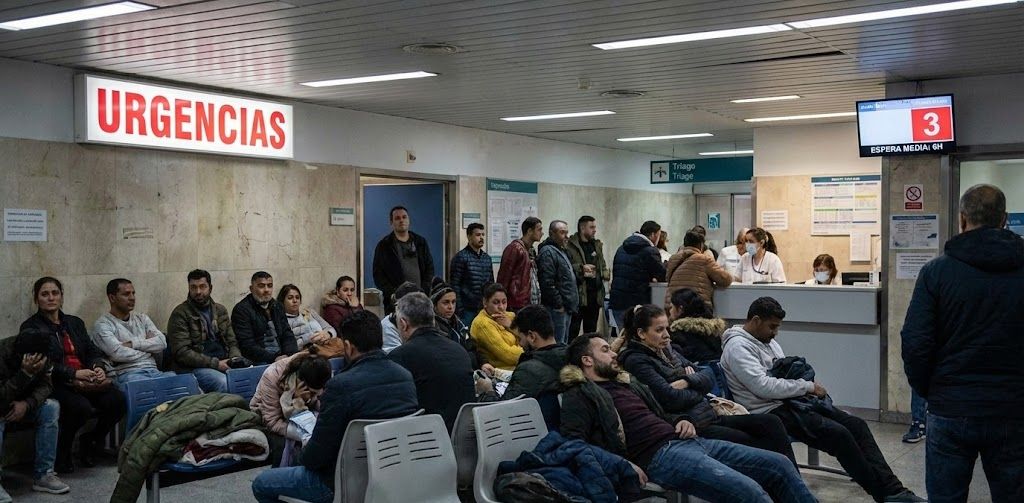
Urgencias = Emergency room. This is for actual emergencies. Stroke, bad car accident, can't breathe, serious injury. They will see you regardless of whether you have your tarjeta yet.
Centro de Salud = Your neighborhood health center. This is for everything else. Regular appointments, prescriptions, referrals to specialists, minor injuries that can wait a day or two.
Clínica privada = Private clinic. Usually faster, sometimes English-speaking staff, you pay or your insurance pays.
Here's where it gets messy: Spain's emergency rooms operate on a triage system that's more aggressive than in the US. If you show up with something non-urgent, you will wait. Hours. Six hours is not unusual. Eight happens. I've heard of twelve.
My hand injury? In the US, that would've been urgent care, done in 90 minutes. In Spain's private system where I accidentally went, 6-hour wait because they also operate on triage and Saturday afternoon means everyone's there. In the public Urgencias, it would've been maybe 3-4 hours based on what the staff told me later. At a Centro de Salud on Monday morning with an appointment? 45 minutes.
The system wants you to go to your Centro de Salud first. You're supposed to call them, get an appointment (sometimes same-day for urgent issues), and go there. They'll either handle it or send you to Urgencias if it's actually serious.
But here's the reality: if it's Saturday evening and you need stitches, the Centro de Salud is closed. Your options are Urgencias or a private clinic if you have insurance.
Most medium-to-large cities have a 24-hour Centro de Urgencias or a Punto de Atención Continuada (PAC). These are like urgent care centers. Less serious than a hospital emergency room, more equipped than a regular health center. This is actually where I should have gone with my hand. Wait time would've been 90 minutes instead of 6 hours.
Madrid has several. Barcelona has them in every district. Smaller cities might not. You need to know where yours is before you need it.
What It Actually Costs
Public SNS system with your tarjeta:
- Emergency room: €0
- Centro de Salud visit: €0
- Specialist (with referral): €0
- Prescriptions: You pay a percentage – 40% if you're working, 10% if you're a pensioner, with a monthly cap around €8 for pensioners
- My broken wrist treatment, including X-ray, cast, follow-ups: €0 at public hospital
Private clinic without insurance:
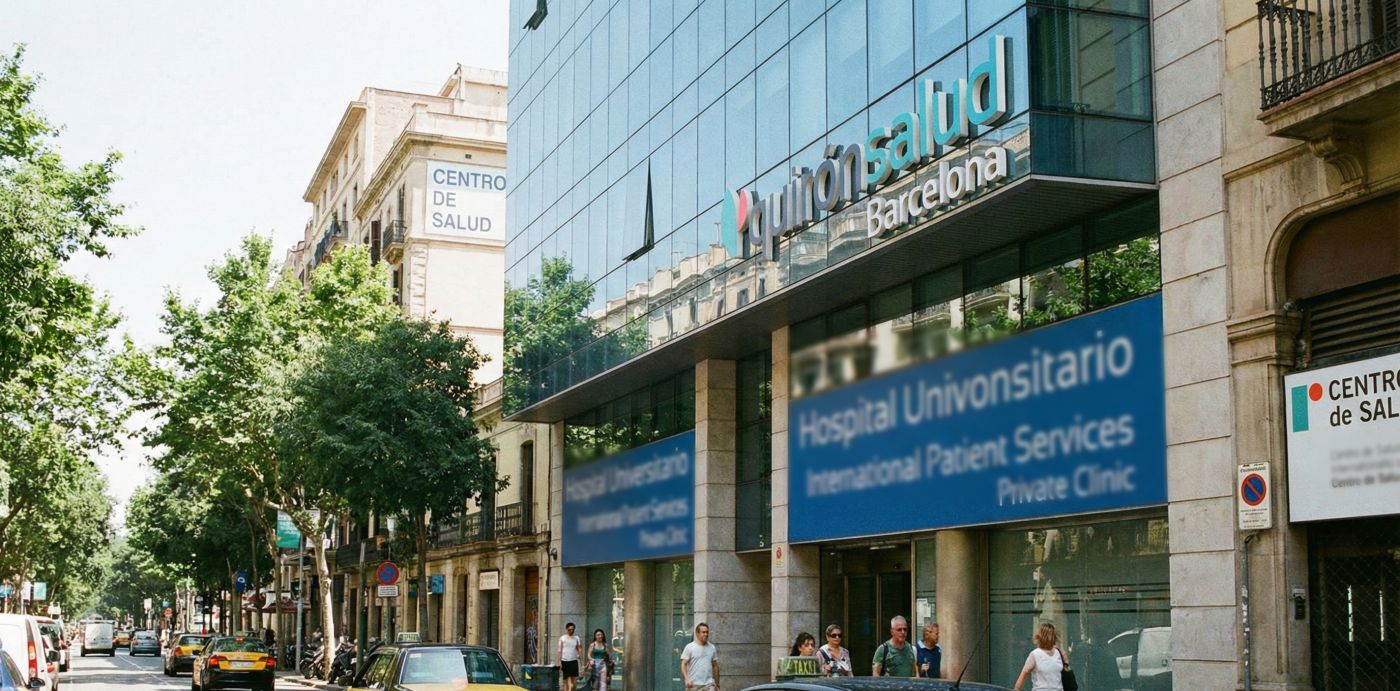
- My hand stitches (ended up here by mistake): €347 total
- Friend's broken wrist at a private clinic: €523 for initial treatment, plus €89 per follow-up visit (she had 3)
- Basic consultation: €80-150 depending on clinic
- X-ray: €60-120
- Blood work: €45-180 depending on tests
Private insurance:
- Basic plans: €40-80/month
- Comprehensive: €100-180/month
- Sanitas, Adeslas, Asisa are the big ones
- Many include dental and vision which SNS doesn't really cover
- Wait times are shorter – you can usually get specialist appointments within a week instead of 2-3 months
The hidden costs both systems have:
- Ambulance: Public ambulance is free with SNS, but if you call a private ambulance service it's €150-400
- Dental: SNS barely covers dental – only emergencies and for kids/pregnant women. Private dental is separate. Root canal + crown ran me €627 in Madrid at a mid-range dentist.
- Physiotherapy: SNS covers some but wait lists are long. Private physio is €35-60 per session.
- Mental health: SNS has psychologists and psychiatrists but getting appointments is difficult. Private therapy €60-120 per session.
- Prescriptions add up: My blood pressure medication is €11.20/month (paying 40% of cost). Doesn't sound like much until you're paying it every month forever.
You know what surprised me? Glasses. I needed new glasses. SNS doesn't cover this at all unless you're a kid or meet very specific criteria. Frames + lenses cost me €340 at an optical shop in Barcelona. Could've gone cheaper – there are discount opticians starting around €89 for basic glasses – but still, it's out of pocket.
The Language Problem Is Real
Google Translate fails at medical terms. I learned this when trying to explain I was allergic to sulfa drugs and Google Translate gave me a phrase that literally meant "I don't like sulfur foods." The nurse was very confused.
Most public healthcare operates in Spanish. Period. Some hospitals in Madrid and Barcelona have English-speaking staff – Hospital Universitario La Paz in Madrid has an international patient unit. Hospital Clínic in Barcelona has more English availability. But the majority of Centros de Salud? Spanish.
The private hospitals cater to expats and tourists so English is more common:
- Hospital Quirónsalud (multiple locations) – English-speaking staff
- Hospital HM Hospitales – English available
- Teknon in Barcelona – very international
- Vithas hospitals – some English
Here's what actually helped me: a medical phrase card I made after that first disaster. I put it in my phone:
- Soy alérgico a [drug name] = I'm allergic to [drug name]
- Tomo [medication name] = I take [medication name]
- Tengo seguro privado = I have private insurance
- ¿Cuánto tiempo tengo que esperar? = How long do I have to wait?
- Necesito un especialista = I need a specialist
- ¿Puede darme esto por escrito? = Can you give me this in writing?
The last one is crucial. When a doctor prescribes something or gives instructions, ask for it written down. Trying to remember medical instructions in a language you're still learning is a recipe for mistakes.
Some specific hospitals known for English-speaking services:
- Madrid: Hospital Universitario HM Montepríncipe, Quirónsalud Madrid
- Barcelona: Hospital Universitari Dexeus, Teknon Medical Center
- Valencia: Hospital Quirónsalud Valencia, Vithas Nisa 9 de Octubre
- Málaga: Hospital Quirónsalud Málaga, Vithas Xanit Internacional
But even at these, not every doctor speaks English fluently. It varies.
One more thing: bring a Spanish-speaking friend to important appointments if you can. When I had to see a specialist about my hand after those stitches (mild nerve damage, turned out to be nothing serious), I brought my Spanish coworker. She caught details I would've completely missed about follow-up care and warning signs to watch for. The doctor was fine with this, just ask first.
The public healthcare system in Spain is genuinely good once you understand how to use it. The private system is there if you want faster access or more English support. Mixing both – having the SNS card but also keeping basic private insurance – is what a lot of long-term expats end up doing.
Just figure out where your nearest PAC is before you slice your hand open making dinner.