2New Diatabs, Oralit, Probiotics. The Pharmacist Has Seen This Face Before
Indonesia spans thousands of islands with wildly different food safety situations. Bali isn't Jakarta. Jakarta isn't Yogyakarta. Here's what you need to know.
The Bali Belly Reality
Everyone talks about Bali Belly like it's inevitable. It's not.
What actually causes it:
- Tap water (in drinks, ice, washed vegetables)
- Food sitting out in tropical heat
- Your compromised immune system from travel
- Cross-contamination in kitchens
- Bacteria your system hasn't encountered
What doesn't cause it:
- Spicy food (sambal doesn't cause food poisoning)
- "The air" (not how this works)
- Curses (seriously, people blame weird things)
Bali Belly is usually bacterial contamination from water or food handling. It's preventable.
Water Situation by Island
Bali: Tap water is NOT drinkable. Brush teeth with bottled water. Ice is usually factory ice in tourist areas, but not always.
Jakarta: Tap water is not drinkable. Major city infrastructure but don't drink from tap.
Yogyakarta: Tap water not drinkable. Bottled water everywhere.
Lombok: Similar to Bali. Tourist infrastructure in Senggigi and Gili Islands. Don't drink tap water.
Gili Islands: Small islands, limited infrastructure. Bottled water only. Desalination isn't always reliable.
Sumatra: Large island, varies by city. Medan has some infrastructure. Rural areas, definitely bottled water.
Flores/Komodo area: Remote, limited infrastructure. Bottled water essential.
Nobody in Indonesia drinks tap water. Bottled water (air mineral) is cheap and everywhere.
Island-by-Island Food Safety
Bali:
- Seminyak/Canggu: Tourist infrastructure, restaurants adapted to foreigners, generally safe
- Ubud: Tourist town, organic food movement, safe options but also sketchy warungs
- Kuta/Legian: Party area, street food mixed quality, late-night food sketchy
- Sanur: Quieter, expat area, good food safety
- Remote Bali: Less infrastructure, be more careful
Jakarta:
- Big city, international food scene, food safety varies by area
- Malls and chains are safe
- Street food is hit or miss
- Menteng/Kemang (expat areas) are safer
- Traditional warungs require more judgment
Yogyakarta:
- Student city, cheap food everywhere
- Malioboro street food is popular but variable
- Tourist restaurants are safer
- Traditional gudeg is safe at busy spots
Gili Islands:
- Tourist infrastructure
- Limited refrigeration on small islands
- Seafood should be fresh (you're surrounded by ocean)
- Watch for water quality in drinks
Lombok:
- Less developed than Bali
- Tourist areas (Senggigi, Kuta) are safer
- Rural areas require caution
- Fresh seafood on coast is great
Warung vs. Restaurant Reality
Warung: Small local eatery. Can be amazing or terrible.
Good warungs:
- Packed with locals at meal times
- Food actively being cooked
- High turnover
- Simple menu (specialists are better than places trying everything)
- Clean setup (relative to Indonesian standards)
Sketchy warungs:
- Empty during lunch/dinner
- Food sitting out since morning
- Flies everywhere
- No visible cooking happening
- Suspicious smells
- Food stored at room temperature in heat
Tourist restaurants:
- More expensive
- Often use filtered water
- Western-style food safety practices
- Generally safer but less authentic
Street Food Guidelines
Indonesian street food can be incredible or disastrous.
Generally safe:
- Satay (grilled fresh, high heat)
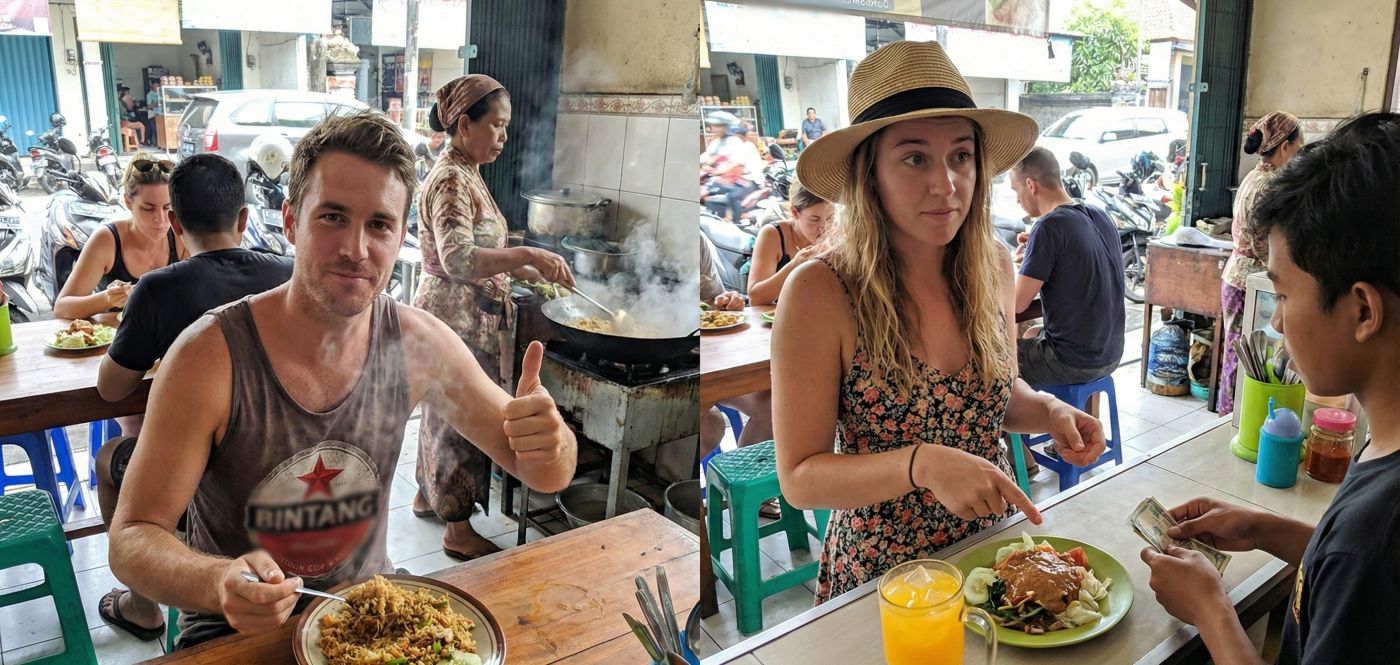
- Nasi goreng cooked to order (fried rice, high heat)
- Mie goreng cooked to order (fried noodles)
- Bakso (meatball soup, boiling broth)
- Anything fried in front of you
- Martabak (both savory and sweet versions, cooked fresh)
- Grilled corn (jagung bakar)
Higher risk:
- Gado-gado (raw vegetables with peanut sauce, washed in tap water)
- Fruit salad (rujak) - pre-cut fruit, washed in tap water
- Ice in drinks from street vendors
- Seafood from street carts far from coast
- Pre-cooked food sitting out for hours
The Rice and Curry Situation
Indonesian food is often rice with curries and sides. At warungs, this food sits out for hours.
Is it safe?
Depends on:
- How long it's been sitting
- Temperature (heat makes spoilage faster)
- Turnover (busy places refresh food)
- What it is (some foods sit better than others)
Safer options:
- Rendang (heavily spiced, preservative properties)
- Grilled items (made to order)
- Rice is usually fine (it's rice)
- Fried items
Riskier:
- Seafood curries sitting out
- Coconut milk based dishes in heat (spoil faster)
- Vegetable dishes without preservation
Nasi Campur Reality
Nasi campur (mixed rice) is rice with various sides. You point at what you want from pre-cooked dishes.
At lunch (11am-2pm), this food is relatively fresh. By 5pm, it's been sitting all day in heat.
Busy places that make food throughout the day? Safer.
Small warung that made one batch at 10am and it's still there at 4pm? Risky.
Sambal Won't Kill You
Sambal (chili paste) is served with everything. It's spicy but it won't give you food poisoning.
The chili and garlic and shrimp paste were probably made fresh (or relatively fresh). The spiciness itself isn't the issue.
If the sambal tastes fermented or spoiled, don't eat it. But most sambal is fine.
Seafood Considerations
On coast or islands: Fresh seafood is amazing. Grilled fish, prawns, squid - all great if busy spot and stored properly.
Inland (Yogyakarta, Bandung): Seafood traveled. Be more cautious. Fried fish is safer than sushi.
Sushi in Indonesia: Only at reputable places. Indonesian sushi standards are not Japanese standards.
Street cart seafood: Only if visibly fresh, on ice, and you see them cook it.
The Smoothie/Juice Question
Fresh juice (jus) is everywhere and delicious. Also risky.
Questions to ask yourself:
- Is the fruit washed in tap water? (Probably yes)
- Is the ice factory ice or tap water ice? (Hard to tell)
- Did they add water to blend? (Sometimes)
Safer options:
- Whole coconut opened fresh
- Packaged juice
- Smoothies at established cafes with filtered water
Riskier:
- Street vendor juice with ice
- Pre-cut fruit smoothies
- Anything clearly diluted with water
Bali Organic Restaurant Scene
Canggu and Ubud have tons of organic/healthy/vegan restaurants catering to yogis and digital nomads.
These places usually:
- Use filtered water
- Wash vegetables properly
- Have good food safety practices
- Charge 3-4x local prices
They're safe but expensive and not authentic Indonesian food.
Jakarta Specific
Big city, diverse food scene, everything from street warungs to high-end restaurants.
Safe areas:
- Malls (Grand Indonesia, Pacific Place, etc.) - food courts are regulated
- Kemang - expat area, restaurants used to foreigners
- Menteng - upscale area, good restaurants
- SCBD - business district, clean and safe
More variable:
- Glodok (Chinatown) - authentic but hit or miss
- Kota Tua - tourist area, food is fine but touristy
- Residential areas - local warungs vary widely
Jakarta has great food but it's a sprawling city. Research where you're eating.
Yogyakarta Specific
Student city, cheap food everywhere, very authentic but less international infrastructure.
Must-try that's generally safe:
- Gudeg (jackfruit stew) at busy spots
- Bakpia (sweet pastries) - packaged, safe
- Sate klatak (Yogya-style satay) - grilled, safe
- Angkringan (night food carts) - some items safer than others
Yogya is less touristy than Bali. Food is authentic but requires more judgment.
Gili Islands Reality
Three tiny islands with limited infrastructure. Everything runs on generators.
Food safety concerns:
- Limited refrigeration
- Small islands, waste management issues
- Fresh seafood is great, other food travels by boat
- Tourist restaurants use generators for fridges
- Power outages affect refrigeration
Gili Islands are beautiful but food safety is more challenging than Bali mainland.
Stick to fresh seafood, grilled items, busy restaurants.
What Time of Day Matters
Breakfast (6-9am): Everything is freshest. Safest time for street food.
Lunch (11am-2pm): Peak time, high turnover. Food is relatively fresh.
Afternoon (2-5pm): Dead period. Food has been sitting since lunch prep. Risky.
Dinner (6-9pm): Busy again. Many places make fresh food for dinner service.
Late night: Depends on location. Near nightlife, food is fresh for the party crowd. Empty street carts? That food is old.
Things That Look Sketchy But Are Fine
Fried tempeh/tofu sitting out: They're fried and relatively dry. Less likely to spoil quickly.
Peanut sauce (for satay): Made with roasted peanuts and spices. Usually fine even if not refrigerated.
Sambal in jars: Preserved with chilies and salt. Can sit out.
Crackers (krupuk): Dry, won't spoil. Safe.
Things That Actually Get You Sick
Ice from unknown sources: Number one culprit.
Raw vegetables washed in tap water: Very common cause.
Food sitting out for 6+ hours in 32°C heat: Spoilage happens fast.
Seafood inland without proper storage: Long supply chain, heat, risky.
Undercooked chicken: Indonesia's chicken standards are not Western standards.
Pharmacy Essentials
Indonesian pharmacies (apotek) are everywhere.
Get these:
- New Diatabs (Indonesian version of Imodium)
- Oralit (rehydration salts)
- Probiotics (Lacto-B is popular)
- Activated charcoal
- Antibiotics if needed (available over counter)
Indonesians get stomach issues too. Pharmacists know what works.
My Actual Experience
Lived in Bali for six months. Got Bali Belly twice.
First time: Fresh juice from a street vendor with tap water ice. Obvious mistake.
Second time: Gado-gado (raw veggie salad) at a warung. The raw vegetables were washed in tap water.
What never made me sick:
- Nasi goreng from street carts (hundreds of times)
- Satay from night markets
- Warungs with high turnover
- Bakso from busy spots
The pattern? Fresh-cooked hot food from busy places = safe. Raw items or food sitting out = risky.
The Adaptation Timeline
Week 1: Be conservative. Your stomach is vulnerable. Stick to cooked food, bottled water, reputable restaurants.
Weeks 2-4: Start trying street food. Choose busy spots. Skip raw vegetables and questionable ice.
Month 2: Your gut microbiome is adapting. Can handle more. Still avoid obvious risks.
Month 3+: Can eat most places locals eat. Still don't drink tap water (never adapt to that).
Tourist Trap vs. Local Spot
Tourist restaurants (Seminyak, Ubud cafes):
- Safe but expensive
- Western standards
- Filtered water
- Less authentic
Local warungs:
- Cheaper (60,000 IDR vs. 150,000 IDR)
- More authentic
- Variable safety
- Requires judgment
You can do both. Tourist spots when you're cautious, local spots when you're adapted.
Bottom Line
Indonesia's food safety varies dramatically by island, location, and establishment.
Safest: Tourist areas in Bali (Seminyak, Canggu, Sanur), Jakarta malls, established restaurants
Middle ground: Busy warungs, street food with high turnover, grilled items
Riskiest: Street vendors with old food, sketchy warungs, raw vegetables, questionable ice
Never safe: Tap water anywhere in Indonesia
Bali Belly is real but preventable:
- Don't drink tap water (including ice)
- Avoid raw vegetables unless you know they're washed properly
- Choose busy places with turnover
- Watch for food sitting out in heat
- Let your stomach adapt gradually
Indonesia has incredible food. Nasi goreng, satay, rendang, bakso - all amazing when done right.
Don't be paranoid, but don't be reckless. Middle path works.
And keep New Diatabs in your bag. You'll probably need it once.