
Nobody dreams of Jakarta.
No Instagram influencer captions their ring light setup with #JakartaLife. No yoga retreat centers promise transformation in Kemang. No spiritual awakening awaits in SCBD's glass towers. Jakarta doesn't care. It's too busy being an actual city with actual jobs for actual adults who've graduated from pretending Bali is a career strategy.
The Anti-Bali Brigade
"I needed to be in a real city," says Marcus from Berlin, like he's the first person to discover that beaches don't pay invoices.
He lives in Kemang, which Time Out just named one of the world's coolest neighborhoods, a designation that would mean something if Time Out hadn't also named 29 other neighborhoods the same thing. His apartment costs 15 million rupiah monthly - about $950 - which gets him a two-bedroom with AC that works and internet that actually supports video calls without everyone becoming pixelated ghosts.
He works from CoHive, pays $100 monthly for a desk, and has real meetings with real clients about real projects that generate real money. Not "building something big." Not "disrupting the ecosystem." Just work. The kind that deposits actual currency into actual bank accounts.
The Bali refugees are easy to spot. They show up over-tanned, over-tattooed, and overwhelmed that nobody cares about their spiritual journey. They last about three months before realizing Jakarta requires actual skills beyond "social media strategy" and "mindfulness coaching."
SCBD: The Sterile Success Zone
Sudirman Central Business District is where Indonesia keeps its money. Glass towers full of people in actual clothes (not "Bali casual") doing actual business (not "networking").
The digital nomads here aren't nomads. They're contractors for Singaporean firms, consultants for Japanese corporations, developers for American startups that actually have funding. They wear shoes. They have LinkedIn profiles that list real accomplishments. They can explain what they do without using the word "journey."
Sarah from Sydney works here. She's a legitimate consultant - the kind companies pay $500/hour, not $5 on Fiverr. She chose Jakarta because "it's close enough to Singapore to matter but cheap enough to save." Her Kuningan apartment costs $1,200 monthly. Her coworking space costs $200. She bills that in half a day.
"The best thing about Jakarta?" she says. "Nobody asks about your vibe."
Kemang: The Last Honest Neighborhood
Kemang tries to be cool without trying to be Canggu, which accidentally makes it actually cool.
The cafes have WiFi that works. The restaurants serve food without manifestation rituals. The bars don't have names like "Cosmic" or "Nirvana" or "Journey." They're just bars. You drink. You leave. Nobody exchanges Instagram handles.
The expat community here includes actual expats - people with employment contracts, work visas, and health insurance that isn't "hoping for the best." They work for Unilever, Pertamina, and banks with names longer than Indonesian words. They complain about traffic, not chakras.
"It's refreshingly transactional," says James from London, who runs a recruiting firm that actually places people in actual jobs. "Everyone knows why they're here. Money. Nobody pretends otherwise."
The Traffic Truth
"Jakarta traffic is insane," everyone says, like they've discovered gravity.
It's not insane. It's math. Thirty-three million people. Infrastructure for twenty million. Roads that flood when someone spills coffee. The equation doesn't balance, so you sit in metal boxes breathing exhaust, checking phones, pretending this is temporary.
The smart ones live walking distance from work. The rich ones have drivers. The delusional ones buy motorcycles and die. Everyone else downloads Gojek, accepts two-hour commutes as meditation, and slowly develops Stockholm syndrome with gridlock.
Tom from New York thought he'd beat the system. Lived in BSD City - a "planned community" forty-five minutes from Jakarta that's actually two hours from Jakarta. "Great infrastructure," the real estate agent said. "Growing tech hub," she promised. Tom now spends four hours daily in traffic, working from his phone, questioning every decision that led him here.
The Flood Season Reality Check
Nobody mentions the floods in their "Why I Moved to Jakarta" Medium posts.
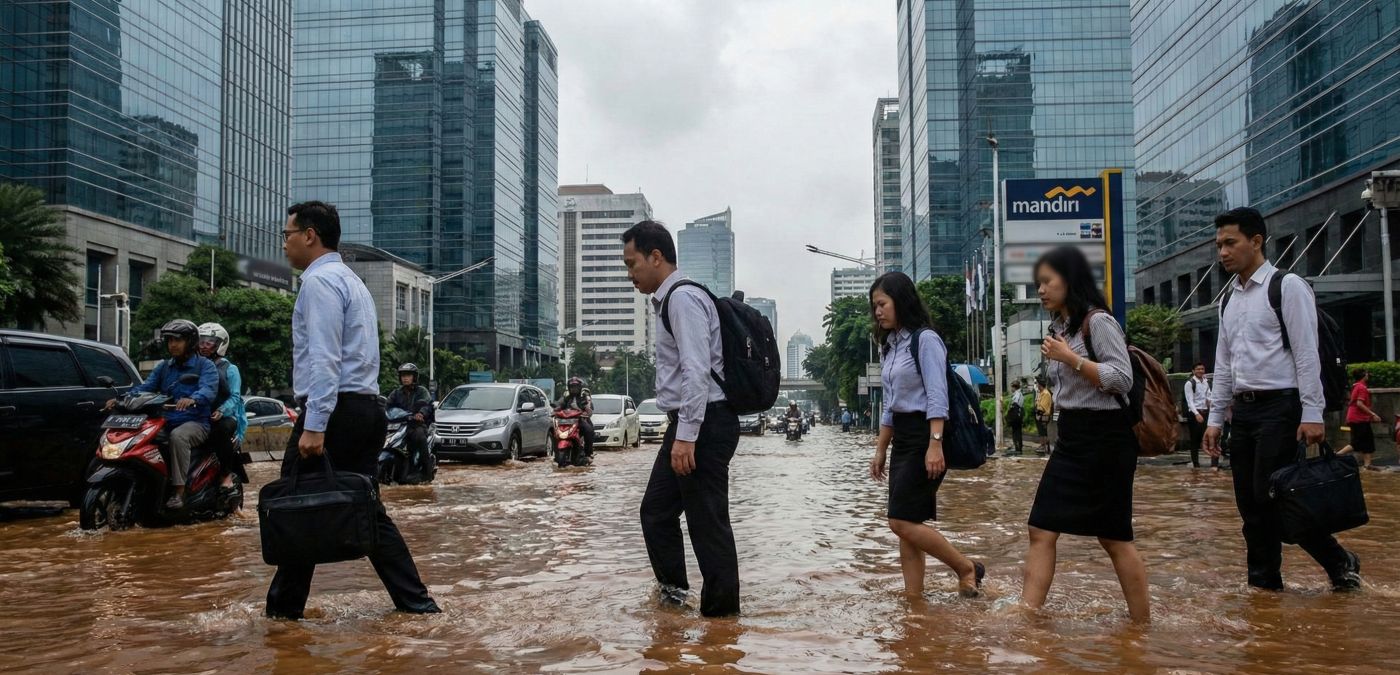
January to March, parts of the city become temporary lakes. Not metaphorical lakes. Actual water, actual boats, actual "should I have typhoid shots?" water. The government promises solutions. The solutions involve Dutch consultants and PowerPoints. The floods continue.
Your apartment might flood. Your coworking space will flood. The reason that meeting got cancelled? Floods. The reason your Gojek costs 400,000 rupiah? The driver's routing around floods.
But here's the thing: the city doesn't stop. Indonesians wade through knee-deep water in business attire, laptops held overhead, meetings at 9am sharp. The floods are inconvenient, not apocalyptic. Life continues. Invoices get sent. Money gets made.
The Language Advantage Nobody Admits
Everyone in the Jakarta expat bubble speaks English, so nobody learns Indonesian, which means you're competing with everyone.
Learn Indonesian - actual Indonesian, not just "terima kasih" and numbers - and suddenly you're valuable. Not "I live in Asia" valuable. Actually valuable. To actual companies. For actual money.
Mike from Melbourne learned Indonesian during lockdown. Went from $50/hour consulting to $200/hour because he can actually talk to the 70% of Indonesian business that doesn't operate in English. He's the only white guy in meetings who doesn't need a translator. His calendar's booked through 2026.
"Everyone wants to work in Southeast Asia," he says. "Nobody wants to learn Southeast Asian languages. The arbitrage is obvious."
The Helper Economy
Every expat has a helper. Nobody talks about it. It feels colonial. It is colonial. It's also practical.
For $200 monthly, someone cleans, cooks, and manages the chaos of Indonesian bureaucracy. They know which police officer to bribe for your visa extension. They know which doctor actually went to medical school. They know why your electricity bill tripled (you didn't bribe the meter reader).
Emma from Amsterdam resisted for six months. "I can clean my own apartment." Then she discovered Indonesian bureaucracy. Now Siti handles everything. Emma feels guilty. Emma also has her passport renewed in three days instead of three months. The guilt fades.
The Real Coworking Scene
Forget the Instagram-optimized spaces with names like "Tribe" and "Hive" and "Colony."
The real work happens in mall food courts. Plaza Indonesia, Grand Indonesia, Pacific Place - acres of air conditioning, stable WiFi, and anonymous productivity. Nobody networking. Nobody disrupting. Just hundreds of people with laptops, working.
The coffee's terrible. The food's overpriced. The ambiance is fluorescent purgatory. But the internet works, the AC works, and nobody talks about their journey. Paradise.
The Weekend Escape Infrastructure
Jakarta's superpower: you can leave.
Friday evening flights to Singapore, Bali, Bangkok - all under $200, all under two hours. The entire expat community evacuates weekly, posts beach photos, pretends they don't live in a concrete fishbowl, then returns Sunday night to do it again.
"Jakarta during the week, Bali on weekends" is the strategy everyone discovers independently and thinks is genius. It's not genius. It's coping. But it works.
The math: Jakarta apartment ($1,000) + weekend flights ($800) + Bali hotels ($400) = still cheaper than living in Singapore. Plus you get to say you're "location independent" while being completely dependent on Jakarta's proximity to better locations.
The Actual Opportunities
Here's what the "10 Reasons Jakarta is Perfect for Digital Nomads!" listicles won't tell you:
Jakarta is where Indonesian money lives. Not tourist dollars. Not crypto speculation. Actual Indonesian corporate money that needs actual services.
Every Indonesian company needs: English copywriting, Western market research, international SEO, competent project management, basic digitalization that actually works. They'll pay Western prices to anyone who can deliver without drama.
David from Dallas makes $15,000 monthly doing nothing but writing English versions of Indonesian corporate websites. Not creative work. Not fulfilling work. Just translating corporate speak from Indonesian corporate speak to American corporate speak. His biggest challenge is staying awake during briefs.
The Dating Paradox
Jakarta dating is refreshingly transactional, which makes it oddly honest.
The Indonesian women interested in foreigners are interested in foreigners for specific reasons: English practice, visa possibilities, lifestyle upgrades, or genuine attraction to people who wear deodorant. Everyone knows the score.
The expat women have their pick of the twelve single expat men who aren't married to Indonesian women or each other. The odds are good but the goods are odd: management consultants with personality disorders, startup founders with funding anxiety, and teachers pretending they're not teachers.
"It's like dating in a small town," says Lisa from London, "if that small town was populated entirely by people making questionable life choices."
Why Jakarta Works
Because it doesn't pretend to be anything other than what it is: a massive, chaotic, flooding, traffic-choked city where you can make actual money doing actual work.
No wellness retreats. No spiritual awakenings. No "community" beyond proximity. Just work, money, and the infrastructure to support both.
You won't find yourself here. You'll find clients. You won't transform here. You'll invoice. You won't build a tribe here. You'll build a savings account.
And honestly? After the performance of Bali, the desperation of Canggu, the delusion of "living your best life" on a tourist visa, Jakarta's honesty feels like liberation.
Welcome to Jakarta. Nobody dreams of it. Everyone can afford it. Some people even like it, though they'd never admit it on Instagram.
Written from Pacific Place food court, surrounded by the beautiful sound of keyboards generating revenue instead of content, in month eight of what was supposed to be a two-week stay.