Editorial Team Report
Expert analysis from Sarah Mitchell, Indonesia Immigration Specialist
Published: October 2025 | 15-minute read
Indonesia presents a paradox for digital nomads: It offers some of Southeast Asia's most desirable destinations—Bali, the Gili Islands, Yogyakarta—but packages them with the region's most expensive and complicated visa system.
Sarah Mitchell has been navigating this system for 9 years. Based in Bali since 2016 and married to an Indonesian, she runs an immigration consulting practice that's processed over 1,500 visa applications. She's blunt about what foreigners face.
"Indonesia has the worst visa system in Southeast Asia," Mitchell states from her Canggu office. "It's expensive. It's bureaucratic. It requires agents for everything. And it changes rules with minimal notice. But people still come because Bali is Bali."
The numbers illustrate the cost differential: Vietnam offers 180 days for $105-130. Thailand's various options run $400-900 annually. Indonesia? Expect $1,000-1,800 per year for the most common digital nomad visa strategy.
Understanding why—and how to navigate it—requires breaking down Indonesia's multi-layered visa options.
Visa on Arrival: The 60-Day Tourist Option
Most visitors' first encounter with Indonesian visas is the Visa on Arrival (VOA).
What you get:
- 30 days initially
- One extension possible (30 additional days)
- Maximum total: 60 days
- Cost: $35 on arrival
The process is simple:
- Land at designated Indonesian airports
- Purchase VOA at counter before immigration
- Pay $35 (cash or card accepted)
- Receive stamp
- Proceed through immigration
The Extension Reality
Around day 25, visitors wanting the additional 30 days must begin the extension process.
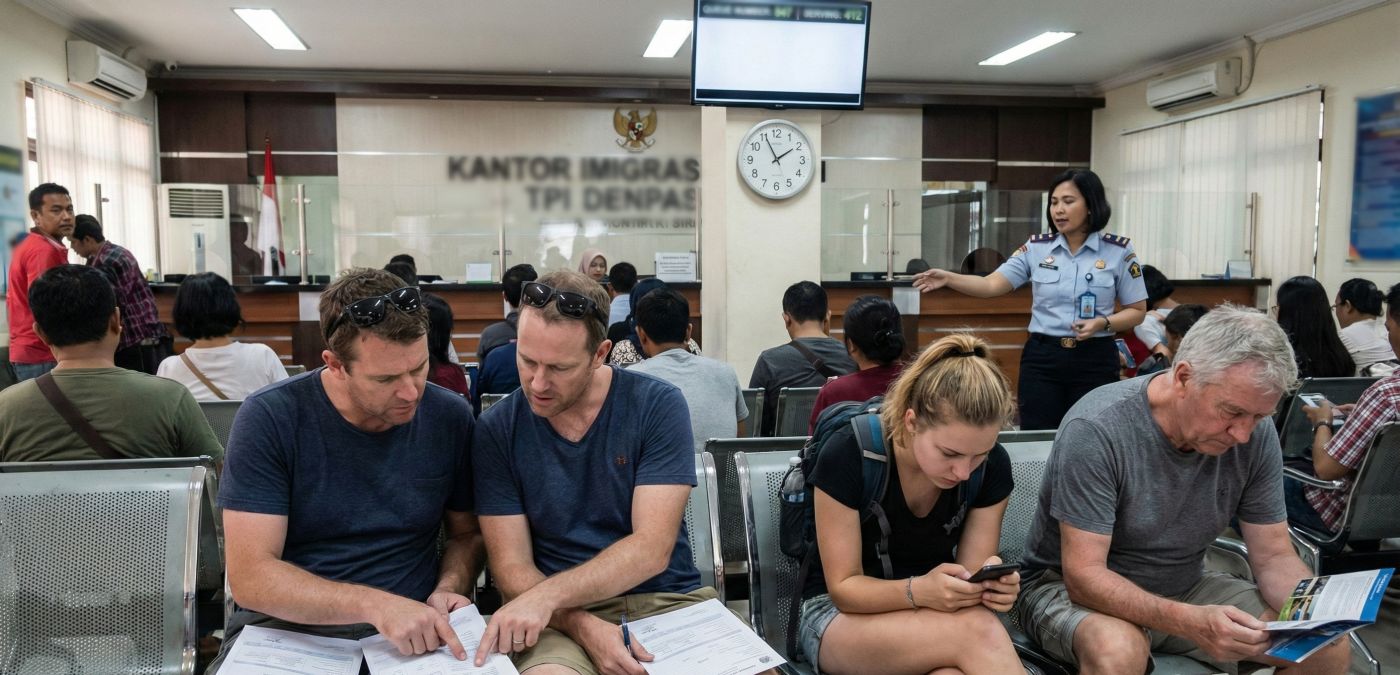
"Theoretically, you can extend yourself at the immigration office," Mitchell explains. "Practically, nobody does this. The offices are chaotic. Lines are 2-4 hours. Staff speaks minimal English. You'll make multiple trips and waste entire days."
DIY extension:
- Visit immigration office (often multiple times)
- Bring passport, photos, cash
- Navigate forms in Indonesian
- Pay official fee (approximately $50)
- Return days later for stamp
- Total time investment: 6-8 hours across multiple visits
Agent-assisted extension:
- Hand passport to agent
- Pay $70-80 (includes official fee + service fee)
- Receive passport back in 5-7 days with stamp
"The $20-30 premium is universally worth it," Mitchell advises. "Even Indonesian locals use agents. The system is designed to encourage this. Don't try to be a hero."
Total VOA cost for maximum 60 days: $115 ($35 + $80 extension)
Who VOA works for:
- Testing Bali for 1-2 months
- Vacation travelers
- Those undecided about longer stays
Who it doesn't work for:
- Anyone planning 3+ months
- Digital nomads seeking extended stays
- Those wanting stability
Critical limitation: After 60 days, you must leave Indonesia. No additional extensions. No conversions to other visa types.
The B211A Social/Cultural Visa: The Main Event
For stays of 3-6 months, the B211A visa dominates.
Officially termed the "Social/Cultural Visa," it's theoretically for visiting friends, studying culture, or attending events. In practice, it's the extended tourist visa that digital nomads rely on.
What you get:
- 60 days initially
- Four possible extensions (30 days each)
- Maximum total: 180 days (6 months)
- Must apply before traveling to Indonesia
The Sponsorship Requirement
Unlike Vietnam's e-visa or Thailand's visa-free entry, the B211A requires Indonesian sponsorship.
"You cannot apply yourself," Mitchell emphasizes. "You need an Indonesian sponsor—a person or company who vouches for you and acts as your local guarantor."
Sponsor options:
- Indonesian friend or family member
- Hotel (some offer sponsorship services)
- Visa agent (most common choice)
"Ninety-nine percent of digital nomads use visa agents," Mitchell estimates. "Your friend isn't going to legally guarantee your behavior. Hotels charge more than dedicated agents. Agents are professional and process thousands of these annually."
The Complete B211A Process
Step 1: Engage sponsor/agent (1-2 weeks before travel)
Your responsibilities:
- Send passport scan (data page)
- Send digital passport photo
- Provide travel dates
- Pay agent fee: $120-180
Agent's responsibilities:
- Submit application to Indonesian immigration
- Process paperwork on your behalf
- Obtain Telex Visa approval letter
- Email you approval (7-14 business days)
Step 2: Arrive in Indonesia
The Telex Visa approval letter is valid for 90 days from issuance.
"You must enter Indonesia within that 90-day window," Mitchell clarifies. "The letter is not the visa itself—it's approval to get the visa on arrival."
At airport:
- Present printed Telex Visa approval to VOA desk
- Pay VOA fee (usually included in agent's quote)
- Receive 60-day B211A stamp
- Enter Indonesia
Step 3: Extension cycle (4 times over next months)
Around day 50-55 of each visa period, initiate the next extension.
"Don't wait until day 58," Mitchell warns. "Processing takes time. Immigration offices can be slow. Start early."
Extension process:
- Contact agent (or visit immigration office yourself)
- Provide passport
- Pay extension fee: $70-80 via agent / $50 DIY
- Wait 5-7 business days
- Receive passport with new stamp
Extension timeline:
- Days 1-60: Initial B211A
- Days 61-90: Extension 1 (start processing day 50-55)
- Days 91-120: Extension 2 (start processing day 85-90)
- Days 121-150: Extension 3 (start processing day 115-120)
- Days 151-180: Extension 4 (start processing day 145-150)
Total B211A Costs
Initial sponsorship: $150 (typical agent fee)
Four extensions: $300 (4 × $75 average)
Grand total: $450 for 6 months
Mitchell emphasizes the regional comparison: "Vietnam gives you 6 months for $105-130. Thailand offers various options for $400-800 annually. Indonesia charges $450 for 6 months—$900 per year if you do two cycles. It's simply more expensive."
The Visa Run Strategy: What Everyone Actually Does
After 180 days on B211A, you must exit Indonesia. But you can immediately return on a new B211A.
"The visa run is built into everyone's Bali routine," Mitchell explains. "It's not officially encouraged, but it's how the system works in practice."
The Pattern
Month 1-6: First B211A cycle (180 days in Indonesia)
Week 24-25: Book and execute visa run
Week 25-26: Agent processes new B211A while you're abroad
Month 7-12: Second B211A cycle (another 180 days)
Annual reality: 360 days in Bali, two short international trips
Popular Visa Run Destinations
Singapore
- Distance: 2.5 hours from Bali
- Flight cost: $150-250 return
- Visa: Free for most nationalities (90 days)
- Minimum stay: 3-5 days recommended
- Pros: Close, efficient, English-speaking
- Cons: Expensive city ($100-200 per day)
Kuala Lumpur
- Distance: 2.5 hours from Bali
- Flight cost: $120-200 return
- Visa: Free for most nationalities (90 days)
- Minimum stay: 5-7 days recommended
- Pros: Cheaper than Singapore, good food scene
- Cons: Less interesting for repeat visits
Bangkok
- Distance: 3.5 hours from Bali
- Flight cost: $150-280 return
- Visa: Free for most nationalities (60 days)
- Minimum stay: 5-7 days recommended
- Pros: Vibrant city, lots to do, affordable
- Cons: Farther, more expensive flights
Perth, Australia
- Distance: 3 hours from Bali
- Flight cost: $200-350 return
- Visa: ETA online ($20)
- Minimum stay: 3-4 days okay
- Pros: Closest Western city, shopping opportunities
- Cons: Expensive (Australian prices)
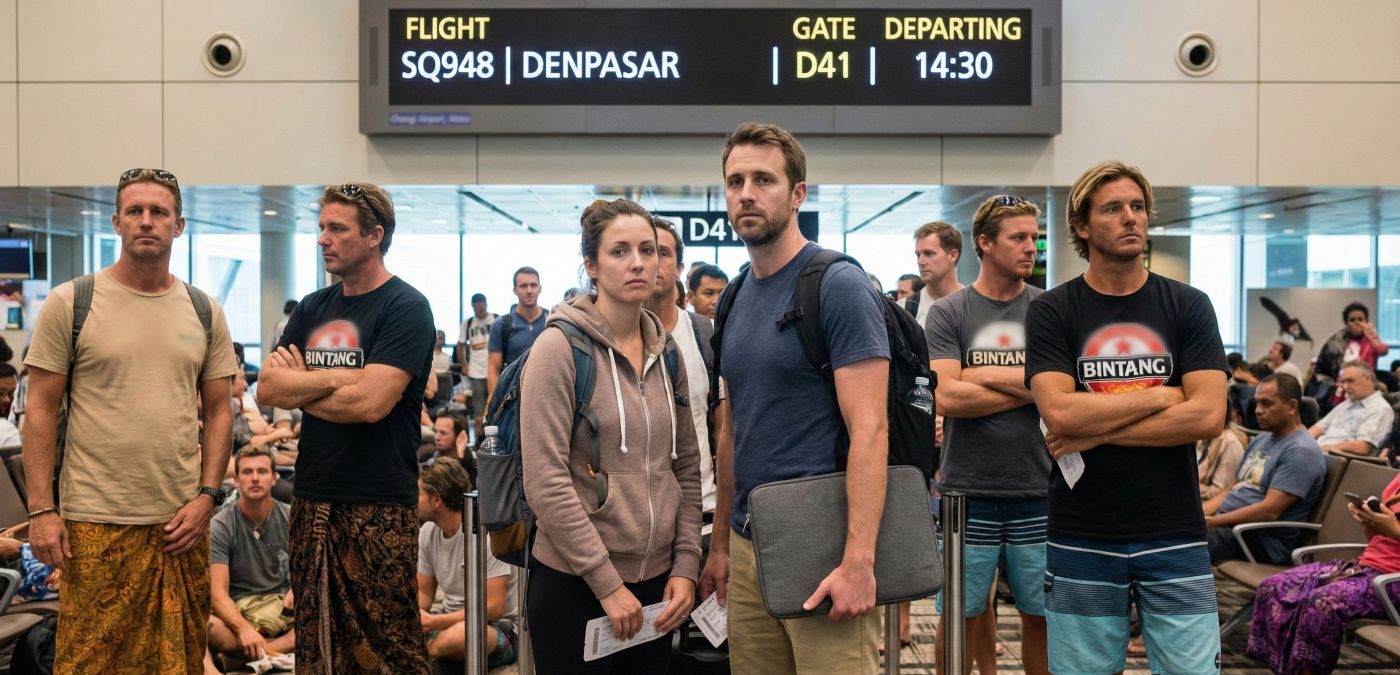
"The visa run isn't just bureaucracy—make it a vacation," Mitchell advises. "Rotate destinations. Don't go to Singapore every time. Mix it up. See different cities."
Annual Visa Run Costs
Two cycles per year:
- 2× B211A sponsorship + extensions: $900
- 2× International flights: $500-600
- 2× Accommodation abroad: $200-400
- Total: $1,600-1,900 annually
"This is why people say Bali is expensive," Mitchell notes. "It's not just the $450 for 6 months. It's $1,600-1,900 per year when you include visa runs. Plus the time—two weeks annually spent on visa logistics."
KITAS: The Residence Permit Few Can Access
KITAS (Limited Stay Permit) is Indonesia's actual residence permit, valid for 1-2 years and renewable indefinitely.
The problem: Most digital nomads don't qualify.
"KITAS requires sponsorship from specific sources," Mitchell explains. "For most digital nomads, these don't apply."
KITAS Sponsorship Requirements
Marriage KITAS (easiest for eligible)
- Married to Indonesian citizen
- Spouse sponsors you
- Valid 1-2 years, renewable
- Cost: $800-1,200 (including agent)
- Processing: 60-90 days
Work KITAS
- Employed by Indonesian company
- Company sponsors you
- Must have work permit (IMTA)
- Salary minimums apply
- Not for remote work for foreign companies
Investor KITAS
- Own Indonesian company (PT PMA)
- Minimum investment: $100,000+ (varies by sector)
- Must hire Indonesian employees
- Cost: $6,500-11,500 (company + KITAS setup)
- Only practical for those running actual Indonesian businesses
Retirement KITAS
- Age 55+
- Proof of $18,000 annual income or pension
- Must rent/own property ($15,000/year minimum value)
- Cost: $1,500-2,500
Student KITAS
- Enrolled in Indonesian university
- University sponsors
- Limited to study duration
"For the typical 28-year-old digital nomad working remotely for American clients, none of these apply," Mitchell summarizes. "You're not married to an Indonesian. You don't work for Indonesian companies. You're not investing $100K. You're not 55. You're not a student."
The Second Home Visa: For High-Net-Worth Individuals
Indonesia launched the Second Home Visa in 2023, targeting wealthy individuals and retirees.
Corrected requirements (as of 2025):
- Place minimum IDR 2 billion (~$130,000 USD) in Indonesian government bonds or designated Indonesian bank
- Age typically 55+ (though some sources indicate no age requirement if financial criteria met)
- Health insurance covering Indonesia
- Valid passport
What is NOT required (contrary to common misconception):
- ❌ Hiring Indonesian housekeeper (this was removed)
- ❌ Purchasing or leasing property (deposit requirement instead)
Benefits:
- 5 or 10 year visa (applicant chooses)
- Multiple entry
- Can bring family
- Can own vehicles
- Can open bank accounts
Cost: $2,500-3,500 (application + agent fees) plus the IDR 2 billion deposit
"The key is the 2 billion rupiah deposit in Indonesian bonds or approved banks," Mitchell clarifies. "This is about $130,000 USD that you must place in Indonesia. It's not spent—it's deposited—but it must be tied up in Indonesian financial instruments for the visa duration. The old requirements about housekeepers and property purchases were confusing and have been clarified or removed."
Who this is for:
- High-net-worth retirees
- Wealthy individuals willing to park $130,000+ in Indonesia
- Those seeking 5-10 year visa without annual renewals
"If you have $130,000 liquid that you can afford to deposit in Indonesian bonds, the 10-year visa works out to $350 per year plus the deposit requirement," Mitchell notes. "But that's a tiny percentage of Bali's digital nomad population."
The Work Permit Question: Gray Zones Everywhere
Indonesia technically requires work permits for anyone earning money within the country.
"Technically, if you're working remotely from Bali, you're supposed to have a work permit," Mitchell states. "Practically, enforcement is zero for digital nomads working for foreign companies."
What Indonesia Actually Cares About
Based on Mitchell's 9 years of observation:
High enforcement priority:
- People working for Indonesian companies without permits
- Illegal English teachers
- Foreigners running Indonesian businesses without proper licenses
- Tax evasion by businesses
Zero enforcement priority:
- Digital nomad in café working for US client
- Remote employee on Zoom calls with European company
- Freelancer serving international customers
- Anyone clearly not competing with local labor
"I've never seen a digital nomad deported or fined for remote work," Mitchell states. "The government knows tens of thousands of people work remotely in Bali. They tolerate it because those people spend money in the economy and aren't taking Indonesian jobs."
Work Permit Requirements (For Context)
If you theoretically wanted a work permit:
- Indonesian company must sponsor
- Must have specific job position
- Company must prove no Indonesian can do the job
- Processing: 30-45 days
- Cost: $1,000-2,000
- Annual renewal required
"No visa agent's shell company will sponsor a work permit," Mitchell explains. "It creates too much legal liability. Work permits are for legitimate employment only."
Banking: Still Extremely Difficult
Opening Indonesian bank accounts remains a major frustration for most visa holders.
On B211A (tourist visa): 95% rejection rate
- Traditional banks (BCA, Mandiri, BNI): Almost always refuse
- Neobanks (Jenius, Jago): Sometimes accept, success rate ~20-30%
- Requirements when they do accept: Passport, visa, proof of address, tax number (sometimes)
On KITAS: Much easier (80% success rate)
- BCA, Mandiri, BNI all accept KITAS holders
- Requirements: KITAS, proof of address, passport
What digital nomads actually use:
"Wise is the dominant solution," Mitchell reports. "They issue Indonesian debit cards, you can hold IDR balance, top up with international transfers. Combined with Revolut and cash, you don't really need an Indonesian bank account."
Bali remains heavily cash-based, especially outside tourist areas. "Beach clubs take cards. Warungs (local restaurants) want cash. ATMs are everywhere. The combination of Wise + cash works fine for 99% of situations."
Regional Differences: Bali vs. Jakarta vs. Elsewhere
Processing speed and agent availability varies significantly by location.
Bali
Advantages:
- Hundreds of agents (very established market)
- English-speaking support standard
- Fast processing (agents handle high volume efficiently)
- Immigration offices accustomed to foreigners
Disadvantages:
- Slightly higher fees (demand premium)
- Immigration offices crowded during peak season
"Bali is the easiest place to process Indonesian visas," Mitchell confirms. "The system is well-oiled because of volume."
Jakarta
Advantages:
- Slightly lower agent fees
- Immigration office in Kuningan relatively organized
- Sometimes faster processing (fewer tourists)
Disadvantages:
- Fewer nomad-focused agents
- Less English support
- Less pleasant city to wait in
Yogyakarta, Bandung, other cities
Advantages:
- Cheaper agent fees
- Very fast processing (low volume)
Disadvantages:
- Harder to find experienced agents
- Minimal English support
- May need to travel to major city for certain processes
"If you're living outside Bali, find a local agent in your city," Mitchell advises. "Don't try to coordinate Bali visa processes while living in Java."
Common Mistakes and How to Avoid Them
Mitchell identified the most frequent errors from her 1,500+ applications.
Mistake 1: DIY Extension Attempts
The fantasy: Save $25 by going to immigration yourself
The reality: Waste 8-12 hours across multiple visits, risk errors in Indonesian paperwork, potentially overstay if process takes longer than expected
"Just pay the agent," Mitchell insists. "The $75 includes their time, their relationship with immigration officers, their knowledge of the process. It's worth every rupiah."
Mistake 2: Overstaying
Consequences:
- Fines: $30 per day
- Under 60 days: Pay fine, possible blacklist notation
- Over 60 days: Deportation risk + 6 month to 5 year ban
"Set calendar reminders," Mitchell urges. "Track your dates religiously. Start extension process at day 50-55, not day 59. Give yourself buffer time."
Mistake 3: Assuming VOA is Sufficient
"I meet people all the time who show up thinking 'I'll just do VOA and figure it out,'" Mitchell says. "Then they discover they can't convert VOA to B211A inside Indonesia. They have to leave, apply for B211A from abroad, and come back. It wastes time and money."
Correct approach: If you plan to stay 3+ months, get B211A before arrival.
Mistake 4: Misunderstanding Second Home Visa
"People hear 'Second Home Visa' and think it's for them," Mitchell notes. "Then they learn it requires placing 2 billion rupiah—$130,000 USD—in Indonesian deposits. That's way beyond most digital nomads' means. It's designed for wealthy retirees, not typical remote workers."
Mistake 5: Using Unreliable Agents
Red flags:
- Promises of work permits for tourists (impossible)
- Charges 2x market rate ($300+ for B211A)
- No physical office
- Demands full payment before starting process
- Won't explain process clearly
Standard rates (don't overpay):
- B211A sponsorship: $120-180
- Extensions: $70-80 each
- KITAS processing: $1,000-1,500
"Ask other expats for recommendations," Mitchell advises. "Check Facebook groups like 'Bali Visa + Legals' or 'Digital Nomads Bali.' Word of mouth is the best way to find reliable agents."
The Cost Reality: Full Annual Breakdown
Let's examine true annual cost for the most common scenario: B211A cycles with visa runs.
Per 6-month cycle:
- B211A sponsorship: $150
- 4 extensions: $300 (4 × $75)
- Visa run flight: $200 (average)
- Visa run accommodation: $150 (5 days)
- Visa run meals/expenses: $100
- Cycle subtotal: $900
Annual (2 cycles): $1,800
Compared to alternatives:
- Vietnam: $105-640/year (depending on visa type)
- Thailand: $400-900/year (various options)
- Malaysia: $100-400/year (visa-free + extensions)
- Philippines: $100-400/year
"Indonesia is 3-6 times more expensive than neighboring countries," Mitchell confirms. "The question becomes: Is Bali worth the premium? For many people, yes. For budget travelers, maybe not."
Expert Assessment: Is Indonesia Worth It?
After extensive discussion about Indonesia's visa complications, we asked Mitchell for her honest assessment.
"Indonesia objectively has the worst visa system in Southeast Asia," she states. "It's expensive. It's bureaucratic. Rules change with minimal notice. You need agents for everything. The government profits from this complexity—they're not incentivized to simplify."
So why do people still come?
"Because Bali is Bali," Mitchell says simply. "The beaches, the surf, the yoga scene, the digital nomad community, the lifestyle—for many people, it justifies the $1,800 annual visa costs and biannual visa runs."
Who Indonesia Works For
Choose Indonesia/Bali if:
- Beach/surf lifestyle is priority
- You can afford $150-200/month in visa costs
- You don't mind visa runs every 6 months
- The community and culture justify the expense
- You're earning enough that $1,800/year doesn't hurt significantly
Who Should Look Elsewhere
Skip Indonesia if:
- Budget is tight (Vietnam/Thailand are much cheaper)
- You hate bureaucracy and complications
- You want long-term legal certainty
- You need straightforward processes
- The visa costs outweigh the lifestyle benefits
The Future Outlook
"Is Indonesia going to improve the visa system?" we asked Mitchell.
"I doubt it," she responds. "The current system benefits too many people—agents, immigration officials, bureaucrats. There's no political will to simplify. Digital nomads will keep coming anyway because of Bali's appeal. Why change a system that's already generating revenue?"
Recent changes:
- 2023: Second Home Visa launched with 2 billion rupiah deposit requirement (housekeeper/property requirements removed or clarified)
- 2024: VOA extension confirmed (still only once, 30 days)
- 2025: No major changes expected
"Indonesia isn't creating a dedicated digital nomad visa like Colombia or Spain," Mitchell predicts. "They're content with the current system. Accept it, budget for it, and enjoy Indonesia—or choose an easier country."
Key Takeaways:
⚠️ Most expensive visa system in Southeast Asia ($1,600-1,900/year)
✅ B211A: $450 for 6 months (180 days total, requires agent assistance)
⚠️ Visa runs required every 6 months (2 international trips annually)
✅ Work remotely in gray zone (tolerated, not enforced)
⚠️ Banking nearly impossible on tourist visas (use Wise/Revolut)
✅ KITAS available for married/employed/investors only
⚠️ Second Home Visa: Requires IDR 2 billion (~$130K) deposit, NOT housekeeper or property purchase
Resources:
- Indonesia Immigration: imigrasi.go.id
- Bali visa agents: Search "Bali visa agent" + check reviews
- Facebook groups: "Bali Visa + Legals," "Digital Nomads Bali"