Vietnam has incredible food. It also has a steep learning curve for foreign stomachs. Here's what actually works.
The Ice and Water Truth
Tap water: Don't drink it. Not in Hanoi, not in Ho Chi Minh City, not anywhere. Bottled water only.
Ice: This is where it gets complicated.
Factory ice (the clear tubes with holes in the middle) is made with purified water. It's generally safe.
Block ice that vendors chip away at? Made with tap water. Not safe.
In cities, most restaurants and cafes use factory ice now. Street vendors? Hit or miss.
The reality: You'll probably have ice in Vietnam. Most people do. If you get sick, it might be the ice, but it also might not be. Ice gets blamed for everything.
Street Food Learning Curve
Vietnamese street food is where the magic happens. It's also where foreigners get sick.
What's actually safe:
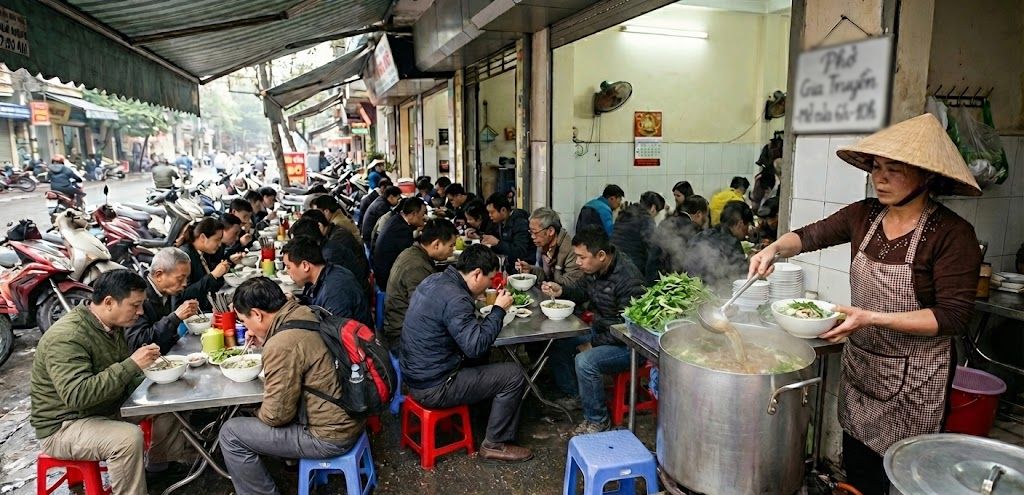
- Phở from a busy shop (boiling broth kills everything)
- Bánh mì (bread is toasted, ingredients are usually fresh)
- Grilled meats (high heat, cooked to order)
- Spring rolls made fresh (if busy turnover)
- Bún chả (grilled pork, fresh herbs, busy spots)
- Anything fried in front of you
What gets foreigners sick:
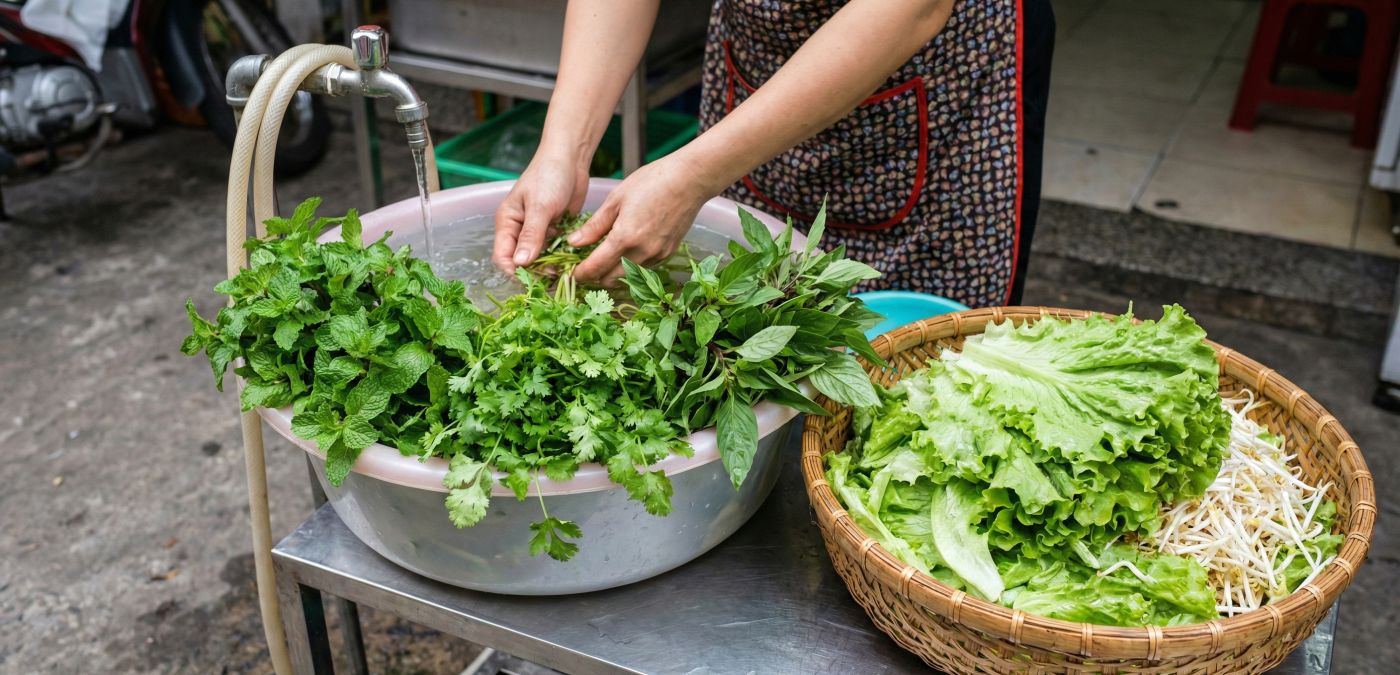
- Raw herbs washed in tap water
- Ice from unknown sources
- Seafood at inland locations
- Food sitting out for hours in heat
- Salads and raw vegetables
- Street vendor food during the slow afternoon period
North vs. South Reality
Hanoi (North):
- Cooler, more traditional
- Food sits out less (cooler weather)
- Tap water quality varies by district
- Street food culture is strong
- Locals eat street food constantly
Ho Chi Minh City (South):
- Hotter, more international
- Food spoilage faster in heat
- More tourist-adapted restaurants
- Street food mixed with modern cafes
- District 1 is tourist central (safer but pricier)
Da Nang (Central):
- Coastal city, fresh seafood
- Popular with expats and tourists
- Good infrastructure
- Generally safe food scene
Both north and south have great food. Heat in the south means pay more attention to food storage and turnover.
The Herb Situation
Vietnamese food uses mountains of fresh herbs. Mint, cilantro, Thai basil, lettuce, bean sprouts - all served raw.
These were washed in tap water.
Options:
- Eat them anyway (adapt over time)
- Skip the raw herbs (food is less good)
- Eat only at established places where herbs look fresh
- Order phở without herbs and add your own from home
Locals eat raw herbs constantly without issue. Their systems are adapted. Yours isn't yet.
Phở Safety Guide
Phở (soup) is one of the safest Vietnamese foods IF you know what to look for.
Safe phở spots:
- Busy during breakfast hours (6-9am)
- Broth is actively boiling
- High customer turnover
- Clean setup (relatively)
- Locals are eating there
Sketchy phở:
- Empty at breakfast time
- Broth isn't steaming hot
- Meat looks old or discolored
- Strong smell of spoiled food
- Nobody else eating there
The boiling broth kills bacteria. Fresh herbs are washed in tap water but if you're adding them to boiling soup, heat helps.
Bánh Mì Reality
Vietnamese sandwiches (bánh mì) are generally safe because:
- Bread is toasted
- Meat is usually cooked and hot
- High turnover at popular spots
- Fast to make, not sitting out long
Watch for:
- Raw vegetables (cucumber, cilantro, pickled carrots usually fine but washed in tap water)
- Mayonnaise in heat (can spoil)
- Pâté quality (should be fresh)
Busy bánh mì carts are usually fine. The bánh mì lady with the massive line? She's making hundreds daily. The food is fresh.
Market Food Reality
Vietnamese markets are intense. Hot, crowded, food everywhere, not always refrigerated.
Morning markets (4-8am): Everything is freshest. This is when locals shop. Safest time.
Midday markets: Hot, food has been sitting, flies everywhere. More selective.
Night markets: Tourist-friendly, fresh cooking, fun. Generally safe for tourists.
What to eat at markets:
- Food cooked to order
- Popular stalls with lines
- Obviously fresh items
- Packaged goods
What to avoid:
- Pre-cut fruit sitting out
- Meat without refrigeration in heat
- Seafood not on ice
- Food covered in flies
- Anything that smells off
Regional Food Safety
Hanoi: Capital, good infrastructure, food culture is traditional. Street food is life. Generally safe if you follow rules.
Ho Chi Minh City: Biggest city, more modern, mixed international and local. District 1 is tourist safe. Districts 3, 5, 7 have great local food.
Hoi An: Tourist town, restaurants adapted to foreigners. Very safe. Almost too safe (less authentic).
Nha Trang: Beach town, fresh seafood, tourist infrastructure. Safe in tourist areas.
Dalat: Mountain town, cooler weather, unique produce. Generally safe.
Mekong Delta: Rural, hot, simpler food. Be more cautious. Fresh river fish is great but watch storage.
Seafood Rules
Coastal cities (Da Nang, Nha Trang, Vung Tau):
- Fresh seafood daily
- Should smell like ocean
- Look for busy restaurants
- Locals know the best spots
Inland cities (Hanoi):
- Seafood traveled far
- More risky if not properly stored
- Stick to trusted restaurants
- Freshwater fish is local and safer
Street vendor seafood:
- Only if you see it's on ice
- High turnover matters
- Grilled is safer than raw
- Avoid oysters from vendors
Coffee Culture
Vietnamese coffee is everywhere and completely safe.
Cà phê sữa đá (iced coffee with condensed milk) is made with:
- Brewed coffee (boiling water, safe)
- Condensed milk (shelf-stable, safe)
- Ice (maybe factory ice, maybe not)
The coffee itself won't make you sick. The ice might. But probably won't.
Vietnam's coffee culture is amazing. Don't skip it out of paranoia.
Egg Coffee in Hanoi
Cà phê trứng (egg coffee) is made with raw egg yolk.
It's whisked vigorously, mixed with condensed milk and coffee. The egg is raw.
Is it safe? Locals drink it constantly. Eggs in Vietnam aren't refrigerated (like most of Asia/Europe). Salmonella risk exists but is low.
Most tourists try it without issues. Your call.
The Digestive Timeline
Days 1-3: Your stomach is vulnerable. Jetlagged, dehydrated, new bacteria. Eat conservatively.
Week 1: Start trying street food. Begin with obviously safe options (phở, bánh mì, grilled meats).
Week 2-3: Your gut is adapting. Can handle more variety. Still avoid the riskiest options (raw herbs, street vendor ice).
Month 2+: Your system has adapted significantly. Can eat most places locals eat. Still use common sense.
What Actually Made Me Sick
First time: Salad at a Western restaurant in Hanoi. The lettuce. Always the lettuce.
Second time: Seafood at a random street cart in Hanoi. Hanoi is not near the ocean. What was I thinking.
What never made me sick: Phở from busy spots, bánh mì from street vendors, bún chả, grilled meats, coffee with ice.
The street food everyone fears? Usually fine if you're smart about it.
The "safe" Western restaurant salad? That's what got me.
Brushing Teeth Reality
Use bottled water to brush teeth. Just do it.
Tiny amounts of tap water won't kill you, but why risk it when bottled water is 10,000 VND ($.40)?
When You Get Sick
You probably will at some point. It's not if, it's when.
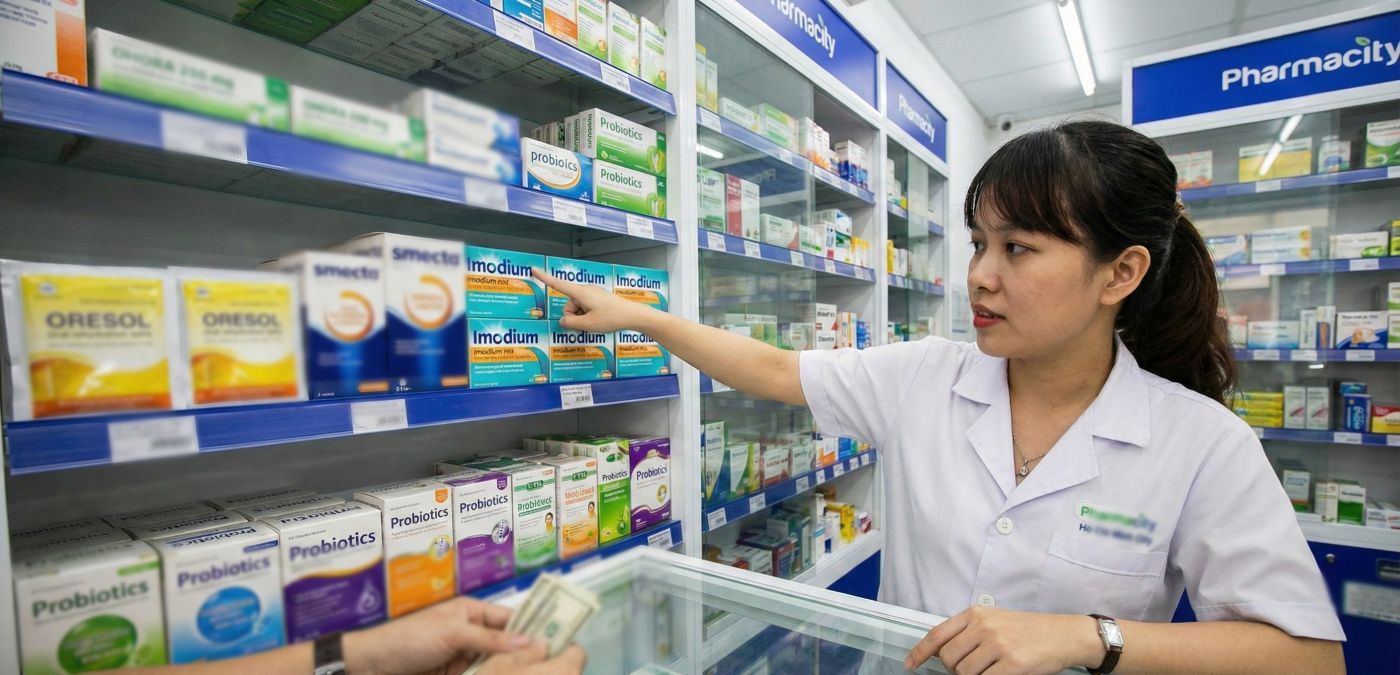
Pharmacies everywhere:
- Smecta (French anti-diarrheal, very popular)
- Immodium
- Oral rehydration salts
- Probiotics
- Antibiotics (over the counter if needed)
Vietnamese pharmacists know what to recommend. Just point to your stomach and they'll help.
Most stomach issues resolve in 24-48 hours. Stay hydrated. Rest. Don't panic.
Food Delivery Apps
Grab, ShopeeFood, Gojek - all popular.
Delivery food safety:
- Stick to popular restaurants with reviews
- Busy restaurants have turnover
- Food travels in heat (consider this)
- Packaged properly matters
- Check reviews from other foreigners
Delivery is generally safe but quality varies.
Restaurant Red Flags
Avoid places with:
- No customers during meal times
- Flies all over food
- Strong smell of spoiled food
- Visible dirt and grime
- Raw and cooked food touching
- No refrigeration in obvious heat
- Staff handling money and food without washing
Good signs:
- Packed with locals
- Food being cooked to order
- Visible cleanliness (relative to Vietnam standards)
- High turnover
- Fresh ingredients
- Staff using tongs/gloves
Things Foreigners Worry About That Don't Matter
- Plastic stools (aesthetic, not safety related)
- Squat toilets (actually more hygienic than sit-down)
- Food cooked on the sidewalk (if it's hot and fresh, it's safe)
- MSG (not harmful despite myths)
Things Foreigners Should Actually Worry About
- Tap water in any form
- Raw vegetables washed in tap water
- Ice from unknown sources
- Food sitting out in 35°C heat for hours
- Seafood far from coast
- Your own compromised system from travel
Specific Dishes Breakdown
Phở: Safe. Boiling broth.
Bún chả: Safe. Grilled meat, fresh herbs (herbs are the only risk).
Bánh mì: Safe at busy spots.
Cao lầu (Hoi An specialty): Safe at restaurants.
Bánh xèo (crispy pancake): Safe. Fried, hot.
Gỏi cuốn (fresh spring rolls): Raw herbs and vegetables. Higher risk.
Nem rán/chả giò (fried spring rolls): Safe. Fried hot.
Cơm tấm (broken rice): Safe. Grilled meat, rice is cooked.
Chè (sweet soup dessert): Ice and ingredients vary. Use judgment.
My Honest Assessment
Vietnam's food is incredible and worth the risk of occasional stomach issues.
You'll probably get sick once. Maybe twice. It's part of adapting.
Most people's Vietnam food experiences are positive. The street food is legendary for a reason.
Don't be so paranoid you miss out. But also don't be reckless.
The Local Adaptation Reality
Vietnamese people get sick too. Not as often as foreigners, but it happens.
They're adapted to local bacteria. You're not. Yet.
After a few months, your system adapts. You can eat almost anywhere locals eat.
First few weeks? Be smart. Choose busy spots. Watch for red flags.
Bottom Line
Vietnam isn't dangerous for food. It requires understanding that:
- Water infrastructure is different (don't drink tap water)
- Heat affects food safety (choose busy spots with turnover)
- Your stomach needs time to adapt (start conservative)
- Street food from popular spots is usually safe
- Raw vegetables are where most people get sick
- Ice probably won't kill you but might not help
The phở from the packed shop at 7am? Safe and delicious.
The salad at the expensive expat restaurant? That's what got me.
Vietnam's food is too good to miss out on. Learn the system, use common sense, and enjoy it.
And keep Smecta in your bag. You'll probably need it once.