You don't move to Saigon. You move to one of three completely different cities that happen to occupy the same space.
The Thao Dien Bubble
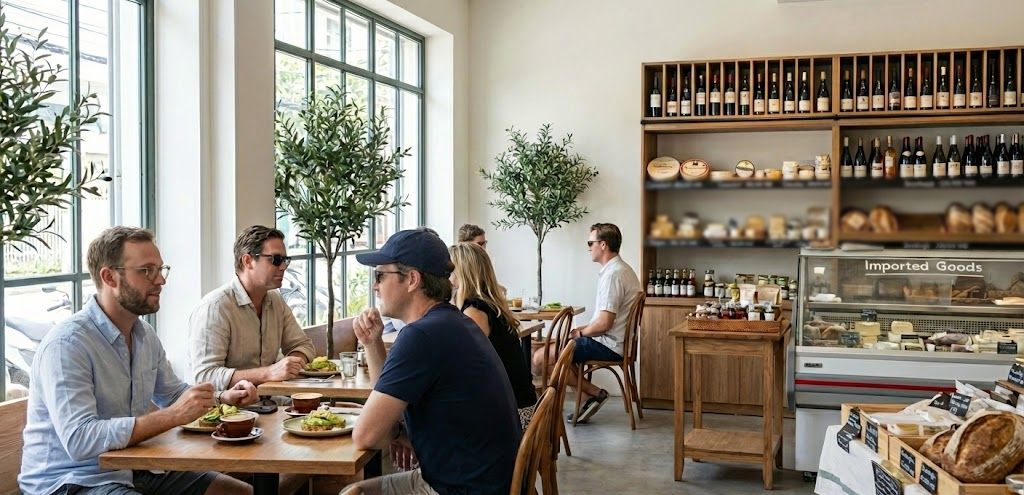
Maria from Barcelona lives in Thao Dien and hasn't eaten Vietnamese food in six months. Her apartment costs $1,200, her gym is $80 monthly, and she gets her groceries from Annam Gourmet where imported cheese costs more than her cleaner makes in a week. She works remotely for a European startup, goes to Wine Wednesdays at The Deck, and complains about how "Saigon isn't what it used to be" despite arriving eight months ago.
Her Saigon is craft coffee shops where everyone has a MacBook, Sunday brunches that cost what locals make in three days, and Facebook groups where people ask which international school is best for little Oliver's emotional development. The biggest crisis this week was MAD House running out of sourdough.
She genuinely doesn't understand why people say Vietnam is cheap.
The Bui Vien Chaos
Tom from Manchester lives in a $300 studio near Bui Vien and thinks he's discovered the real Vietnam. His days blur into nights at corner bars where Saigon beer costs 15,000 dong and everyone's either starting their trip or ending it. He teaches English online when the wifi works, which is roughly half the time, and supplements his income writing "Why Saigon DESTROYS Bangkok" articles that get seventeen views.
His friendship circle refreshes every three weeks as people move on to Hoi An or give up and go home. The longest relationship he's had here lasted six weeks and ended when she got dengue and decided Southeast Asia wasn't worth it. He tells people he loves the authentic chaos while secretly googling teaching jobs in Korea at 3am.
He's been saying "just another month" for fourteen months now.
The District 4 Reality
Linh returned from studying in Australia three years ago and works at a fintech startup in District 1. She lives in District 4 because it's the only place she can afford her own apartment on a local salary that's good by Vietnamese standards but laughable to the Thao Dien crowd. Her building floods every October, the construction next door starts at 6am, and her foreign friends always act surprised when they realize she speaks perfect English.
Her Saigon is knowing which street food vendor won't give you food poisoning, navigating office politics where speaking English too well makes you a threat, and watching her neighborhood get gentrified by people who call it "authentic" while pricing out everyone who made it that way.
She's tired of being the cultural translator for expats who've lived here three years and still can't pronounce "pho" correctly.
The Coworking Contradiction
The coworking spaces tell you everything. Dreamplex charges $150 monthly and everyone's building "the Uber of something." The presentations are in English about "capturing the Vietnamese market" by people who've never sold anything to actual Vietnamese people. The free beer Friday attracts the same forty people who all know each other's elevator pitches by heart.
Meanwhile, Vietnamese developers are building actual businesses from coffee shops where the wifi's better than Dreamplex and the coffee's 20,000 dong. They don't need networking events because they're actually working.
The foreign founder meetups are 90% people explaining why their visa run business is "technically legal" and 10% people with real businesses who stopped coming months ago.
The Language Divide
"I'm learning Vietnamese" is what everyone says for exactly three weeks before giving up. The exceptions are the guys who learned it for a girlfriend and immediately forget it when they break up, and the rare souls who actually commit and suddenly realize they've been getting ripped off for two years.
Jenny spent $500 on Vietnamese classes and can successfully order coffee but still points at menu pictures. Marcus lived here four years and knows eight words, six of which are beer-related. Sarah speaks fluently and discovered her landlord's been overcharging her by 40% and all her "local friends" have been laughing about it in Vietnamese the whole time.
The real tell is how people pronounce districts. "Quan Mot" or "District One"? That's your first filter. "Sài Gòn" or "Ho Chi Minh"? That's your second. The locals just call it home and wonder why foreigners make everything so complicated.
The Money Reality
The "Saigon is so cheap" crowd and the "Saigon is expensive" crowd are both right because they're living in different economies.
Local economy: Lunch is 35,000 dong, beer is 18,000, a decent apartment is $400, and you can live well on $1,000 monthly if you don't need imported anything or Western healthcare.
Expat economy: Lunch is $15 at a "reasonable" place, craft beer is $5, a "decent" apartment in D2 is $1,500, and you need $3,000 monthly minimum unless you want to live like Tom in his Bui Vien struggle studio.
Digital nomad economy: Everything's a tax write-off, prices don't matter because it's cheaper than San Francisco, and you Instagram your $8 smoothie bowl while complaining about a $0.50 bike parking fee.
The overlap zone - places that serve both locals and foreigners - is shrinking. You're either in the Vietnamese price universe or the expat one. The middle ground got gentrified out of existence sometime in 2019.
The Visa Run Veterans
There's a specific deadness in the eyes of someone explaining their visa situation for the hundredth time. The three-month tourist visa warriors who've been to Phnom Penh so often they have favorite restaurants. The business visa holders whose "businesses" are elaborate fictions maintained by agents for $50 monthly. The English teachers whose schools keep promising work permits "next month" for three years running.
Alex just got back from visa run number sixteen. He knows the exact minute the Cambodia border opens, which officer accepts cigarettes as a "tip," and how to sleep on the bus without getting your phone stolen. He's spent more on visa runs than an actual residency would cost, but at this point it's about the principle.
The new e-visa system was supposed to fix everything. Instead it just created a new category of person stuck in visa purgatory, refreshing government websites at midnight and maintaining three different backup plans.
The Departures Nobody Mentions
Every month someone leaves quietly. Not the dramatic "I'm done with Asia" exits, but the quiet admissions that it isn't working. The Instagram stays up showing the rooftop pools and street food tours. The LinkedIn keeps the Ho Chi Minh location. But they're back in Cleveland working remote, pretending they're still nomading.
Sophie lasted eighteen months. Built a whole identity around being a "Saigon expat," had the motorbike, the Vietnamese boyfriend, the apartment with the five-floor walkup that she called "charming." Then one day she just... left. Changed her ticket, packed a suitcase, abandoned everything else. Still posts throwback photos hashtagged #SaigonForever.
The turnover is so constant that friend groups have a three-month half-life. The people who stay longer than two years develop a protective callousness about goodbyes. "See you later" replaces "goodbye" because everyone might come back but probably won't.
The Ones Who Can't Leave
Then there are the lifers who didn't plan to be. They came for a year, then another, then stopped counting. They can't explain to people back home what they do here. They can't imagine doing it anywhere else.
Kevin's been here seven years, teaches business English to executives, has a Vietnamese wife he met on Tinder, and owns an apartment he can't legally own. His life would make no sense in Kansas. His salary here makes him middle class. His salary there wouldn't cover rent.
He's created a life that only exists in this specific context. Take him out of Saigon and the whole thing collapses. So he stays, complains about the traffic and the heat and the construction, and secretly knows he's never leaving.
The Truth About Community
The "amazing expat community" everyone mentions is actually seventeen different communities that occasionally overlap at overpriced taco nights. The teachers hang with teachers. The startup people hang with startup people. The NGO workers hang with NGO workers. The English teachers look down on the backpacker teachers who look down on the online teachers who look down on everyone.
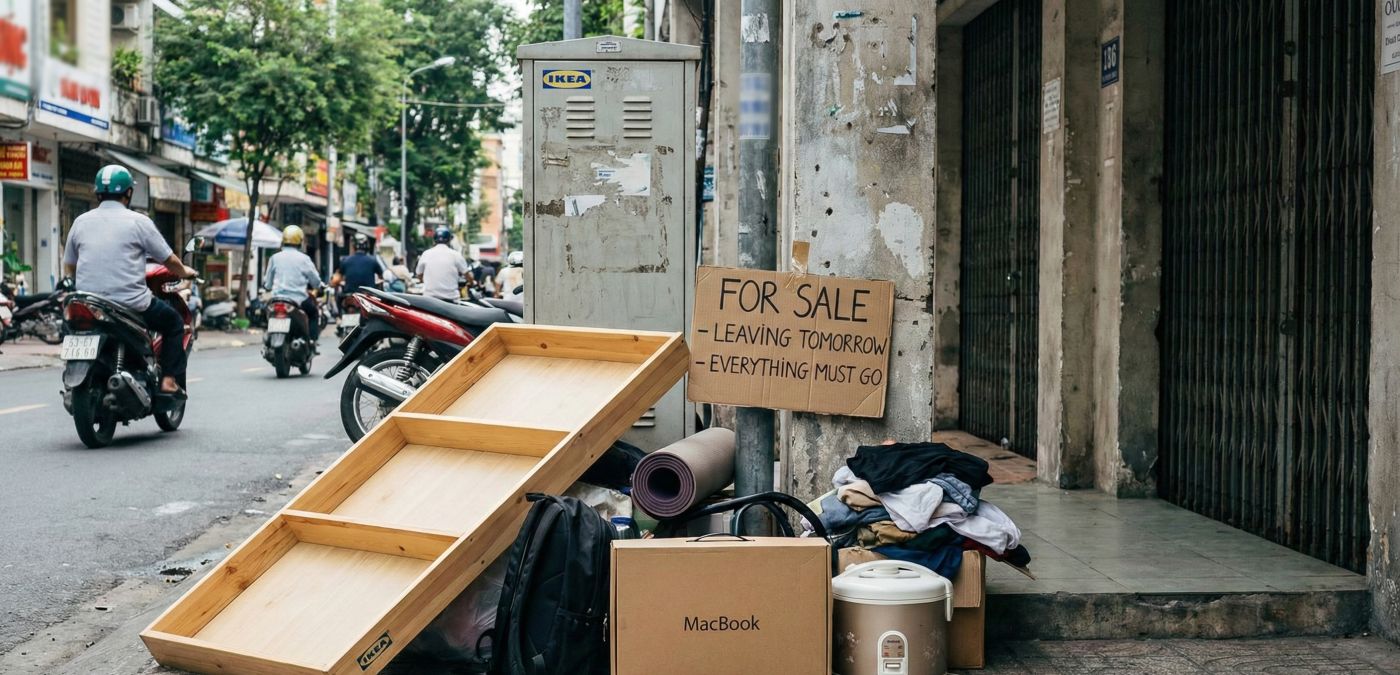
The Facebook groups are 40% visa questions, 30% apartment hunting, 20% people selling furniture because they're leaving tomorrow, and 10% actual community building that twelve people show up for.
Real connections happen accidentally. You meet someone at a coffee shop power outage, bond over the shared suffering, and suddenly you have an actual friend. But mostly it's surface-level socializing lubricated by cheap beer and the shared understanding that everyone's temporary even when they're not.
What Saigon Actually Is
Saigon isn't a melting pot. It's a city where different groups occupy the same physical space while living in parallel universes. The Vietnamese city continues underneath the expat layer, indifferent to the foreigners' dramas about finding good avocados or reliable wifi.
It's a place where you can reinvent yourself because nobody knows who you were before, but also where you might discover you're exactly the same person just sweating more.
It's simultaneously the best decision and worst decision people make, often in the same day, sometimes in the same hour.
The motorbikes keep flowing regardless. The construction never stops. The city doesn't care about your journey of self-discovery or your startup or your travel blog. It just continues being what it's always been - a city of nine million people trying to make money and live their lives, plus a few thousand foreigners convinced they're the main characters.
Welcome to Saigon. You'll either leave in three months or three decades. There's surprisingly little in between.
Based on seven years of watching people arrive with dreams and leave with dysentery, visa runs to places that shouldn't exist, and conversations that always end with "but where else would I go?"