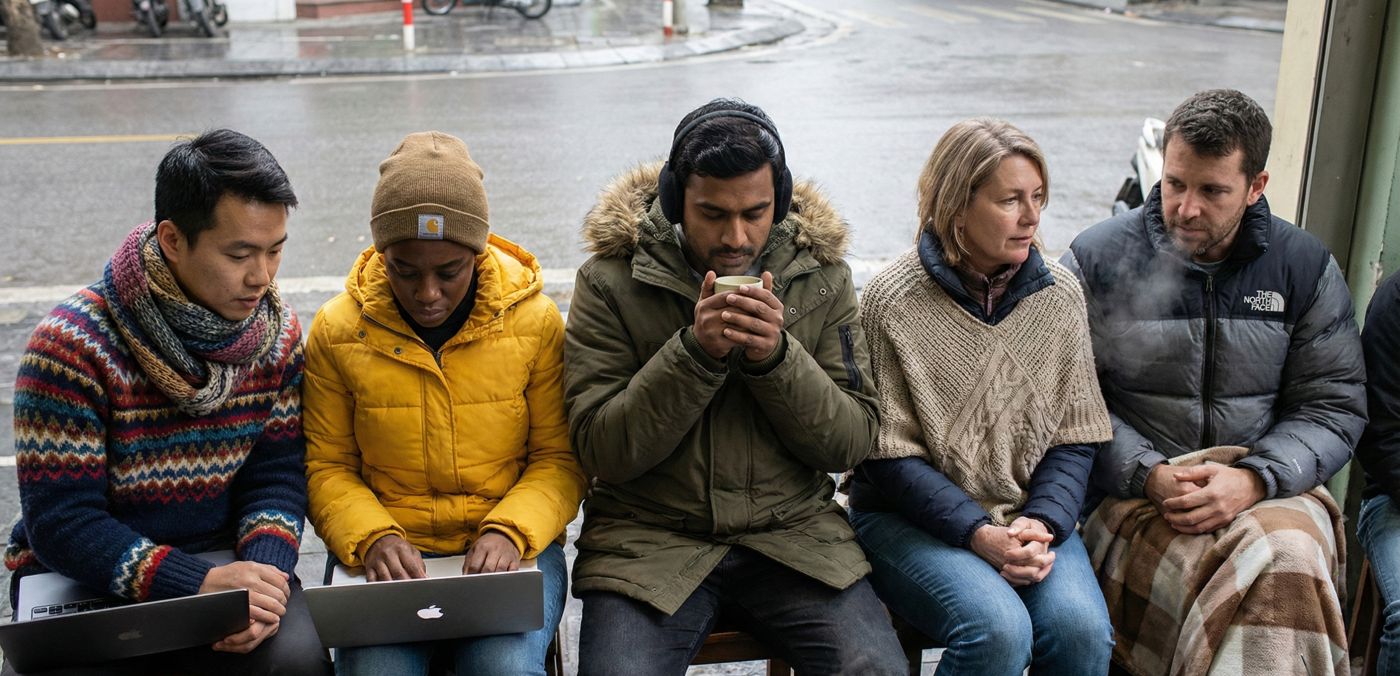
It's December and 14 degrees Celsius in Hanoi. The entire expat community is collectively gaslighting each other that this isn't cold.
"It's not REAL winter," says Emma from Toronto, wearing three layers under her North Face jacket while sitting in a café with no heating. Her laptop battery drains 30% faster in the cold but she won't admit that's why. "Back home it's minus twenty." She says this like it's relevant, like the fact that Canada is colder makes her apartment in Tay Ho any warmer.
The truth nobody admits: Hanoi winter is a specific kind of miserable. It's not dramatic enough to prepare for, not mild enough to ignore. It's fifteen degrees with 90% humidity that gets into your bones. Your apartment becomes a damp cave. Your clothes never fully dry. The mold starts appearing in corners you didn't know existed.
But everyone keeps pretending it's fine because admitting you're cold in Vietnam feels like failure.
The Tay Ho Tribe
Tay Ho is where foreigners go to avoid Vietnam while living in Vietnam. It's Brooklyn-priced apartments overlooking a polluted lake that nobody swims in, Western restaurants charging Singapore prices for Bangkok-quality food, and expat bubbles so thick you could live here five years without learning how to pronounce "thank you" properly.
Jake from Seattle has been here three years. His Vietnamese consists of "cà phê sữa đá" and numbers up to 100,000 (the price threshold where he starts haggling). He runs a "location independent business" that's actually just affiliate marketing. His favorite Vietnamese restaurant is a place run by an Australian that serves "elevated street food" for fifteen times the street price.
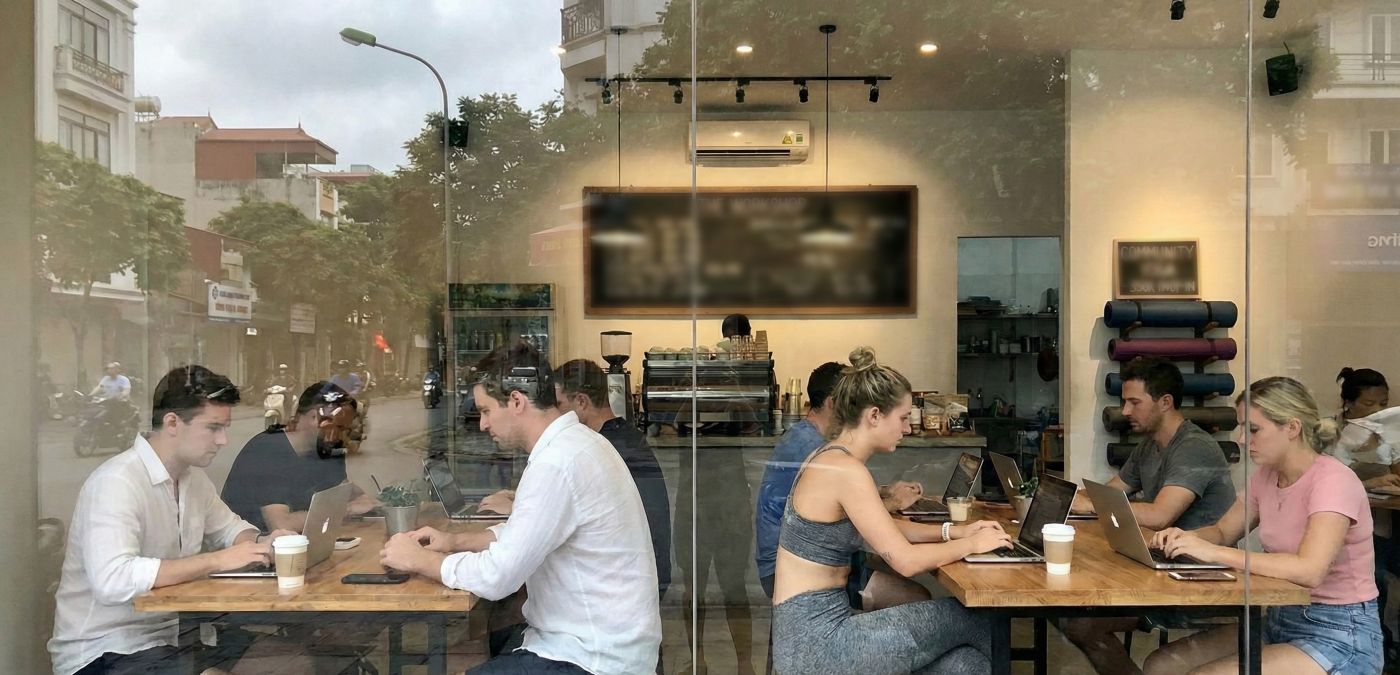
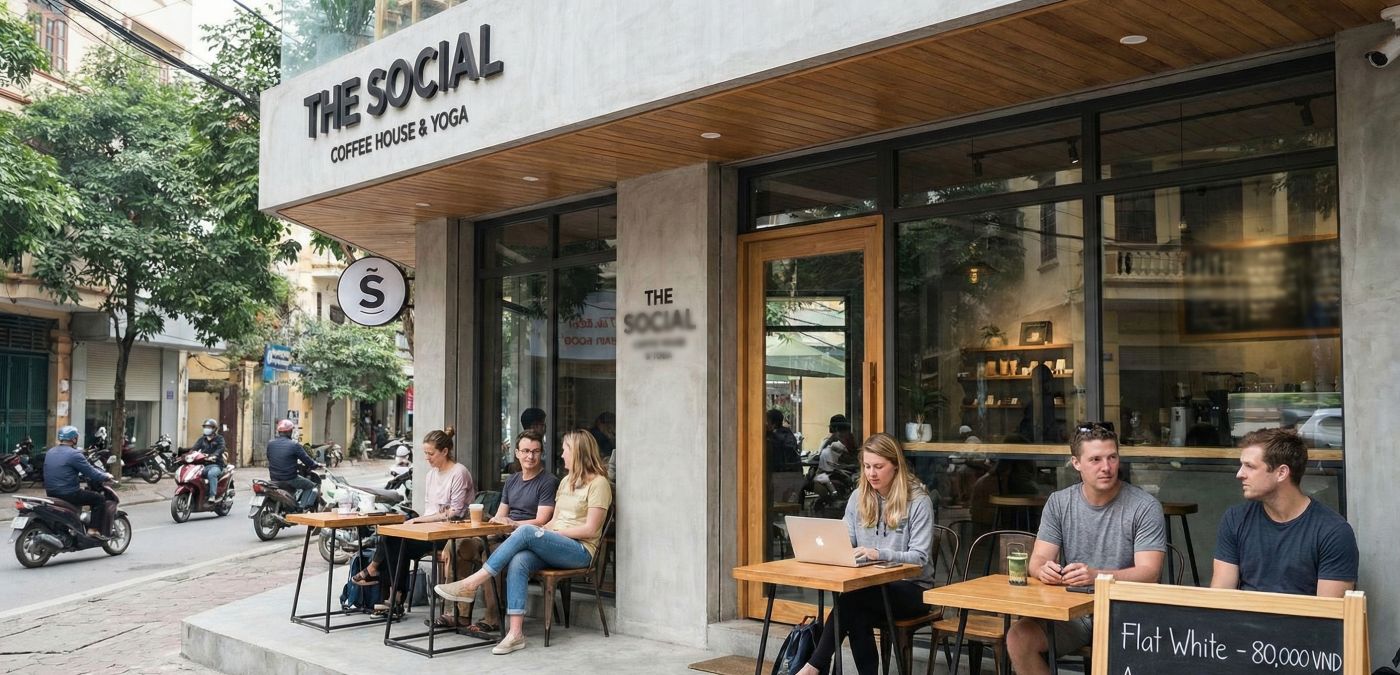
He lives on Xuan Dieu street, which might as well be in Portland. There's a craft beer place, a yoga studio, three specialty coffee shops that charge 80,000 for a flat white, and a grocery store selling quinoa to people who moved to Asia to eat quinoa. The Vietnamese who work here commute from districts where rent costs what these expats spend on weekend brunch.
"I love how authentic Hanoi is," Jake says, from a co-working space that could be in any gentrified neighborhood anywhere. He's never been south of Hoan Kiem. He thinks the Old Quarter is "too touristy."
The Old Quarter Martyrs
Then there's the other extreme. The ones who live in the Old Quarter because they want the "real" experience. They pay tourist prices for everything, their apartment is above a karaoke bar that runs until 2am, and they've confused suffering with authenticity.
Rachel from London wanted to "live like a local." She rents a fourth-floor walkup for 8 million dong that a local would pay 4 million for. The stairs are so narrow she has to turn sideways. The kitchen is a hot plate on the balcony. She tells people this builds character while secretly apartment hunting in Ba Dinh.
Her neighborhood is 80% hotels and hostels. Every conversation starts with "Where are you from?" Every restaurant has pictures on the menu. She hasn't had a genuine interaction in six months but posts Instagram stories about "getting lost in the maze of authentic Hanoi life."
The actual locals in the Old Quarter see her as a walking ATM with a ponytail.
The Vietnamese Price vs Foreigner Price Reality
Everyone knows about the two-price system but nobody talks about the third price: the "foreign resident who thinks they're getting local price but aren't" price.
Mike's been here eighteen months and thinks he's cracked the code. He knows to walk away from the first quote. He learned to say prices in Vietnamese. He shops at local markets. He's still paying 50% more than locals but 50% less than tourists, so he feels like he won.
The fruit vendor charges him 40,000 for mangos that cost locals 25,000. His xe om driver asks for 50,000 for a ride that should be 30,000. His landlord increases rent 10% yearly "because of inflation" that doesn't affect Vietnamese tenants. But compared to the tourist getting charged 80,000 for the same mangos, Mike thinks he's winning.
The Vietnamese staff at his company watch him negotiate in broken Vietnamese, trying so hard to not get ripped off over 50 cents, and they're too polite to tell him he's still overpaying for everything.
The Teaching English Hierarchy
The English teaching scene is a caste system everyone participates in but nobody acknowledges.
At the top: International school teachers with real credentials, making $3,000-4,000 monthly, living in serviced apartments, complaining about how hard it is to save money while spending more than most Vietnamese families see in a year.
Middle tier: Language center teachers with online TEFL certificates, making $1,500-2,000, sharing apartments in Tay Ho, convinced they're "making a difference" while teaching grammar to kids who already speak better English than half the foreign teachers here.
Bottom tier: Backpacker teachers with no credentials, making $15-20 per hour cash, visa running every three months, one dengue fever away from going home.
Then there's the online teachers, working Bangkok hours for Beijing companies, teaching Chinese kids while living in Hanoi because it's cheaper than Thailand but more comfortable than Cambodia. They're not really here or there, just existing in timezone arbitrage.
Everyone judges everyone else. The real teachers look down on the TEFL teachers who look down on the backpacker teachers who look down on the online teachers who make more than all of them.
The Pollution Denial
"It's not that bad today" is Hanoi's version of "It's not the heat, it's the humidity." Everyone checks AQI obsessively then ignores it completely.
When it hits 150, people say "Well, it's not Beijing." When it hits 200, they say "It's just seasonal." When it hits 250, they buy air purifiers then continue eating street food on sidewalks where buses blow exhaust directly into their pho.
Lisa bought a $300 air purifier for her bedroom. She runs it 24/7, windows sealed, creating a clean air bubble she leaves to sit in traffic jams on a motorbike, breathing exhaust through a cloth mask she bought for 10,000 dong.
The long-termers develop a specific cough around month six. They blame it on the "change of seasons" in a country with two seasons. They buy traditional medicine from old ladies in the market. They refuse to connect it to the daily reality of living in visible air pollution.
"Your body adjusts," they say, which is medically the opposite of what happens.
The Community That Isn't
The "Hanoi Expats" Facebook group has 45,000 members. The weekly meetup has twelve people, eight of whom are new and won't come back.
Everyone's looking for community but nobody wants to commit to the people actually here. Every friendship has an expiration date. Every relationship is temporary. Everyone's leaving "next year" even if they've been saying that for five years.
The networking events are the same twenty people selling services to each other that nobody needs. English editing for people who don't write. Web design for people without businesses. Life coaching for people who can't figure out their own lives.
The real connections happen accidentally. You meet someone during a power outage. You bond over a visa crisis. You become friends with someone because you both got food poisoning from the same bun cha place. These friendships are intense and fleeting, like summer camp for adults who should know better.
The Hanoi Relationship Paradox
Dating here follows predictable patterns everyone pretends are unique to their situation.
Foreign guy meets Vietnamese girl: She's either interested in English practice, a visa, or genuinely likes him but her family will never accept a foreigner, especially one who teaches English and has no clear future. He thinks he's different from other Western guys dating Vietnamese women. He's not.
Foreign girl meets Vietnamese guy: He's either already married, will be married to someone his parents choose, or is one of the rare progressive Vietnamese guys who dated foreigners in college and knows exactly how this ends.
Expat meets expat: They trauma-bond over pollution and visa runs, date for three months, then one gets a job in Bangkok and they attempt long-distance for exactly one visit before admitting it's over.
The successful relationships are the ones that acknowledge the temporariness upfront. "Let's just see what happens" becomes "I can't believe we've been together two years" becomes "So... your country or mine?"
Why People Actually Stay
Not for the reasons they post about. Not the "amazing food" or "rich culture" or "friendly people." The real reason is inertia mixed with just enough comfort to avoid difficult decisions.
Your $700 apartment in Tay Ho would be $2,700 in any Western city. Your visa runs are annoying but not impossible. Your life here is manageable even if it's not progressing. You're saving some money even if not as much as planned.
You stay because leaving means admitting this was temporary. Going home means explaining what you've been doing for three years. Starting over somewhere else means energy you don't have anymore.
You stay because Hanoi becomes a holding pattern that feels like movement. You're not stuck, you're "experiencing life abroad." You're not avoiding decisions, you're "keeping options open."
You stay because the discomfort becomes comfortable. The chaos becomes predictable. The temporary becomes permanent so gradually you don't notice until you're looking at flights home and can't remember why you'd want to leave.
Then winter comes again. Fourteen degrees and damp. Everyone pretending it's not cold. And you realize you've become one of them - someone who complains about Hanoi weather while choosing to live through it again, telling yourself next year will be different.
It won't be. But that's why you're still here.
Written from a Tay Ho café where the coffee costs more than lunch should, surrounded by people on laptops pretending to work while actually looking for jobs in Thailand, during month nineteen of what was supposed to be a six-month stay.