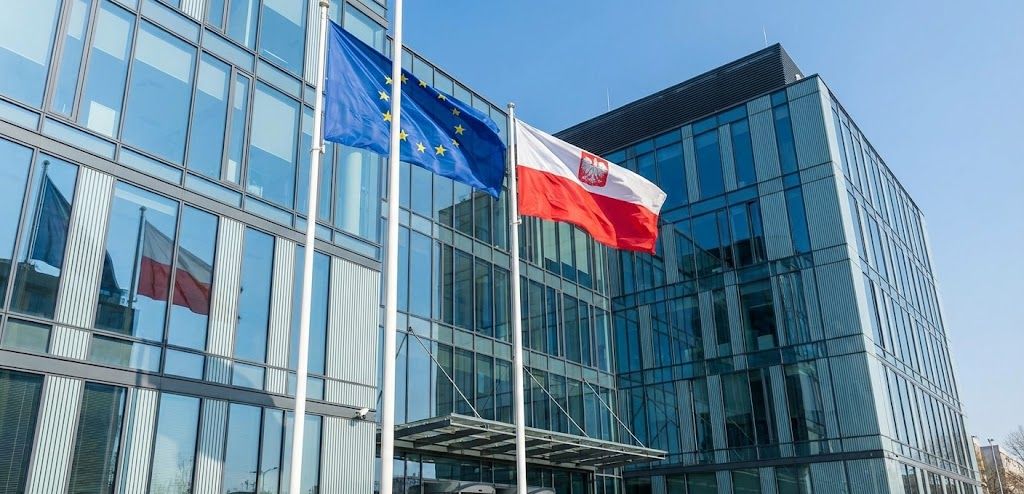
Search "best countries for digital nomads" and you get the usual list: Portugal, Thailand, Mexico, Bali, Dubai.
Poland? Never makes the list.
There's no Digital Nomad Poland Facebook group with 40,000 members. No coworking spaces in Kraków advertising "crypto-friendly tax regime." No Medium articles titled "I Moved to Warsaw and Cut My Taxes in Half."
Meanwhile, Poland has:
- EU member state with full freedom of movement
- 19% flat tax option
- Reasonable cost of living (Kraków rent: 2,500-4,000 PLN or $630-1,010 for city center 1BR)
- Fast internet (average 174 Mbps according to Speedtest Global Index)
- Geographic center of Europe (3-hour flights to anywhere)
- Schengen visa access for 90+ countries
So why isn't Poland competing with Portugal and Estonia for remote workers?
Because the Polish tax system is complex, not particularly competitive, and the country hasn't tried to market itself as digital nomad destination. Nobody's selling the dream.
But for certain people—mainly EU citizens wanting Central European base without Portugal's inflated costs—Poland actually works. Just not the way the tax optimization blogs promise.
The "Polish Deal" That Complicated Everything
January 2022: Poland implemented "Polski Ład" (Polish Deal, officially Polish Order). Massive tax reform affecting everyone.
Key changes:
- Tax-free threshold raised from 8,000 PLN to 30,000 PLN annually (~$1,900 to ~$7,580)
- Middle-class tax credit introduced
- Health insurance contribution changed from 7.75% deductible to 9% non-deductible
- Various deductions eliminated or restructured
Result: Some people's taxes went down. Others went up. Almost everyone got confused.
The flat 19% tax option remained but became less attractive relative to progressive system for certain income levels.
For foreigners trying to understand Polish tax: The 2022 changes made it significantly more complicated than "just pay 19% flat tax" that pre-2022 guides promised.
The Two Tax Options Nobody Explains Clearly
Poland offers two personal income tax systems. You pick one annually.
Option 1: Progressive Scale (Skala podatkowa)
Tax rates (2025):
- First 120,000 PLN (~$30,300): 12%
- Above 120,000 PLN: 32%
But there's tax-free amount: 30,000 PLN (~$7,580)
So:
- Income 0-30,000 PLN: 0%
- Income 30,001-120,000 PLN: 12%
- Income 120,001+: 32%
Plus health insurance contribution: 9% (not deductible for tax purposes, but you don't pay it twice)
Example: 100,000 PLN income (~$25,250)
Taxable after threshold: 70,000 PLN Tax at 12%: 8,400 PLN (~$2,120) Health contribution: 9,000 PLN (~$2,270) Total taxes: 17,400 PLN (~$4,390) ZUS (if self-employed, preferential first 2 years): ~9,600-12,000 PLN annually (~$2,425-3,030) Total with ZUS: 27,000-29,400 PLN (~$6,815-7,420) Effective rate including ZUS: 27-29.4%
Example: 200,000 PLN income (~$50,500)
Taxable after threshold: 170,000 PLN First 90,000 at 12%: 10,800 PLN Next 80,000 at 32%: 25,600 PLN Total tax: 36,400 PLN (~$9,190) Health contribution: 18,000 PLN (~$4,545) ZUS (if self-employed, full rate after 2 years): ~19,200-24,000 PLN (~$4,850-6,060) Total: 73,600-78,400 PLN (~$18,585-19,795) Effective rate including ZUS: 36.8-39.2%
Option 2: Flat Tax 19% (Podatek liniowy)
Simple: 19% on all income minus business expenses if applicable. No thresholds, no brackets.
BUT:
- No tax-free amount (the 30,000 PLN threshold doesn't apply)
- Still pay 4.9% health contribution (different rate than progressive, with statutory minimum base—so you pay at least the minimum even in low-income months)
- Can deduct business expenses if self-employed
- Can't combine income with spouse (progressive system allows joint filing for married couples)
Example: 100,000 PLN income
Self-employed with 20,000 PLN documented expenses: Taxable: 80,000 PLN Tax at 19%: 15,200 PLN (~$3,840) Health contribution (4.9%): 3,920 PLN (~$990) ZUS (preferential first 2 years): ~9,600-12,000 PLN (~$2,425-3,030) Total: 28,720-31,120 PLN (~$7,255-7,860) Effective rate including ZUS: 28.7-31.1%
Compare to progressive (with ZUS): 27-29.4%
At this income level, progressive still wins even with expenses.
Example: 200,000 PLN income
Self-employed with 40,000 PLN expenses: Taxable: 160,000 PLN Tax at 19%: 30,400 PLN (~$7,675) Health contribution (4.9%): 7,840 PLN (~$1,980) ZUS (full rate after 2 years): ~19,200-24,000 PLN (~$4,850-6,060) Total: 57,440-62,240 PLN (~$14,505-15,715) Effective rate including ZUS: 28.7-31.1%
Compare to progressive (with ZUS): 36.8-39.2%
At this income level, flat tax wins decisively.
Crossover point roughly 140,000-160,000 PLN depending on expenses and personal situation.
Most digital nomads earning $40,000-80,000 (160,000-320,000 PLN) benefit more from flat tax IF they can document business expenses.
The Residency Rule: Standard But Strictly Enforced
Poland determines tax residency via Article 3 of the Personal Income Tax Act:
You're Polish tax resident if:
- Center of personal or economic interests in Poland (primary test), OR
- Stay 183+ days in Poland during tax year (secondary test)
"Center of interests" includes:
- Where family lives
- Where you earn most income
- Where your property is
- Where you have permanent home available
- Social and economic ties
This isn't unique to Poland. But Polish tax authorities (Krajowa Administracja Skarbowa - KAS) are fairly aggressive about enforcing it.
Tax residents: Worldwide income taxable in Poland Non-residents: Only Polish-source income taxable (generally 20% flat rate)
For digital nomads: Remote work for foreign clients = not Polish-source income. So if you stay under 183 days AND don't establish center of interests, you're non-resident and owe PLN 0 Polish tax.
But establishing "center of interests" is easy to do accidentally:
- Sign 12-month apartment lease
- Get Polish mobile number and bank account
- Register temporary residence (required after 30 days for non-EU citizens, voluntary for EU citizens)
- Spend most of your time in Poland even if technically under 183 days
KAS can argue center of interests and claim you as tax resident even at 160 days.
The Visa Situation: EU vs Non-EU Gap
For EU/EEA/Swiss citizens:
Freedom of movement applies. No visa needed.
You can:
- Enter Poland freely
- Stay as long as you want
- Work (employed or self-employed)
- Register temporary residence if staying 3+ months (voluntary but recommended)
- Access healthcare after registration
- Open bank accounts easily
Tax obligations apply, but no visa complications.
For non-EU citizens:
Much more complicated.
Tourist visa: 90 days in any 180-day period (standard Schengen rules). No work allowed, including remote work for foreign companies.
Work permit: Required for employment or business activity in Poland. Requires:
- Job offer from Polish company, OR
- Establishing Polish business entity (easier but has requirements), OR
- Self-employment registration (requires specific visa type)
Temporary residence permit: Various categories.
- Work: Requires work contract or business registration
- Business: Need to establish Polish company and show viability
- Study: Requires enrollment
- Family: Requires Polish family member
For typical non-EU digital nomad wanting to work remotely: No straightforward path.
Options:
- Stay on 90-day tourist visa, leave for 90 days, return (doesn't trigger 183-day residency)
- Establish Polish jednoosobowa działalność gospodarcza (sole proprietorship - JDG), get residence permit, register properly
- Use Poland as part of nomadic rotation, not primary base
Option 2 (establish JDG) is most legitimate but requires:
- Registering business: ~500-800 PLN (~$125-200)
- Residence permit application: ~640 PLN (~$160)
- Health insurance: Included in ZUS contributions
- Accountant: 200-400 PLN monthly (~$50-100)
- ZUS contributions: See detailed breakdown below (PLN 800-1,000+ monthly in first 2 years, PLN 1,800-2,400+ monthly after)
Not prohibitively expensive, but not trivial either.

ZUS: The Social Security Nobody Warns You About
ZUS (Zakład Ubezpieczeń Społecznych) = Polish Social Insurance Institution.
If you're self-employed in Poland (JDG), you must register with ZUS and pay monthly contributions.
2025 rates for self-employed (social + Labour Fund; health contribution calculated separately):
- First 2 years (preferential rates): Social contributions ~PLN 400-460/month. Add health contribution (varies by tax regime/income), total often PLN 800-1,000+ monthly (~$200-250)
- After 2 years (full rates): Social contributions ~PLN 1,600-2,000/month (~$400-500). Health separate based on your income/regime.
This is SEPARATE from income tax. Social contributions cover:
- Pension
- Disability insurance
- Labour Fund
Health contribution depends on whether you use progressive or flat tax system (9% or 4.9% of income respectively).
For someone earning 200,000 PLN annually ($50,500):
- Income tax (19% flat): 30,400 PLN (~$7,675)
- Health contribution (4.9%): 9,800 PLN (~$2,475)
- ZUS social contributions (full rate): ~PLN 19,200-24,000 annually (~$4,850-6,060)
- Total: 59,400-64,400 PLN (~$15,000-16,260)
Effective rate: 29.7-32.1%
That ZUS contribution kills the "19% flat tax" appeal.
Compare to Portugal's old NHR (was 20% flat, no social security for foreign income) or Dubai (0% everything): Poland's 30%+ total burden not competitive.
However:
EU citizens can use A1 certificate. If you're paying social security in your home EU country, you can get exemption from ZUS contributions in Poland.
German freelancer moves to Poland:
- Still pays German social security (mandatory)
- Gets A1 certificate from Germany
- Exempt from ZUS in Poland
- Only pays Polish income tax
This changes the math significantly. Instead of 30.3% total burden, it's 20-22% (income tax + health contribution only).
For EU citizens with A1: Poland becomes competitive.
For non-EU citizens: The ZUS obligation makes Poland expensive relative to alternatives.
The Costs That Make Poland Unappealing
Kraków (most popular city for expats):
Rent (1BR, city center): 2,500-4,000 PLN (~$630-1,010) Utilities, internet: 600-800 PLN (~$150-200) Groceries: 1,200-1,500 PLN (~$300-380) Transportation: 200 PLN (~$50) for public transit pass Eating out: 800-1,200 PLN (~$200-300) Gym, activities: 300-400 PLN (~$75-100)
Monthly total: 5,600-8,100 PLN (~$1,415-2,045) Annual: ~$17,000-24,500
This is cheaper than Western Europe but MORE expensive than:
- Thailand: ~$12,000-18,000 annually
- Mexico: ~$15,000-20,000 annually
- Vietnam: ~$12,000-18,000 annually
- Portugal (outside Lisbon/Porto): ~$18,000-24,000 annually
Poland sits in awkward middle. Not as cheap as Southeast Asia or Latin America. Not as appealing as Portugal despite similar costs.
Warsaw:
Add 30-40% to Kraków prices. Still cheaper than London, Berlin, Paris. But not cheap enough to compete with actual budget destinations.
When Poland Actually Makes Sense
EU citizen wanting Central European base
You can live legally without visa complications. A1 certificate exempts you from ZUS. Income tax 19-22% competitive with other EU options.
German developer earning €70,000 (~280,000 PLN):
- Polish tax (19% flat): 53,200 PLN (~$13,430)
- Health contribution: 13,720 PLN (~$3,465)
- German social security: Paid in Germany (A1 exempts ZUS)
- Total Polish burden: 23.9%
Compare to staying in Germany: 35-40% total burden.
Savings: €8,000-11,000 annually (~$8,700-12,000).
Plus: Three-hour flights to anywhere in Europe. Lower cost of living than Germany. Comparable quality of life.
For German, French, Italian, Spanish digital nomads: Poland offers EU-level infrastructure at lower cost with reasonable tax burden IF you qualify for A1.
Lower-income remote worker ($25,000-40,000)
Progressive tax system with 30,000 PLN tax-free amount makes low incomes favorable.
Earning 120,000 PLN ($30,300):
- Tax: 10,800 PLN (~$2,725)
- Health: 10,800 PLN (~$2,725)
- ZUS (first 2 years preferential): ~11,500-14,400 PLN (~$2,905-3,635)
- Total: 33,100-36,000 PLN (~$8,355-9,090)
Effective rate: 27.6-30%
Higher than Thailand or Mexico, but you're in EU with full healthcare access, rule of law, modern infrastructure.
For someone valuing stability over pure tax optimization: Poland works at lower income levels.
Someone who actually wants to live in Poland
Kraków is beautiful. Warsaw is vibrant. Wrocław, Gdańsk, Poznań all have character. Polish food is underrated. History everywhere.
If you want to be in Poland for Poland reasons (culture, location, lifestyle), the tax situation isn't prohibitive. It's just not a selling point.
19-25% effective rate on $50,000-80,000 income with EU access and reasonable costs: This is fine. Not optimized, but fine.
When Poland Doesn't Make Sense
Pure tax optimization ($60,000-150,000)
Polish total burden 28-39% depending on income level and ZUS situation.
Better options:
- Dubai: 0%
- Old Portugal NHR: 20%
- Spain Beckham Law: 24%
- Thailand: 0% if structured properly (pre-2024 rule)
- Mexico RESICO: 1.5-2.5%
Poland can't compete on pure numbers unless you're EU citizen with A1 exemption.
Non-EU citizens earning under $60,000
The visa complexity plus ZUS obligations make total burden 30-39%.
Southeast Asia or Latin America cheaper with fewer complications.
Americans specifically
US taxes citizens worldwide. Poland taxes residents worldwide.
American digital nomad in Poland:
US side:
- Must file regardless
- Can use FEIE: Excludes $130,000 (2025)
- But self-employment tax still applies: 15.3% on net
Poland side:
- Tax resident (183+ days)
- Income tax: 19-32% depending on amount and option
- Health contribution: 4.9-9%
- ZUS: 12-15% of income (self-employed, full rate)
US-Poland tax treaty prevents double taxation on same income. But SE tax separate obligation.
American earning $80,000 in Poland:
- Polish burden: ~PLN 75,000 (~$18,925) - income tax + health + ZUS
- US SE tax: ~$12,240
- Treaty allows credit for Polish income tax
- But still owe SE tax separately
Total: ~$18,925 + $12,240 = $31,165 Effective rate: 39%
Not competitive. Better to stay in US or choose zero-tax jurisdiction like Dubai.
People wanting "easy"
Polish tax system post-2022: Complex. ZUS registration: Required forms, Polish language. Banking: Requires PESEL (Polish ID number) or passport + residence registration. Accountants: Necessary (~200-400 PLN monthly), most speak Polish primarily. Tax office: Forms in Polish, officials rarely speak English outside Warsaw.
For someone wanting Portuguese-level expat infrastructure or Estonia-level digital bureaucracy: Poland isn't there.
System works, but it's not designed for foreigners. You adapt to Poland; Poland doesn't adapt to you.
The Real Costs: 100,000 PLN Income Example
Digital nomad earning 100,000 PLN (~$25,250) considering Poland full-time:
Setup costs (non-EU citizen):
- Business registration (JDG): 600 PLN (~$150)
- Residence permit: 640 PLN (~$160)
- PESEL registration: Free
- Bank account setup: Free-200 PLN (~$0-50)
Total setup: ~$310-360
Annual ongoing:
- Accountant: 3,600 PLN (~$910)
- Rent (Kraków, shared): 2,000 PLN × 12 = 24,000 PLN (~$6,060)
- Living expenses: 3,500 PLN × 12 = 42,000 PLN (~$10,605)
Total living: ~$16,675
Taxes (progressive system, first 2 years ZUS):
- Income tax: 8,400 PLN (~$2,120)
- Health contribution: 9,000 PLN (~$2,270)
- ZUS social (preferential): ~9,600-12,000 PLN (~$2,425-3,030)
Total taxes: 27,000-29,400 PLN (~$6,815-7,420)
Grand total year one:
- Setup: $310
- Living: $16,675
- Taxes: $6,815-7,420
- Total: $23,800-24,405
From $25,250 gross: Net $845-1,450 left for savings/discretionary.
Compare to Thailand on $25,250:
- Living costs: ~$12,000
- Thai tax (if resident): ~$2,000-3,000
- Net available: $10,000+
Poland works IF you value EU membership, healthcare access, geographic location. Not if you're maximizing savings potential.
What Almost Nobody Does (But Works)
The 182-day strategy for EU citizens:
Live in Poland 182 days maximum per year.
- Not tax resident in Poland
- No Polish tax obligations (foreign-source income)
- But maintain A1/social security in home EU country
- Use Poland as base within broader European nomad lifestyle
Spend:
- 180 days Poland
- 90 days Spain
- 90 days Italy
- 5 days traveling
Never trigger tax residency anywhere (if you don't establish center of interests).
From home country perspective: They can argue you're still tax resident there based on citizenship/economic ties. Requires careful management.
But this works for perpetual travelers who want EU access without specific country tax obligations.
Poland as one element of broader European nomad strategy rather than sole destination.
The Comparison Nobody Makes: Poland vs Portugal
Everyone compares Portugal. Few compare Poland. Let's fix that.
Portugal (old NHR, now closed):
- 20% flat tax on income
- 10-year benefit
- Required actual residency in Portugal
- Cost of living: High (Lisbon/Porto expensive)
- Result: Great deal, but expensive lifestyle costs
Poland:
- 19% flat tax (plus health contribution = ~23-24%)
- No time limit
- Can be anywhere in Poland
- Cost of living: Moderate (30-40% cheaper than Lisbon)
- Result: Slightly higher tax rate, much lower living costs
For someone earning $50,000:
- Portugal: 20% tax = $10,000, living costs $24,000+, total burn: $34,000
- Poland: 24% tax = $12,000, living costs $17,000, total burn: $29,000
Poland actually cheaper overall despite higher tax rate.
Why doesn't Poland market this? Because Portuguese government actively promoted NHR. Polish government doesn't care about attracting digital nomads. It's incidental that the tax system happens to work okay.
The Languages Barrier That Breaks Everything
Here's why Poland won't become a digital nomad hub:
Everything is in Polish.
Tax forms: Polish. ZUS registration: Polish. Banking apps: Polish with sometimes-broken English translation. Accountant explanations: Polish unless you pay premium for English-speaking service.
Government websites: Polish primarily. Official communications: Polish.
This isn't Spain where tourist infrastructure means English everywhere. Or Portugal where government specifically created English-language support for NHR applicants.
Poland expects you to learn Polish or hire translators.
For 6-12 month digital nomad experience: This is exhausting. For permanent relocation: This is normal. Learn the language.
Most digital nomads want 6-12 month experience. Language barrier makes Poland too much friction for temporary stay.
Compare to Estonia: Everything digital, everything in English. Or Portugal: Entire NHR bureaucracy has English support.
Poland works for people serious about Central Europe long-term. Not for people wanting easy 1-year experiment.
Three Scenarios That Actually Work
Scenario 1: French developer, 5-year plan
Income: €65,000 (~260,000 PLN) Has A1 certificate (pays French social security)
Polish obligations:
- 19% flat tax: 49,400 PLN (~$12,470)
- Health contribution: 12,740 PLN (~$3,215)
- Total: 62,140 PLN (~$15,685)
Effective rate: 23.9%
French tax rate would be: 35-40%
Savings: €7,000-10,000 annually (~$7,600-10,900)
Over 5 years: €35,000-50,000 saved (~$38,000-54,500)
Plus: Lives in Kraków (beautiful), travels Europe easily (central location), builds life in stable EU country.
Works because: EU freedom of movement, A1 exemption, long-term commitment.
Scenario 2: British retiree (post-Brexit challenges)
Income: Pension £28,000 (~112,000 PLN)
Polish progressive tax:
- Tax: 9,840 PLN (~$2,485)
- Health: 10,080 PLN (~$2,545)
- No ZUS (pension income)
- Total: 19,920 PLN (~$5,030)
Effective rate: 17.8%
UK tax would be: ~£3,600
Poland actually costs more in pure tax terms.
But: Cost of living in Poland 40-50% lower than UK. Healthcare accessible. Geographic advantage for Europe travel.
Net financial outcome: Similar or slightly better. Quality of life: Depends on individual preferences.
Works because: Pension income (no ZUS), established life, language learning possible with time.
Scenario 3: Polish-American returning
American with Polish heritage. Speaks Polish. Earning $95,000 remotely for US company.
Gets Polish citizenship by descent. Becomes Polish tax resident.
Polish obligations:
- 19% flat: ~72,200 PLN (~$18,230)
- Health: 18,620 PLN (~$4,700)
- No ZUS (employed, employer in US)
- Total: ~$22,930
US obligations:
- FEIE excludes $130,000
- No federal income tax (under exclusion)
- No SE tax (employed, not self-employed)
Total tax: ~$22,930 Effective rate: 24.1%
Compare to staying in US: 25-30% federal + state.
Slightly better or similar. But lives in Poland (family, culture, homeland connection).
Works because: Dual citizenship, language fluency, cultural ties, employed (no ZUS or SE tax).
The Bottom Line
Poland isn't on digital nomad lists because:
- Government doesn't market it
- Tax system complex post-2022
- ZUS contributions kill the 19% appeal for non-EU citizens
- Language barrier significant
- Cost of living not competitive with Southeast Asia or Latin America
- Not obviously better than Portugal, Spain, or even staying in home country for most
But Poland works for:
- EU citizens with A1 exemption (20-24% total burden)
- People earning $25,000-40,000 (progressive system favorable)
- Long-term residents willing to integrate (language, culture, systems)
- People who want to be in Poland specifically (location, lifestyle, family)
For pure tax optimization: Poland loses to Dubai, old Portugal, Mexico RESICO, Thailand.
For EU citizenship wanting Central European base: Poland wins on cost of living vs Western Europe while maintaining reasonable tax burden (especially with A1 exemption).
For Americans: Poland offers nothing special. Similar or higher burden than US with more complexity.
For non-EU citizens: Visa complications plus ZUS make total burden 30-39%. Better options exist.
The "19% flat tax" sounds good until you add health contribution (4.9% with statutory minimum), ZUS (12-15% of income for full rate, 8-12% for preferential), and compliance costs. Real burden: 30-39% for most self-employed people.
That's not terrible. It's just not competitive with alternatives unless you specifically value what Poland offers beyond taxes: Central Europe location, EU membership, cultural richness, reasonable costs.
Poland is the answer if your question is "Where can I live in Central Europe with legal status and reasonable taxes?"
Poland isn't the answer if your question is "Where can I pay the least taxes possible?"
Know which question you're asking.
Key Facts:
- Tax residency: 183+ days OR center of interests in Poland
- Progressive rates: 12% (up to 120,000 PLN), 32% above
- Flat tax option: 19% on all income
- Tax-free threshold (progressive only): 30,000 PLN (~$7,580)
- Health contribution: 4.9% (flat tax, with statutory minimum base) or 9% (progressive, not tax-deductible)
- ZUS social (self-employed): ~PLN 800-1,000/month first 2 years (preferential rate ~PLN 400-460 social + health varies by regime), ~PLN 1,800-2,400+/month after (full rate ~PLN 1,600-2,000 social + health)
- EU citizens: Can work freely, may use A1 certificate to exempt ZUS
- Non-EU: Need residence permit + work authorization
- Exchange rate: ~4.0 PLN = $1 USD
- Tax year: January 1 - December 31
- Filing deadline: April 30
- Accountant costs: 200-400 PLN monthly (~$50-100)
Resources:
- Tax authority (KAS): www.podatki.gov.pl
- ZUS (social insurance): www.zus.pl
- Residence permits: www.gov.pl/web/gov/residence-permit
- Tax calculator: www.kalkulatory.gofin.pl
- Business registration: www.biznes.gov.pl
- A1 certificate: From home country social security authority
⚠️ Important Note: Poland's tax system changed significantly in January 2022 with the "Polish Deal" reform. Many pre-2022 guides about "simple 19% flat tax" are outdated. The current system includes mandatory health contributions that are NOT tax-deductible, significantly increasing the effective tax rate.
ZUS contributions are mandatory for self-employed individuals and represent a substantial additional cost (~8-12% of income) beyond income tax. EU citizens may use A1 certificates to avoid ZUS if paying social security in home countries.
Non-EU citizens face significant visa complications. There is no straightforward "digital nomad visa" or equivalent. Working remotely on tourist visa is technically illegal, and establishing legal work authorization requires business registration or employment contract.
This article reflects Polish tax law as of 2025 based on the Personal Income Tax Act (as amended by Polish Deal 2022) and ZUS regulations. Individual situations vary significantly based on citizenship, income sources, residency status, and bilateral tax treaties.
Before relocating to Poland, consult with Polish tax advisor (doradca podatkowy) and verify current visa requirements. Use this guide to understand whether Poland fits your situation—not as a plan to optimize taxes in isolation from other factors.
Poland works for some people. Just not the typical "digital nomad" profile. Know whether you're one of the exceptions before committing.