Published: October 2025 | 14-minute read
When digital nomads research European bases, Poland often appears on lists for its affordability and Central European location. What those lists don't mention: Poland's immigration system is actively challenging for location-independent workers.
Anna Lewandowska has practiced Polish immigration law for 11 years from her Warsaw office. She's processed over 800 visa applications for foreigners. She's blunt about what her country offers—and doesn't offer—to digital nomads.
"Poland does not make immigration easy," Lewandowska states matter-of-factly. "This isn't Southeast Asia where countries welcome digital nomads. This isn't Latin America with special remote worker programs. This is the European Union. This is Poland. This is bureaucracy layered on European regulations."
The numbers illustrate the contrast: Colombia's digital nomad visa costs $177 for two years. Vietnam offers six months for $105-130. Poland? Expect to spend €2,500-4,500 in the first year alone—and that's if your application is approved.
Understanding why requires examining Poland's approach to immigration, which Lewandowska characterizes as "designed for traditional workers, not digital nomads."
For EU Citizens: Free Movement Makes It Simple
Before diving into the complexity, Lewandowska emphasizes an important distinction.
"If you hold an EU, EEA, or Swiss passport, you can stop reading," she says. "You have freedom of movement. You can live and work in Poland indefinitely. Just register your address at city hall. That's it."
For the estimated 450 million EU citizens, Poland is accessible.
This analysis focuses on everyone else: Americans, Canadians, Australians, Britons (post-Brexit), and other non-EU nationals who want to stay longer than 90 days.
The Schengen 90/180 Rule: Your Three-Month Limitation
Poland belongs to the Schengen Area—26 European countries with abolished internal borders.
The fundamental rule: Non-EU citizens can stay 90 days within any 180-day period without a visa.
"It's a rolling calculation," Lewandowska explains. "Not calendar-based. At any given moment, look back 180 days. You cannot have spent more than 90 of those days in Schengen territory."
What this means practically:
- Days 1-90: Stay in Poland (or anywhere in Schengen) visa-free
- Day 91: Must leave entire Schengen Area
- Days 91-180: Must remain outside Schengen for 90 days
- Day 181: Can return for another 90 days
Common misconception: "I'll spend 90 days in Poland, take a week in London, then come back."
"That doesn't reset anything," Lewandowska clarifies. "The UK is outside Schengen, but leaving for a week doesn't give you another 90 days. The calculation continues rolling."
For digital nomads: Three months is insufficient for establishing a base. Longer stays require a visa.
The National D Visa: Poland's Long-Stay Option
The National D visa enables stays beyond 90 days. Several categories exist, but most relevant for digital nomads is the business/freelance variant.
Eligibility Criteria
To qualify for business/freelance D visa:
1. Proof of business activity
- Business registration (from home country acceptable)
- Client contracts or employment letter
- Invoices and income statements
- Business plan (explaining your work)
- Proof of remote work capability
2. Financial requirements
- Official minimum: 600 PLN per month (~€140)
- Realistic expectation: €1,000+ monthly
- 3-6 months of bank statements
- Clear pattern of stable income
"Don't show exactly 600 PLN," Lewandowska advises. "Immigration wants to see comfortable self-sufficiency. Show €1,500-2,000 monthly if possible. Higher income = higher approval probability."
3. Accommodation proof
- Rental contract for Polish apartment
- Hotel reservation for initial period
- Must cover visa duration requested
4. Health insurance
- Must explicitly cover Poland
- Minimum €30,000 coverage
- Valid for entire visa period
- Private insurance required
5. Criminal background check
- From country of citizenship or legal residence
- Must be apostilled (Hague Apostille)
- Recent (within 6 months)
- If lived in multiple countries past 5 years, may need from each
"The criminal background check is where many applications die," Lewandowska notes. "Americans forget it needs apostille. Canadians get provincial checks instead of RCMP national checks. Australians let them expire before applying."
6. Purpose statement
- Clear explanation of why Poland
- Evidence of remote work arrangement
- Demonstration of self-sufficiency
- Any ties to Poland
The Application Process: Where to Apply
Important clarification: Applications must be submitted at Polish consulates in your country of citizenship or country of legal residence.
"You cannot apply from inside Poland on a tourist visa," Lewandowska emphasizes. "You cannot convert tourist status to residence inside the country. But you don't necessarily have to go back to your birth country—if you have legal residence in another country, you can apply from that country's Polish consulate."
For example:
- US citizen living in UK on work visa: Can apply at Polish consulate in London
- Canadian with permanent residence in Australia: Can apply at Polish consulate in Australia
- German citizen anywhere: Doesn't need visa (EU citizen)
"The key is having legal status in the country where you're applying," Lewandowska clarifies. "You can't be on a tourist visa in Thailand and try to apply from Bangkok's Polish consulate. But if you have a work visa, residence permit, or other legal status there, you may be able to apply."
Step 1: Locate and contact appropriate Polish consulate
Determine where you have legal status or citizenship, then contact that area's Polish consulate.
"Making the appointment is challenging," Lewandowska says. "Consulates book 2-3 months in advance. Slots fill quickly. Phone lines are often busy. Some allow online booking, but many require calling repeatedly."
Step 2: Document assembly
Complete required documents:
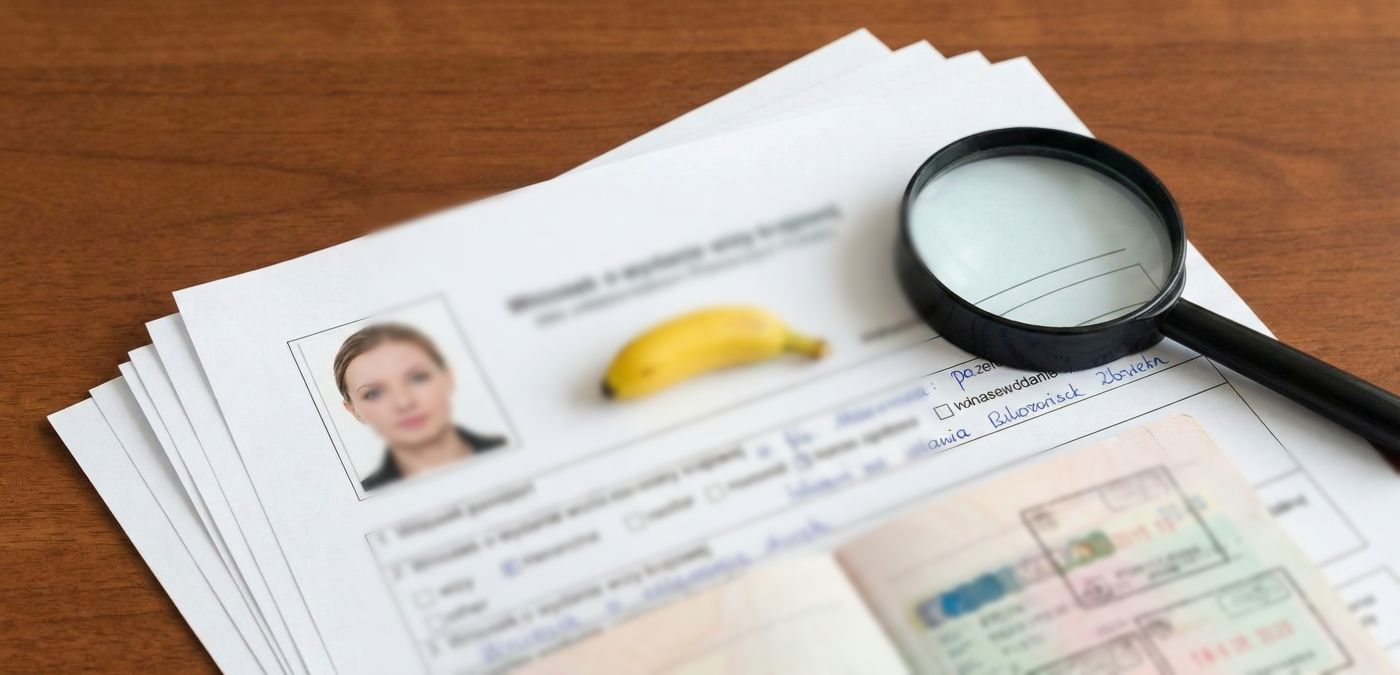
1. Application form (available in Polish or English, but Polish preferred)
2. Valid passport (original + photocopy of data page)
3. One passport photo (35x45mm, white background, recent)
4. Health insurance policy (original + copy)
5. Financial proof (3-6 months bank statements)
6. Accommodation evidence (lease or reservation)
7. Business documentation:
- Business registration certificate
- Client contracts
- Recent invoices
- Business plan
- Tax returns if available
8. Criminal background check (apostilled)
9. Application fee: 340 PLN (~€80)
Translation requirement: All non-Polish documents must be translated by sworn translators (tłumacz przysięgły).
"This is where people lose €100-200," Lewandowska notes. "Professional translation is mandatory. Immigration rejects applications with uncertified translations immediately. Don't use Google Translate. Don't ask your Polish friend. Hire a sworn translator."
Step 3: Consulate interview
At your scheduled appointment:
- Bring all original documents plus copies
- Bring certified translations
- Answer questions about plans, work, finances
- Explain why Poland specifically
"Interviews are typically in Polish or English, depending on the officer," Lewandowska says. "Prepare clear answers. Vague responses raise suspicion. Specific details demonstrate legitimacy."
Common questions:
- What type of work do you do?
- Who are your clients?
- Why Poland rather than other countries?
- Where will you live?
- How will you support yourself?
- Do you speak Polish?
Step 4: Wait (and wait more)
Official processing time: 60-90 days
Actual processing time: Often 90-120 days
"During this period, your passport remains at the consulate," Lewandowska explains. "You cannot travel internationally. You cannot contact them for updates. If they request additional documents, you must respond within 7-14 days."
Step 5: Receive decision
Possible outcomes:
- Approved: Visa sticker placed in passport, typically 1-year validity
- Rejected: Written explanation (often in Polish), appeal possible but difficult
- Additional documents needed: More delays while providing them
Approval rate: Approximately 70% with complete, well-prepared documentation
"The 30% rejection rate isn't random," Lewandowska notes. "Most rejections stem from incomplete documents, insufficient financial proof, or applicants who don't actually qualify but applied anyway."
After Arrival: The Residence Card Ordeal
Obtaining the D visa is only phase one. Phase two—getting the actual residence card—is challenging.
"This is where clients call me frustrated," Lewandowska admits.
Within 30 days of Polish arrival, you must:
1. Register address at city hall (Urząd Miasta)
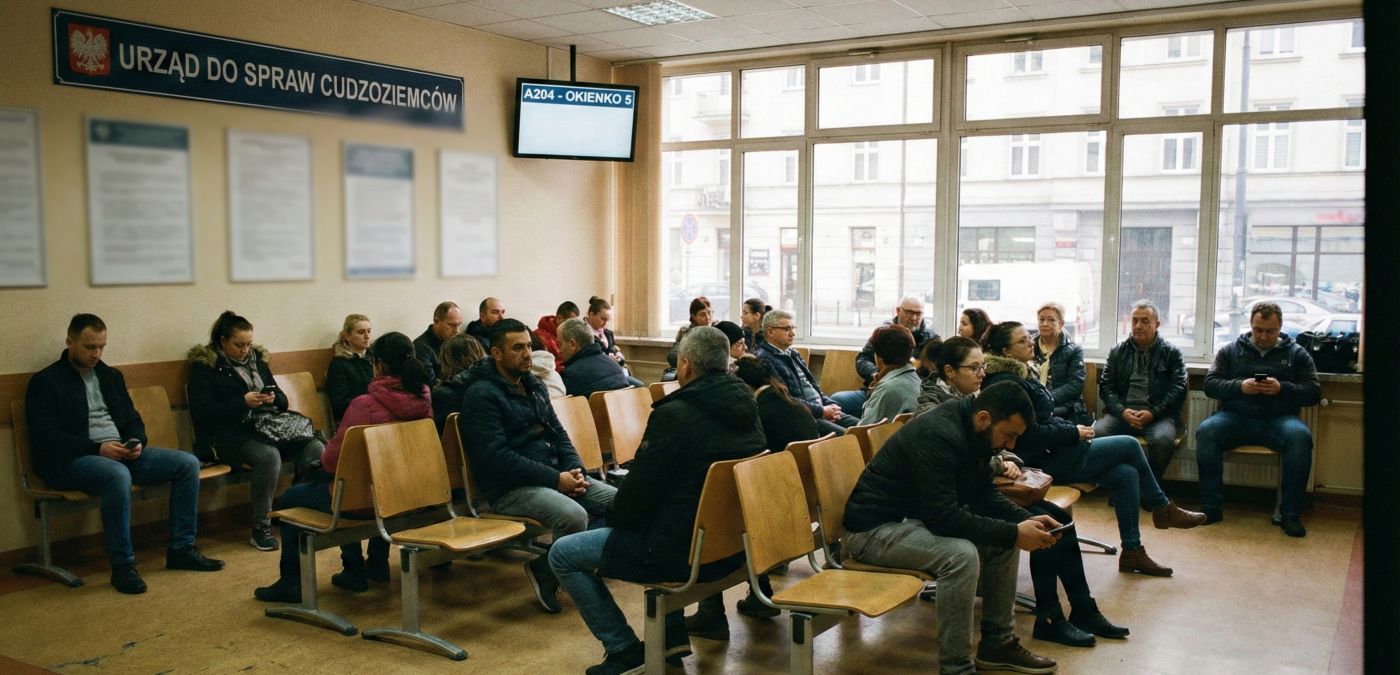
2. Apply for residence card at immigration office (Urząd Wojewódzki)
City Hall Registration (Relatively Straightforward)
What you need:
- Passport
- Rental contract (proof of address)
- Landlord's ID if private rental
- Completed form (in Polish)
Process:
- Visit city hall
- Wait in line (1-3 hours typical in Warsaw)
- Submit documents
- Receive registration confirmation (zameldowanie)
Timeline: Usually same day
"This part actually works," Lewandowska acknowledges. "It's straightforward by Polish standards."
Immigration Office Application (The Challenge)
Required documents:
- Passport with D visa
- Address registration from city hall
- Four passport photos
- Health insurance (again)
- Financial proof (again)
- Business documents (again)
- Completed application (10+ pages, in Polish)
- Fee: ~150 PLN (€35)
The process:
Appointment booking:
"Appointments are booked 2-4 weeks in advance," Lewandowska says. "Some offices have online systems. Some require calling. Some require showing up early to get a number."
The appointment itself:
- Bring all documents (originals and copies)
- Bring translations
- Officer reviews everything (in Polish typically)
- Asks questions
- Takes fingerprints
- Issues temporary paper document
Duration of appointment: 2-4 hours including waiting
Processing time for card: 30-90 days officially, often 60-120 days in reality
"During processing, you have temporary paper authorization," Lewandowska explains. "You can stay in Poland. But international travel is complicated—you need special stamps to re-enter. Many clients just stay put until the card arrives."
Collection: When ready (notification via SMS or email), return to immigration office to collect plastic card.
What the Residence Card Provides
Duration: Matches D visa (typically 1 year initially)
Benefits:
- Official resident status in Poland
- Ability to open Polish bank accounts
- Vehicle registration capability
- Legal self-employment authorization
- Better Schengen travel access
- Foundation for eventual permanent residence
Renewal: Before expiration (start 60 days early), entire process repeats for typically 2-3 year renewal period.
Business Registration: The Legal Self-Employment Route
Digital nomads wanting fully legal self-employment status should register a Polish business.
Jednoosobowa działalność gospodarcza (sole proprietorship):
- Simplest form
- Just the owner, no employees required
- Online registration via CEIDG.gov.pl
- Cost: ~40 PLN (€9)
- Processing: 1-3 days
Benefits:
- Legal self-employment status
- Can invoice Polish clients if needed
- Strengthens visa applications and renewals
But here's what nobody mentions clearly: the hidden ongoing costs.
The ZUS Obligation
"ZUS is Poland's social security system," Lewandowska explains. "If you register a business, you must pay ZUS contributions monthly. This is mandatory even with zero income."
ZUS rates:
- First 24 months: 80-150 PLN/month (~€18-35) preferential rate
- After 24 months: 600-1,500 PLN/month (~€140-350) full rate
"That full rate after two years shocks everyone," Lewandowska says. "You're paying €140-350 monthly just for the privilege of being self-employed. Whether you earn €500 or €5,000 monthly, those contributions are mandatory."
Additional Compliance Costs
Accounting: Most self-employed individuals hire accountants
- Cost: €50-100 monthly
- Necessary for navigating Polish tax code
- Handles VAT (if applicable), income tax, ZUS calculations
Annual tax filing: Required by April 30th
- Complex regulations
- Accountants strongly recommended
- DIY rarely successful
Total annual compliance costs:
- Years 1-2: €960-1,200 (ZUS) + €600-1,200 (accountant) = €1,560-2,400
- Years 3+: €1,680-4,200 (ZUS) + €600-1,200 (accountant) = €2,280-5,400
"People see the €9 registration fee and think Polish business is cheap," Lewandowska notes. "Then year three hits and they're paying €3,000-5,000 annually in mandatory contributions and accounting. It's expensive."
Tax Residency and Obligations
Spending 183+ days per year in Poland triggers tax residency.
If you become Polish tax resident:
- Must file annual tax return (even with zero Polish income)
- Polish-source income taxed in Poland
- Foreign-source income: depends on tax treaty with source country
Polish tax rates:
- 12% on income up to ~120,000 PLN (~€28,000)
- 32% on income above that threshold
- Plus: ~9% health insurance contribution
- Plus: ZUS if self-employed
"Effective tax rate for digital nomad earning €50,000 annually: roughly 25-30%," Lewandowska estimates.
Tax Treaties and Foreign Income
Poland has tax treaties with most developed countries preventing double taxation.
General principle: Income from foreign employment/clients is usually taxed in the source country, not Poland.
Example: American digital nomad in Poland working for US company
- Under US-Poland tax treaty: Usually taxed in US
- Must still file Polish return showing foreign income
- Typically owes no additional Polish tax
"Consult a tax advisor," Lewandowska strongly recommends. "Tax treaties are complex. Each situation is different. General guidance can't replace professional tax advice."
Polish tax consultant costs: €300-800 annually
Banking Access: Finally Possible with Residence Card
Polish bank accounts require residence status.
On tourist visa or D visa without residence card: Nearly impossible
- Most banks refuse outright
- Success rate under 5%
With residence card (Karta Pobytu): Relatively straightforward
- PKO BP (largest bank): Accepts residence card holders
- mBank (modern, tech-forward): Better English support
- Santander Bank Polska: International bank, some English service
Requirements:
- Residence card
- Passport
- Proof of address
- Sometimes NIP (tax number)
Process:
1. Visit branch
2. Complete application (often in Polish)
3. Submit documents
4. Make initial deposit (amount varies)
5. Wait 1-3 weeks for account approval
6. Collect debit card
Success rate with residence card: 80-90%
"Bring a Polish-speaking friend if possible," Lewandowska advises. "Branch staff English varies widely. In Warsaw city center, English is better. In smaller cities or residential areas, Polish dominates."
Alternative for those without Polish accounts: Wise and Revolut function well in Poland for daily spending.
The Path to Permanent Residence
This is where Lewandowska emphasizes the need for accuracy.
"People often oversimplify Poland's path to permanent residence," she notes. "It's not as straightforward as some blogs claim."
General timeline:
After 5 years of legal, continuous residence in Poland on temporary permits, you may become eligible to apply for permanent residence (Pobyt Stały).
However:
- "Continuous residence" means actually living in Poland (not traveling extensively)
- Different visa types may have different requirements
- Must demonstrate stable income throughout
- Must pass Polish language exam (A2 level minimum)
- Must have health insurance
- Must have accommodation
- Application is not automatic—immigration reviews full history
"The 5-year timeline is a rough guideline, not a guarantee," Lewandowska clarifies. "Each case is evaluated individually. Someone who's spent 5 years in Poland but traveled outside Poland 6 months per year might face questions. Someone with perfect documentation and continuous presence has better chances."
From Permanent Residence to Citizenship
After obtaining permanent residence (Pobyt Stały):
- Generally need another 5+ years as permanent resident before citizenship eligibility
- Total timeline typically 10+ years from first arrival
- Must demonstrate Polish language proficiency
- Must demonstrate ties to Poland
- Poland generally doesn't recognize dual citizenship for naturalized citizens (with some exceptions)
"The path exists, but it's long and requires genuine commitment to Poland," Lewandowska says. "This isn't a 3-year fast track to EU citizenship. Plan for 10+ years if citizenship is your goal."
Rejection Reasons: Where Applications Fail
Based on 800+ applications Lewandowska has handled, these are the primary failure points.
1. Applied from Wrong Location (35% of Rejections)
"This is the number one error," Lewandowska emphasizes. "People arrive in Poland on 90-day tourist status, decide they love Warsaw, and want to apply for residence. You must apply from a country where you have legal status—either citizenship or legal residence. Being on a 90-day tourist visa doesn't count as legal residence."
2. Incomplete Documentation (28% of Rejections)
Common issues:
- Missing translations
- Uncertified translations
- Criminal check lacking apostille
- Criminal check older than 6 months
- Insufficient financial proof
- Vague business documentation
"Completeness is everything," Lewandowska says. "One missing translation can trigger rejection. One missing apostille can end your application."
3. Insufficient Financial Means (18% of Rejections)
Immigration wants comfortable self-sufficiency evidence.
Problems:
- Bank statements showing less than €1,000 monthly average
- Inconsistent income patterns
- Cannot demonstrate income stability
- Unclear income sources
"Show steady, reliable income well above the minimum," Lewandowska advises. "A bank account with €30,000 doesn't help if monthly inflows are €300. They want recurring income, not just savings."
4. Criminal Record Issues (12% of Rejections)
Problems:
- Not apostilled (most common)
- State/provincial rather than national-level check
- Expired (older than 6 months)
- Missing countries if lived abroad
"Americans: Get FBI check, not state check," Lewandowska specifies. "Canadians: Get RCMP check, not provincial. Australians: Get Australian Federal Police check. It must be national-level."
5. Unclear Business Purpose (7% of Rejections)
Immigration officers can spot vague applications.
Red flags:
- Can't explain what type of work they do
- Income sources unclear
- Appears to be employee, not self-employed
- Business plan lacks credibility
"Be specific," Lewandowska urges. "Don't say 'online consultant.' Say 'web development contractor for US e-commerce companies.' Specific = credible."
True Cost Analysis: The First-Year Investment
Let's calculate actual out-of-pocket expenses for year one.
Pre-Application Phase
Criminal background check + apostille: €50-150
- US: FBI check + State Dept apostille ($80-120)
- UK: DBS + FCO apostille (£80-120)
- Canada: RCMP + authentication ($90-130)
- Australia: AFP + DFAT (AU$110-180)
Health insurance (12 months): €1,200-1,800
- Budget: €100/month = €1,200
- Mid-range: €150/month = €1,800
Document translations: €100-200
- Employment letters, contracts, business plans
Miscellaneous: €30-50
- Photos, copies, notarizations
Pre-application subtotal: €1,380-2,200
Application and Residence Card
D visa application fee: €80
Travel to consulate (if not local): €200-500
Residence card fee: €35
Travel to Poland: €300-800
Application/entry subtotal: €615-1,415
Business Registration (If Pursuing)
Registration: €9
First-year ZUS (preferential rate, 12 months): €216-420
Accountant (12 months): €600-1,200
Business subtotal: €825-1,629
Year One Total
Without business registration: €1,995-3,615
With business registration: €2,820-5,244
Most clients spend: €3,500-4,500 first year
"This is expensive compared to most digital nomad destinations," Lewandowska acknowledges. "Vietnam is €600-650 for a year. Colombia is €240 for two years. Poland is €3,500-4,500 for year one alone."
Years 2+ (Renewal Costs)
Visa renewal: €80
Health insurance: €1,200-1,800
ZUS: €216-420 (years 2-3) or €1,680-4,200 (year 4+)
Accountant: €600-1,200
Annual renewal costs: €2,096-7,300 depending on ZUS rate
Who Poland Actually Works For
After extensive discussion of Poland's bureaucratic complexity and costs, we asked Lewandowska directly: Who should actually consider Poland?
"Poland works for very specific people," she responds. "If you don't fit these criteria, there are easier options."
Good Candidates for Poland
1. Those specifically wanting Poland
"Don't come to Poland just because it's 'affordable EU,'" Lewandowska advises. "Come because you're genuinely interested in Poland—the culture, the history, the language, the people. The bureaucracy is worth it only if you actually want to be here."
2. People seeking long-term EU presence
"Poland offers a path: 5 years temporary residence can lead to permanent residence, which eventually can lead to citizenship. That's valuable if you're committed to the 10+ year timeline. But understand it's genuinely 10+ years, not a quick process."
3. Those with professional support
"If you can afford lawyers and accountants—and you should—Poland becomes manageable. I guide clients through every step. Their cost goes up by €500-1,000 for my services, but their success rate rises from 50-60% to 85%. Worth it."
4. People who handle cold well
"November through March is brutal. Dark at 3:30pm in December. Gray skies constantly. Temperatures often below freezing. If you have Seasonal Affective Disorder, don't come. If you're Scandinavian or Canadian, you'll manage."
5. Long-term committers (2-3+ years minimum)
"The first year costs €3,500-4,500 and takes 6-9 months start to finish. That investment only makes sense if you're staying at least 2-3 years to justify it."
Poor Candidates for Poland
1. Budget digital nomads
"If you're living on €1,500/month, Poland eats too much of your budget. Vietnam or Colombia make more financial sense."
2. Those wanting simplicity
"If bureaucracy makes you anxious, Poland will be miserable. This is not straightforward. This requires patience, organization, and professional help."
3. People testing nomad life
"If you're new to this lifestyle and want to try several countries, don't start with Poland. Start with easy options like Thailand or Mexico. If you discover you love location independence AND want EU presence, then consider Poland."
4. Those needing English everywhere
"Outside of Warsaw city center and Krakow tourist areas, English is limited. Daily life requires Polish or constant translation apps. Integration without Polish is extremely difficult."
5. Sun-dependent personalities
"If you need sunshine for mental health, Poland will be very challenging November through March. Five months of gray is real."
Alternative EU Options Worth Considering
Poland isn't the only—or easiest—EU pathway for digital nomads.
Portugal D7 Visa:
- Passive income visa
- €9,120 annual income requirement (~€760/month)
- More welcoming process
- English more common
- Better weather
- Clearer path to EU permanent residence
"Portugal designed D7 for exactly this demographic," Lewandowska notes. "It's more welcoming to remote workers."
Spain Digital Nomad Visa:
- Launched 2023
- €2,334/month income requirement (~€28,000/year)
- Specifically for remote workers
- English support in major cities
- Better climate
- 1 year renewable to 5
"Spain recognized digital nomads as a category and built infrastructure for them. Poland hasn't done this."
Estonia E-Residency + Digital Nomad Visa:
- Estonia actively courts digital nomads
- E-Residency program for company formation
- Separate digital nomad visa for residence
- English widely spoken
- Excellent digital infrastructure
- Smaller country with fewer large city options
Czech Republic Živnostenský List (Freelance Visa):
- Similar to Poland but somewhat less bureaucratic
- Prague has larger expat community
- More English support
- Better central European travel position
"If you want EU residence and don't specifically need Poland, research these alternatives," Lewandowska advises. "They may better suit your situation."
Lewandowska's Final Assessment
After 11 years fighting Polish immigration bureaucracy on behalf of clients, Lewandowska offered her candid professional opinion.
"Poland's immigration system is challenging for digital nomads by design. It's not an accident. It's not oversight. It's policy."
Why?
"Poland's system serves:
1. EU citizens (who have automatic rights anyway)
2. Ukrainian refugees (special wartime provisions)
3. Traditional workers employed by Polish companies
4. Students at Polish universities
5. Family reunification
Digital nomads aren't a priority. Poland doesn't see strong economic benefit—you're not creating local jobs. There's cultural conservatism about immigration. The bureaucracy serves its own purposes."
Does she recommend Poland?
"Honestly? Only if you're committed. Only if you specifically want Poland. Only if you can afford €3,500-4,500 first year and €2,000-5,000+ annually ongoing. Only if you can handle bureaucracy and winter. Only if you're planning 3+ years minimum."
What about the future?
"Will Poland create a digital nomad visa like Colombia or Spain? I doubt it. There's no political will. The system works for Poland as-is—it filters out casual applicants and maintains control. Why change it?"
Her advice to digital nomads:
"If you love Poland—the culture, the history, the Central European position—and you can handle complexity and cost, then yes, pursue this. Hire a lawyer. Budget properly. Commit to 3+ years minimum to justify the investment.
But if you just want 'affordable EU base' without specific interest in Poland, there are easier paths. Don't choose Poland by default. Choose it intentionally, understanding fully what you're committing to."
Key Takeaways:
Apply from country of citizenship or legal residence (not just any country)
Expensive first year: €2,500-4,500 including all costs
Extremely bureaucratic (6-9 month process start to finish)
Brutal winter (Nov-March: cold, dark, challenging)
Path to permanent residence exists but takes 10+ years total typically
ZUS contributions required if self-employed (€140-350/month after 2 years)
Best for those specifically wanting Poland, not just "EU access"
Resources:
- Polish Office for Foreigners: gov.pl/web/uw-foreigners
- Polish consulate locator: gov.pl/web/dyplomacja
- Polish immigration lawyers: Search "prawnik imigracyjny" + city name