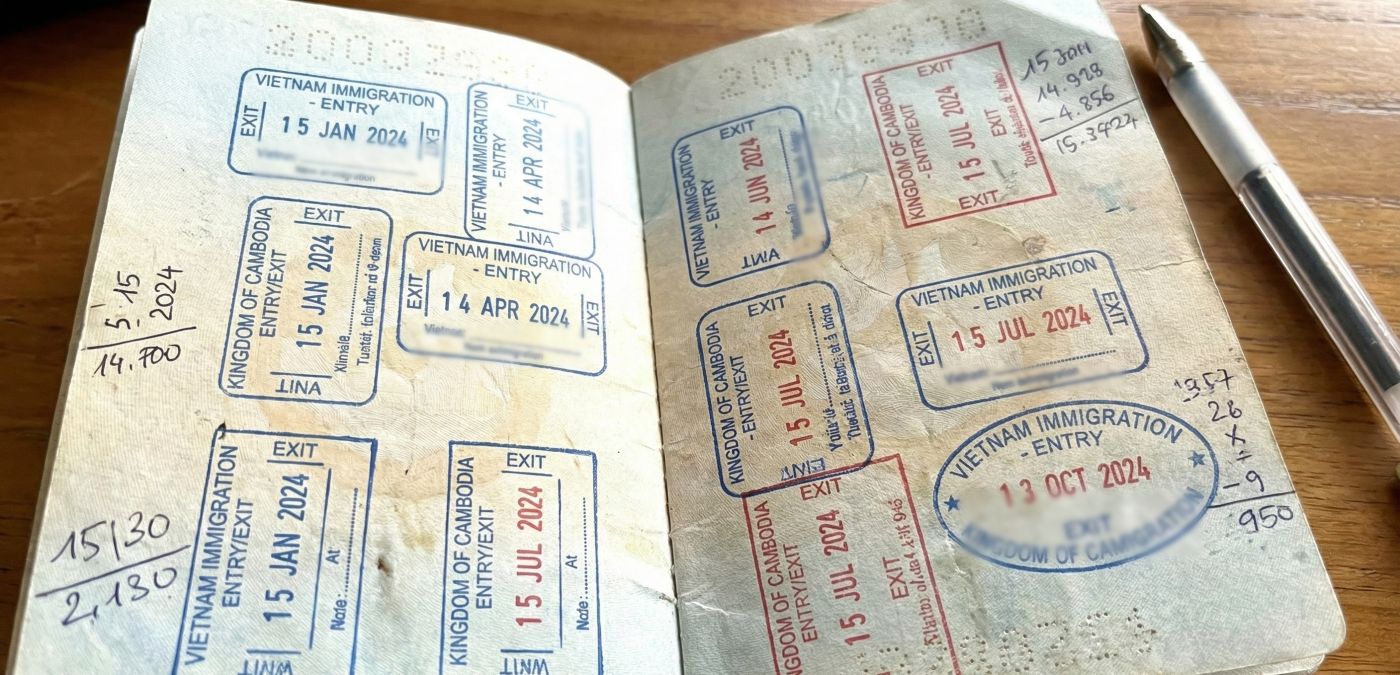
An Australian developer did three visa runs in 2024. Flew to Cambodia three times, stayed two days each trip, flew back. Tourist visa renewed each time. Total: 264 days in Vietnam.
January 2025, he receives letter from General Department of Taxation. They counted his days. He's a tax resident. They want tax finalization on his worldwide income. His freelance work for Australian clients: VND 1.8 billion (~$72,000). Progressive tax rates apply.
Tax bill: VND 523 million (~$21,000).
He thought visa runs solved the problem. They didn't.
The Visa vs. Tax Residency Confusion
Vietnam has NO digital nomad visa. Government discusses it occasionally - proposed "Golden Visa" program got attention in 2025 - but nothing exists yet.
What exists:
- E-visa: 90 days, $25, apply online
- Tourist visa: 30-90 days depending on type
- Business visa: Requires Vietnamese sponsor
- Work permit: Requires job offer from Vietnamese employer
Most digital nomads use e-visa or tourist visa. Extend it once, leave before 90 days, return, repeat.
This solves the visa problem. Doesn't solve the tax problem.
Vietnam determines tax residency three ways (Article 16, Law on Personal Income Tax No. 04/2007/QH12):
- Physical presence: 183+ days in calendar year OR 12 consecutive months from first arrival
- Permanent residence: Hold temporary/permanent residence card
- Rented accommodation: Lease 183+ days AND can't prove tax residence elsewhere
Most digital nomads trigger #1 without realizing it.
The math: Three 90-day tourist visas = 270 days in Vietnam = tax resident.
What Tax Residency Actually Means
Tax residents:
- Worldwide income taxable in Vietnam
- Progressive rates 5-35%
- Must file annual tax finalization by April 30
- Personal allowance: VND 11 million/month (~$468)
- Dependent allowance: VND 4.4 million/month each (~$187)
Non-residents:
- Only Vietnam-source income taxable
- Flat 20% rate
- No annual finalization required
- No allowances
The trap: Many digital nomads earn income remotely for foreign companies. Not Vietnam-sourced technically. But as tax resident, Vietnam taxes worldwide income.
Developer earning $72,000 remotely for Australian clients while living in Hanoi 264 days:
- Vietnam considers this worldwide income
- Subject to progressive rates
- After personal allowance: Roughly VND 523 million tax owed (~$21,000)
- Effective rate: 29%
Same income, stayed 182 days or less as non-resident:
- Not Vietnam-sourced income (foreign clients, foreign company)
- Arguably no Vietnam tax owed
- Effective rate: 0%
One extra day changes everything.
The Progressive Rates That Hurt
Vietnam's brackets for monthly income after allowances:
| Taxable Income (VND/month) | Taxable Income (USD/month) | Rate |
| Up to 5 million | Up to ~$213 | 5% |
| 5-10 million | $213-$426 | 10% |
| 10-18 million | $426-$767 | 15% |
| 18-32 million | $767-$1,362 | 20% |
| 32-52 million | $1,362-$2,215 | 25% |
| 52-80 million | $2,215-$3,406 | 30% |
| Over 80 million | Over $3,406 | 35% |
This is monthly taxable income AFTER personal allowance of VND 11 million.
Freelancer earning VND 150 million/month (~$6,387):
- Personal allowance: VND 11 million
- Taxable: VND 139 million (~$5,919)
- Tax calculation:
- First 5M at 5% = 250,000
- Next 5M at 10% = 500,000
- Next 8M at 15% = 1,200,000
- Next 14M at 20% = 2,800,000
- Next 20M at 25% = 5,000,000
- Next 28M at 30% = 8,400,000
- Remaining 59M at 35% = 20,650,000
- Total monthly tax: VND 38.8 million (~$1,651)
- Annual tax: VND 465.6 million (~$19,812)
- Effective rate: 26%
That's higher than many Western countries for that income level.
Compare to:
- Thailand: 0% if don't remit
- Dubai: 0% personal income tax
- Portugal: 20% flat (old NHR regime)
- Spain: 24% Beckham Law
Vietnam's 26-35% effective rates on mid-to-high income aren't competitive.
The Lease Agreement Trap
Third residency test gets overlooked: lease 183+ days = tax resident even if physically present fewer days.
German consultant arrived October 2024. Signed 12-month lease in Ho Chi Minh City. Left December for holidays. Returned January, left March. Total days in Vietnam: 147.
Under 183-day threshold? Should be non-resident?
Wrong. Lease term 12 months = 365 days. Circular 92/2015/TT-BTC specifies leased accommodation includes "hotels, boarding houses, rest houses, lodgings, and working offices."
If lease term 183+ days AND can't prove tax residence elsewhere, Vietnam considers you tax resident regardless of actual days present.
The consultant can't prove German tax residence (wasn't there enough days). Becomes Vietnamese tax resident. Worldwide income taxable.
Many landlords in expat areas require 6-12 month leases. Digital nomads sign thinking "I'll leave before 183 days." The lease term itself triggers tax residency if you can't prove residence elsewhere.
Service Contracts vs. Employment Contracts
Vietnam distinguishes between:
Employment income (labor contracts):
- Taxed progressively 5-35% for residents
- Employer withholds monthly
- Includes salary, wages, bonuses
Service contracts income:
- Payments over VND 2 million/month: 10% withholding for residents
- Treated differently for tax purposes
- Common for freelancers and consultants
Most digital nomads work under service arrangements, not employment. This creates reporting ambiguity.
British content writer with 5 Vietnamese clients paying via service contracts:
- Each client should withhold 10% PIT
- Writer must file annual finalization
- Many clients don't withhold (especially if paying foreign account)
- Writer responsible for self-declaring
In practice: Clients don't withhold. Freelancer doesn't self-declare. Tax authority doesn't catch it immediately.
Until they do.

The Enforcement Reality
General Department of Taxation (GDT) under Ministry of Finance administers taxes. Provincial tax offices handle local enforcement.
Current enforcement level: Inconsistent.
What they track well:
- Formal employment (employers withhold at source)
- Vietnamese companies and their employees
- Large taxpayers
- Property transactions
- Banking transactions over certain thresholds
What they track poorly:
- Digital nomads working remotely
- Freelancers with foreign clients
- People on tourist visas
- Cross-border payment platforms (Wise, PayPal, Payoneer)
Vietnam signed Common Reporting Standard (CRS) in 2017. Over 100 countries exchange financial account information. But implementation capacity varies.
According to Vina TPT, a tax advisory firm in Vietnam: "The GDT is increasingly using AI to monitor digital transactions, enforcing taxes on crypto gains and online services."
Translation: They're building enforcement infrastructure. Currently catching low-hanging fruit (obvious violations, large amounts). Over time, capability will improve.
The Australian developer who got caught: His case likely flagged because:
- He had Vietnamese bank account
- Received regular wire transfers from abroad
- Immigration stamps showed 264 days
- Easy to connect dots
Digital nomad using foreign accounts, tourist visa, no paper trail in Vietnam: Lower enforcement risk currently. But not zero. And not permanent.
What Happens When They Catch You
Penalties under Decree 125/2020/ND-CP:
Late filing:
- 0.05% of tax owed per day
- Accumulates quickly
Failure to file:
- 10-20% of tax owed
- Can reach VND 25 million (~$1,064) depending on severity
False information:
- 20% of additional tax owed
- Criminal liability possible for serious evasion
Example:
- Tax owed: VND 500 million (~$21,277)
- 6 months late: VND 500M × 0.05% × 180 days = VND 45 million (~$1,915)
- Total: VND 545 million (~$23,192)
Plus: Must file tax finalization within 45 days of leaving Vietnam if you're tax resident. Miss this = additional penalties.
The Australian developer's letter demanded:
- Tax owed: VND 523 million
- Late filing penalty: VND 52 million
- Total: VND 575 million (~$24,468)
He paid. Alternative was fighting it, hiring lawyers, risking criminal charges.
The Business Visa Doesn't Help
Some people think: "Get business visa, avoid tax issues."
Business visa (DN category) requires Vietnamese sponsor. Usually means:
- Company invites you for business purposes
- Company submits invitation letter
- You get 90-day or longer visa
This solves visa legality. Doesn't exempt you from tax residency rules. Same 183-day test applies. Business visa holders become tax residents if they exceed threshold.
And: Business visa implies conducting business in Vietnam. Makes tax authority more likely to ask questions if you're earning income while on business visa.
Work permit requirement: If performing work IN Vietnam, technically need work permit even if clients are foreign. Remote work for foreign companies sits in gray zone.
Vietnam's Law on Entry, Exit, Transit and Residence stipulates work permits required for "working in Vietnam." But what's "working in Vietnam" when you're video calling clients in San Francisco while sitting in Da Nang?
No clear answer. Most digital nomads operate without work permits. Enforcement focuses on obvious cases (teaching English, working for Vietnamese companies). Remote work for foreign entities largely ignored.
Largely. Not completely.
The Double Tax Treaty Reality
Vietnam has DTAs with 80+ countries including US, UK, Australia, Canada, Germany, Singapore, Japan.
These treaties prevent double taxation. Generally:
- If taxed in home country, can claim foreign tax credit in Vietnam
- Or if taxed in Vietnam, claim credit in home country
- Tie-breaker rules determine which country has taxing rights
The catch: Must apply for DTA benefits. Not automatic.
Per Circular 92/2015/TT-BTC: Must submit notification application to GDT 15 days BEFORE tax payment deadline. Can submit up to 3 years late, but complications arise.
Most digital nomads don't know this. Don't apply for DTA relief. Get double-taxed.
American developer in Hanoi:
- US taxes worldwide income (citizenship-based)
- Vietnam taxes worldwide income (183+ days = resident)
- DTA exists: Generally Vietnam gets primary taxing right for employment income if work performed there
- Developer can claim Foreign Tax Credit on US return for Vietnamese taxes paid
- Must actually pay Vietnamese taxes and get documentation
- Most don't do this, just pay US taxes, hope Vietnam doesn't notice
If Vietnam notices first = owe Vietnamese taxes. Can then claim FTC in US for next year. But timing mismatch creates cash flow problem.
What $50,000 Actually Costs
Let's run numbers for typical digital nomad:
Scenario: Freelance developer, $50,000 annual income (VND 1.17 billion)
Option A: Stay 182 days or less (non-resident)
- Not Vietnam-source income (foreign clients)
- Vietnam tax: VND 0
- Total tax burden: Just home country taxes
Option B: Stay 250 days (become resident, don't declare)
- Vietnam tax owed: ~VND 210 million (~$8,936)
- If caught, add 20% penalty: VND 42 million (~$1,787)
- Total: VND 252 million (~$10,723)
- Plus stress, legal fees, potential visa consequences
Option C: Stay 250 days (become resident, declare properly)
- Vietnam tax: ~VND 210 million (~$8,936)
- Must file annual return by April 30
- Must get tax clearance certificate when leaving
- Total: VND 210 million + compliance hassle
Option D: Work for Vietnamese company (proper work permit)
- Employer withholds tax at source
- Same VND 210 million tax on $50,000
- But legal status clear
- Work permit costs: $500-1,000 setup, must be sponsored
The honest calculation: Vietnam isn't tax-competitive for remote workers earning $40,000+.
Below that threshold (after personal allowances), effective rates lower. At $25,000-30,000, might pay 8-12% effective rate. Still more than many alternatives but reasonable.
Above $60,000, you're hitting 25-30% effective rates. Thailand, Portugal, Dubai, Estonia all offer better deals.

The Americans Get Hit Twice
US citizens face special problems.
United States taxes based on citizenship, not residence. Live in Vietnam, work remotely, US still wants taxes.
Vietnam taxes based on 183-day presence. Exceed threshold, Vietnam wants taxes too.
DTA helps but doesn't eliminate burden:
Developer, US citizen, living Hanoi 220 days, earning $80,000:
US side:
- Must file US return regardless
- Can use Foreign Earned Income Exclusion (FEIE): Excludes $130,000 (2025)
- Must pass Physical Presence Test (330 days outside US) or Bona Fide Residence Test
- If passes: $80,000 excluded from US income tax
- Self-employment tax still applies if self-employed: 15.3% on net earnings
- SE tax on $80,000: ~$12,240
Vietnam side:
- Tax resident (220 days)
- Worldwide income taxable
- After personal allowances: Effective rate ~20-22%
- Vietnam tax: ~$16,000-17,600
With DTA:
- Vietnam has primary taxing right (work performed there)
- Pay Vietnam tax: $16,000-17,600
- Claim Foreign Tax Credit on US return for Vietnamese taxes
- But FTC doesn't eliminate SE tax
- Still owe US: ~$12,240 SE tax
Total taxes: ~$28,000-30,000 (35-37.5% effective rate)
Compare to staying in US:
- Federal income tax: ~$10,000-12,000
- SE tax: ~$12,240
- Total: ~$22,000-24,000 (27.5-30%)
Vietnam actually costs MORE for Americans earning $80,000 remotely.
Only wins if:
- Employed by Vietnamese company (no SE tax)
- Or earning substantially more (FEIE + FTC interaction becomes favorable at $150,000+)
What Actually Makes Sense
After all this complexity, the honest assessment:
Vietnam works for:
Low-income remote workers (under $30,000):
- Effective Vietnam tax: 5-10%
- Cheaper than most Western countries
- Cost of living offsets tax burden
Retirees with passive income:
- Overseas remittances to individuals: Exempt (Article 4, Circular 111/2013/TT-BTC)
- Social security, pensions from abroad: Generally not taxed
- Can live tax-free if income truly passive
Genuinely short-term visitors (under 183 days):
- Avoid tax residency
- No Vietnam tax on foreign income
- Must actually track days carefully
Vietnamese company employees:
- Proper work permit
- Clear legal status
- Employer handles withholding
- Tax burden similar to other countries
Vietnam doesn't work for:
Mid-to-high income remote workers ($40,000-100,000):
- 20-30% effective rates
- Better options exist (Thailand, Portugal, Dubai)
- Compliance complexity
- Visa uncertainty
Americans with self-employment income:
- Double taxation (SE tax + Vietnam progressive rates)
- Higher total burden than staying in US
- Only makes sense at very high income or with employment
People who value certainty:
- No digital nomad visa = legal gray area
- Visa runs technically illegal if "working"
- Tax residency easily triggered
- Enforcement capacity improving
Long-term residents wanting stability:
- Tourist/business visas max 12 months typically
- Temporary residence card requires work permit or other qualification
- Path to permanent residence unclear for remote workers
The Proposed Golden Visa Reality Check
April 2025: Vietnam's Tourism Advisory Board proposed "Golden Visa" to Prime Minister.
Suggested features:
- 10-year investor visa (minimum investment required)
- 5-year talent visa (skilled professionals, researchers)
Status: Proposal stage. No legislation. No implementation timeline. No confirmed details.
Even if passed: Will likely target high-net-worth investors and exceptional talents, not typical digital nomads earning $40,000-80,000 remotely.
Similar to Dubai's Golden Visa: Sounds great, probably won't help average remote worker.
Da Nang hosted Vietnam Nomad Fest March 2025. Two-week event for digital nomads. Government participating. This suggests interest in the community.
But interest doesn't equal legislation. Thailand discussed digital nomad visa for years before implementing. Malaysia's MM2H became prohibitively expensive. Indonesia's constantly changes rules.
Don't restructure your life around proposed visas that don't exist yet.
The Practical Options Now
If you want to spend significant time in Vietnam in 2025:
Option 1: Stay under 183 days
- Use 90-day visa, leave before 183 days total
- Don't sign long-term leases (max 90-day agreements)
- Track days meticulously (both calendar year AND rolling 12-month)
- Can return after break, start new count
- Risk: Immigration may question frequent entries
- Cost: Visa fees + travel costs for breaks
Option 2: Get proper work permit through Vietnamese employer
- Find remote work position with Vietnamese company
- Company sponsors work permit
- Clear legal status
- Pay Vietnamese taxes properly
- Can get temporary residence card
- Cost: 20-30% tax on income, but legal certainty
Option 3: Accept tax resident status, file properly
- Stay as long as you want
- Declare worldwide income
- Pay 20-30% effective tax rate
- File annual return by April 30
- Get tax clearance when leaving
- Cost: Higher taxes, but compliant
Option 4: Use Vietnam as part of nomadic rotation
- 90 days Vietnam
- 90 days Thailand
- 90 days elsewhere
- Never trigger 183 days anywhere
- Remain true perpetual traveler
- Cost: Constant movement, no stable base
Option 5 (not recommended but honest): Fly under radar
- Stay on tourist visas
- Don't declare income
- Use foreign accounts
- Hope enforcement doesn't improve
- Risk: Penalties if caught, visa consequences, stress
- Many people do this; doesn't make it smart
The Bottom Line
Vietnam is beautiful. Hanoi's energy, Ho Chi Minh City's dynamism, Da Nang's beaches. Cost of living remains low. Food is incredible. Coffee culture unmatched. Fast internet widely available. Growing expat community.
But tax and visa situation remains complicated:
Visa: No digital nomad option. Tourist/business visas require leaving every 90 days. Technically shouldn't be "working" on these visas. Enforcement weak but legality shaky.
Tax: 183-day threshold easy to hit. Progressive rates 5-35% not competitive for mid-to-high earners. Worldwide income taxable as resident. Enforcement currently spotty but improving.
Legal status: Gray zone for remote workers. Can do it, thousands do. Not officially sanctioned. Could change.
For low-income remote workers (under $30,000), Vietnam's math works. Low taxes after allowances, low cost of living, high quality of life.
For mid-to-high income ($40,000-100,000), Vietnam's tax burden comparable to Western countries but without legal clarity. Thailand's remittance-based system or Portugal's old NHR regime were better deals.
For Americans, Vietnam creates double tax burden that makes little financial sense unless employed by Vietnamese company.
The Australian developer who triggered this article: He hired Vietnamese tax advisor for VND 15 million (~$638). Filed proper tax finalization. Paid VND 575 million total (~$24,468). Got tax clearance certificate. Left Vietnam.
Now he's in Bali. 180 days or less. Counting carefully.
Key Facts:
- Tax residency: 183+ days in calendar year OR 12 consecutive months OR lease 183+ days
- Tax resident: Worldwide income taxable, progressive 5-35%
- Non-resident: Vietnam-source only, flat 20%
- Personal allowance: VND 11 million/month (~$468)
- Dependent allowance: VND 4.4 million/month (~$187)
- Filing deadline: April 30 annually (or 90 days for first year)
- Leaving Vietnam: 45-day deadline for tax finalization
- Penalties: 0.05% daily + 10-20% for non-filing
- Maximum penalty: VND 25 million (~$1,064) administrative
- E-visa: 90 days, $25, no work authorization
- Work permit: Required for employment in Vietnam
- DTA: 80+ countries, must apply for benefits
- Enforcement: Currently weak, improving
Resources:
- General Department of Taxation: gdt.gov.vn
- Personal Income Tax Law: Law No. 04/2007/QH12
- Circular 92/2015/TT-BTC (tax filing procedures)
- Circular 111/2013/TT-BTC (PIT regulations)
- Decree 125/2020/ND-CP (penalties)
- E-visa application: evisa.xuatnhapcanh.gov.vn
- Immigration: xuatnhapcanh.gov.vn
⚠️ Important Note:
Vietnam's tax law is clear, enforcement is not. This article reflects regulations as of October 2025 based on Law No. 04/2007/QH12, Circular 92/2015/TT-BTC, and Circular 111/2013/TT-BTC.
Many digital nomads operate in Vietnam without proper work authorization or tax compliance. Thousands do it successfully. That doesn't make it legal.
Tax and immigration rules can change. Enforcement capacity is improving. The General Department of Taxation is implementing AI monitoring systems according to multiple tax advisory firms operating in Vietnam.
The 183-day threshold is mathematically straightforward but practically easy to miscalculate. A 12-month lease can trigger tax residency even with fewer physical days present.
Before spending significant time in Vietnam, verify current rules directly with GDT (gdt.gov.vn) and consult with licensed Vietnamese tax advisors who understand expat situations. International firms like Dezan Shira & Associates, KPMG Vietnam, and local specialists like Vina TPT can provide proper guidance.
This article is based on official legal sources and real cases. Use it to understand the landscape. Get professional advice before making decisions that could result in VND 500 million+ tax bills.