
By Nguyen Thanh Long, Housing Law Specialist April 2025
A British developer just got evicted from his Hanoi apartment after nine months. Not for non-payment. Not for damage. Because his landlord didn't have legal right to rent to foreigners—and the district police discovered this during a routine inspection.
He lost three months rent (VND 36 million/$1,440), his deposit (VND 24 million/$960), and had five days to vacate.
This happens regularly in Vietnam. Foreigners rent apartments that legally can't be rented to them. Nobody checks until suddenly someone does. Then it's the tenant who loses, not the landlord.
Vietnamese housing law for foreigners is specific, complex, and widely ignored—until enforcement arrives. Here's what the law actually says, what actually happens, and how to stay on the right side of both.
The Legal Framework Nobody Explains
Vietnam has clear laws about foreigners renting property. Most foreigners (and many Vietnamese landlords) don't know them.
The Housing Law Foundation
Law on Housing No. 65/2014/QH13 (amended 2023) governs all residential property in Vietnam.
Article 186 specifically addresses foreigners:
"Foreign organizations and individuals eligible to rent houses in Vietnam include:
- Foreign organizations with investment projects or business activities in Vietnam
- Foreign individuals legally residing in Vietnam
- Overseas Vietnamese holding Vietnamese passports or valid overseas Vietnamese certificates"
"Legally residing" means:
- Temporary residence card (valid work permit/business registration)
- Long-term visa (DN - business visa with sponsor)
- Diplomatic status
- Special administrative recognition
"Legally residing" does NOT mean:
- Tourist visa (even if you've been extending it for months)
- Visa on arrival
- E-visa (90 days)
- Overstaying any visa
Circular 23/2015/TT-BXD (Ministry of Construction) implements Article 186:
"House owners must verify foreign tenant's legal residence status before signing lease. Must keep copies of passport and visa/residence card. Must register lease with local police within 7 days."
What This Means Practically
If you're on tourist visa, technically you can only legally rent:
- Hotels
- Serviced apartments (registered with Department of Tourism)
- Short-term accommodation with proper licensing
You cannot legally rent:
- Regular apartments with 6-12 month leases
- Houses
- Rooms from individual landlords
- Anything requiring "residence" registration
But: 90% of foreigners in Vietnam on tourist visas do rent regular apartments. This is the gap between law and practice.
The Three Categories of Legal Housing
Category 1: Tourist Accommodation (Legal for Everyone)
What qualifies:
- Hotels with business licenses
- Hostels with Department of Tourism registration
- Serviced apartments with STR (short-term rental) licenses
- Guesthouses with proper permits
Legal basis: Governed by tourism law, not housing law.
Requirements: None from tenant side. Just payment.
Cost: VND 8-25 million/month ($320-1,000) for studio-equivalent.
Pros:
- 100% legal regardless of visa
- Simple payment
- No deposit complications
- Flexible duration
Cons:
- Expensive (40-80% premium over regular apartments)
- Hotel-style living (less private)
- Daily/weekly billing (harder to budget)
- Limited kitchen access often
Example - Hanoi:
Serviced studio in Ba Dinh:
- Rate: VND 18 million/month ($720)
- Includes: Utilities, wifi, cleaning
- Contract: Simple, registered with tourism authority
- Legal status: Completely clear
Regular apartment same area: VND 10-12 million/month ($400-480)
Premium: 50-80% for legal clarity.
Category 2: Formal Long-Term Rental (Legal with Proper Visa)
What qualifies:
- Apartments in registered buildings
- Houses owned by individuals with proper documentation
- Condominiums with foreign ownership allowed
- Properties with "residential" (nhà ở) designation
Legal basis: Housing Law Article 186 + Circular 23/2015
Requirements from tenant:
- Temporary residence card OR work permit OR business license
- Passport
- Proof of employment (if work permit based)
- Police registration within 7 days of move-in
Requirements from landlord:
- Property ownership documents (sổ đỏ - red book)
- Certificate of house ownership
- Tax registration
- Must file lease with ward police
Cost: VND 8-18 million/month ($320-720) for 1BR in Hanoi/HCMC.
Contract terms:
- 6-12 months typical
- 1-2 months deposit
- Notarized contract (recommended)
- Police registration requirement
Example - Ho Chi Minh City:
1BR in District 2:
- Rent: VND 14 million/month ($560)
- Deposit: VND 28 million (2 months)
- Contract: 12 months, renewable
- Requirements: Temporary residence card, passport copy, employer letter
- Registration: Filed with Ward police within 7 days
Fully legal. Tenant has protection under Housing Law.
Category 3: Informal/Gray Market (Technically Illegal, Widely Practiced)
What this is:
- Regular apartments rented to foreigners on tourist visas
- Landlords who don't register leases
- No police notification
- Cash payments, minimal contracts
- Most digital nomads live in this category
Legal status: Violates Article 186 (tenant doesn't meet "legal residence" requirement).
Risk factors:
- Police can order eviction anytime
- Tenant has minimal legal recourse
- Deposit recovery difficult if problems arise
- Immigration complications possible
Cost: VND 7-15 million/month ($280-600) for 1BR.
Why it exists:
- Demand from thousands of tourist-visa foreigners
- Landlords want tenants
- Enforcement inconsistent
- Profitable for both sides short-term
Example - Da Nang:
1BR near beach:
- Rent: VND 9 million/month ($360)
- Deposit: VND 9 million
- Contract: "Informal" - simple document, not notarized
- No police registration
- Cash or transfer payment
- Landlord meets you at coffee shop, not police station
Works fine... until it doesn't.
The Police Registration System (TT07)
Circular 07/2012/TT-BCA requires all foreigners to register address with local police.
The TT07 Form
What it is: Temporary residence declaration for foreigners.
Who must file:
- Landlord (primary responsibility)
- Or tenant (if landlord doesn't)
- Within 24 hours of arrival (technically)
Information required:
- Tenant's full name, nationality, passport
- Visa type and validity
- Address of accommodation
- Landlord's information
- Entry date
Where to file: Ward police station (công an phường/xã)
Consequences of not filing:
- Tenant: Fine VND 1-5 million ($40-200)
- Landlord: Fine VND 2-8 million ($80-320)
- Potential deportation for serious violations
The Reality Gap
In tourist areas (Hanoi Old Quarter, HCMC District 1, Da Nang beach):
- Enforcement sporadic
- Many landlords don't file
- Police generally don't check door-to-door
- Hotels/guesthouses file automatically
- Private apartments: 30-40% compliance estimated
In residential areas:
- More enforcement
- Ward police know neighborhood
- Random checks more common
- Higher compliance (60-70%)
What triggers checks:
- Neighbors complaining (noise, parties)
- Police anti-crime sweeps
- Immigration crackdowns
- Visa overstays prompting investigation
- Bad luck/random inspection
The Protection Strategy
If you have work permit/TRC:
- Ensure landlord files TT07 immediately
- Keep copy for your records
- Update if you change address
- Required for visa extensions
If you're on tourist visa:
- Stay in officially licensed accommodation OR
- Accept risk of informal rental OR
- Keep low profile (no complaints, no problems)
Red flags that increase risk:
- Loud parties
- Many visitors
- Conflicts with neighbors
- Visa issues (overstay)
- Being visible/obvious foreigner in residential area
The Deposit Problem Under Vietnamese Law
Housing Law Article 187 addresses deposits:
"Deposit amount shall be agreed by parties but not exceed 3 months rent. Must be returned within 30 days after lease ends, minus legitimate deductions."
Sounds protective. Reality differs.
When Deposit Recovery Works
Conditions:
- Formal lease with registered address
- Landlord is professional/company
- Clear documentation of property condition
- Tenant has legal status (work permit)
- Move-out inspection done jointly
Success rate: 70-80% recover full or nearly full deposit.
Timeline: 30-60 days typically.
When Deposit Recovery Fails
Conditions:
- Informal lease, no registration
- Tourist visa tenant
- Landlord is individual (not company)
- No documentation of initial condition
- Tenant leaves Vietnam before resolution
Success rate: 30-40% recover deposit.
Common scenarios:
Scenario A: Landlord claims damage.
- "Walls need repainting": VND 5 million ($200)
- "AC broken": VND 3 million ($120)
- "Cleaning": VND 2 million ($80)
- From VND 18 million deposit: Return VND 8 million ($320)
- Keep VND 10 million ($400) = 55% of deposit
Scenario B: Landlord just keeps it.
- Stops answering calls
- No forwarding address
- Tenant already left Vietnam
- No practical recourse
Scenario C: Dispute on "normal wear"
- Landlord wants professional painting
- Tenant argues it's normal wear
- No legal framework for informal lease
- Compromise: Lose 25-40% of deposit
The Legal Recourse Options
For formal, registered leases:
- Negotiation: Direct discussion, compromise.
- Mediation: Ward People's Committee offers free mediation (hòa giải). Success rate 50-60%.
- Court: File lawsuit at District People's Court.
- Cost: VND 2-5 million ($80-200) filing fee
- Lawyer: VND 10-20 million ($400-800)
- Timeline: 6-12 months
- Worth it for deposits over VND 30 million ($1,200)
- Consumer Protection Hotline: Call 1800.8282. Limited effectiveness but free.
For informal leases:
- Negotiation only real option
- Legal system won't help (lease wasn't legal)
- Cut losses, learn lesson
The Furniture and Utilities Reality
Vietnamese rental law distinguishes nhà trống (empty house) and nhà đủ đồ (furnished house). But definitions vary.
What "Furnished" Legally Means
Circular 11/2015/TT-BCA (police regulation) defines furnished rental as including:
"Basic furniture for residential use: bed, table, chairs, wardrobe, cooking equipment."
Does NOT specify:
- Quality level
- Working condition
- Completeness
Result: "Furnished" apartments range from "has a broken bed" to "luxury fully equipped."
Typical Furnished Includes
Budget tier (VND 6-10 million/$240-400):
- Bed (maybe mattress)
- Plastic table and chairs
- Old wardrobe
- Basic kitchen setup (single burner, some pots)
- Washing machine (maybe, often broken)
- AC (usually old, inefficient)
Mid tier (VND 10-15 million/$400-600):
- Decent bed with mattress
- Sofa, dining table
- Functional wardrobe
- Kitchen equipment (2 burner, fridge, dishes)
- Washing machine
- AC (working)
- TV (maybe)
Upper tier (VND 15+ million/$600+):
- Good quality furniture
- Full kitchen (oven sometimes)
- Modern appliances
- Multiple ACs
- Smart TV
- Quality bedding
The Appliance Responsibility Gray Zone
Law says: Landlord maintains furniture. Tenant maintains reasonable care.
Practice varies:
AC maintenance:
- Law: Landlord's responsibility if broken
- Practice: Tenant often pays for cleaning (VND 300,000-500,000/$12-20) and minor repairs
- Major repairs: Negotiable, often split
Water heater:
- Breaks frequently in Vietnam
- Replacement: Landlord's responsibility legally
- Practice: Tenant waits 2-4 weeks for landlord action or pays themselves for speed
Washing machine:
- Similar to water heater
- Landlords slow to fix/replace
- Tenants often "borrow" one or buy used
Strategy: Document all appliances on move-in. Video working condition. When something breaks, establish it worked initially. This gives leverage.
Utilities Setup
Who pays:
- Almost always tenant (unlike some Western countries)
- Rare for utilities to be "included" unless serviced apartment
How billing works:
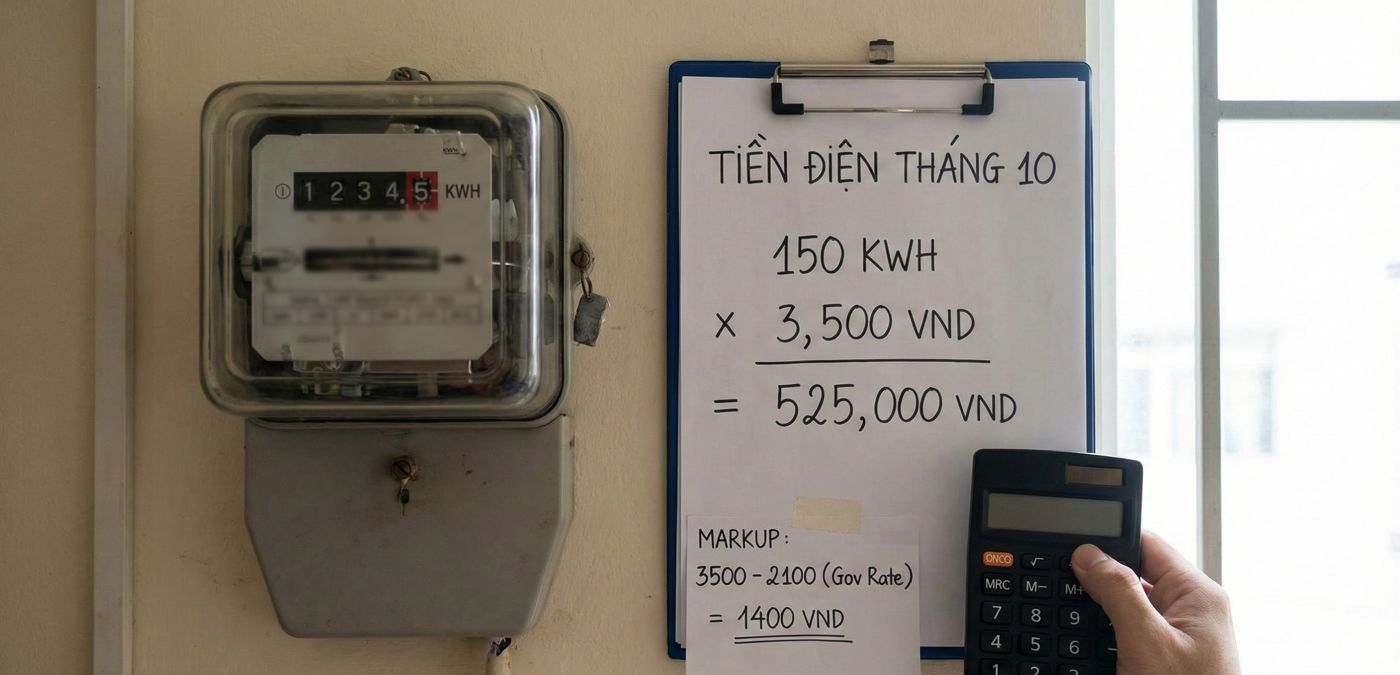
Electricity:
- Metered per apartment
- Landlord's name on account usually
- Landlord charges you (markup common)
- Government rate: VND 1,800-2,900/kWh
- Landlord charges: VND 3,000-4,500/kWh (50-70% markup)
- Legal? Gray area. Common practice.
Water:
- Very cheap (VND 8,000-15,000/m³)
- Usually minimal markup
- Bill: VND 80,000-200,000/month ($3-8)
Internet:
- Tenant arranges usually
- Viettel, VNPT, FPT providers
- Cost: VND 250,000-400,000/month ($10-16)
- Speed: 50-100 Mbps typical
The markup issue: Landlords charge 150-180% of actual cost for electricity. You can:
- Accept it (most common)
- Negotiate lower (sometimes works)
- Demand direct billing (landlord usually refuses)
- Document rates and dispute (risky, can sour relationship)
The Condominium Foreign Ownership Rules
Law on Housing Article 159 allows foreigners to own condominiums under conditions.
Key restrictions:
- 30% building limit: Maximum 30% of units can be foreign-owned in any building.
- Eligible foreigners:
- Work permit holders
- Investors with investment certificates
- Married to Vietnamese citizens
- Overseas Vietnamese
- 50-year ownership: Foreigners get 50-year renewable ownership, not perpetual.
- Areas restricted: Some areas near military/government facilities prohibit foreign ownership.
Why This Matters for Renters
Renting foreign-owned condos:
- Owner has clear legal right to rent to you
- Paperwork usually proper
- Higher quality apartments often
- But: More expensive (foreign owners charge market rates)
Renting Vietnamese-owned condos:
- Legal if you have work permit/TRC
- Owner might not know proper procedures
- More negotiating room on price
- But: Compliance with registration laws less certain
Checking ownership: Ask for sổ hồng (pink book - condo ownership certificate). Foreigner's name = foreign owned. Vietnamese name = Vietnamese owned.
The Rental Contract Requirements
Housing Law Article 186.3 requires written contracts for leases over 6 months.
What Must Be In Contract
Legal minimums:
- Parties' information (names, IDs, addresses)
- Property address and description
- Lease term
- Rent amount and payment schedule
- Deposit amount
- Rights and obligations of each party
- Breach consequences
- Dispute resolution method
Recommended additions:
- Furniture/appliance list with condition notes
- Utility payment responsibility
- Maintenance responsibility breakdown
- Early termination terms
- Rent increase limits
- Sublease permissions
- Guest/visitor policies
Notarization Requirements
Law does NOT require notarization for rental contracts.
But: Notarization provides:
- Legal proof of contract authenticity
- Court accepts without question if dispute
- Harder for either party to claim fraud
Cost: VND 500,000-1 million ($20-40)
Process:
- Both parties go to notary office (văn phòng công chứng)
- Bring: IDs, passports, ownership documents
- Notary reads contract, verifies understanding
- Both sign in presence of notary
- Notary stamps and signs
Worth it?
- Yes if: Long-term lease (12+ months), large deposit (VND 30 million+/$1,200+), foreign landlord
- Maybe if: Standard 6-12 month lease, mid-range deposit
- No if: 1-3 month, small deposit, trusting landlord
The Language Issue
Law does NOT require Vietnamese language contracts.
But: Courts only recognize Vietnamese for proceedings.
Best practice:
- Bilingual contract (English and Vietnamese)
- Clear statement: "If discrepancy, Vietnamese version prevails" OR "Both versions equally binding"
- Get translation reviewed by independent translator (not landlord's friend)
Cost of translation: VND 300,000-800,000 ($12-32) for standard contract.

The Regional Enforcement Variations
Vietnam enforcement of housing law varies dramatically by location.
Hanoi
Strictness: Medium-High
Characteristics:
- Capital city, more government oversight
- Random police checks in residential areas
- Foreigner registration enforced moderately
- Old Quarter: Tourist zone, more lenient
- Tay Ho (West Lake): Expat area, some enforcement
- Ba Dinh/Dong Da: Residential, higher enforcement
Risk level for informal rentals: Medium
What we see: Tourist visa holders generally okay in Tay Ho and Old Quarter for 6-12 months. Longer stays or residential areas = higher risk.
Ho Chi Minh City
Strictness: Low-Medium
Characteristics:
- Business focus, less political sensitivity
- District 1/3: Tourist areas, very lenient
- District 2/7: Expat areas, medium enforcement
- Outer districts: Higher enforcement
- Economic hub = authorities focus on business, less on housing
Risk level for informal rentals: Low
What we see: Tourist visa digital nomads live in Districts 1,2,3,7 for 6-24 months without issues commonly. Police checks rare.
Da Nang
Strictness: Low
Characteristics:
- Tourism-dependent economy
- Beach areas: Very lenient
- Residential areas: Still lenient
- Smaller city, less bureaucratic
- Police know tourist visa foreigners exist, mostly ignore
Risk level for informal rentals: Very Low
What we see: Tourist visa foreigners rent 12+ months frequently. Few enforcement actions unless complaints.
Hai Phong, Can Tho, Nha Trang (Secondary Cities)
Strictness: Medium-High
Characteristics:
- Less international exposure
- Fewer foreigners = more noticeable
- Police less familiar with process
- Either strictly enforce or confused about rules
Risk level: Variable, unpredictable
The Complete Legal Compliance Checklist
For foreigners wanting 100% legal rental:
□ Have temporary residence card OR work permit OR diplomatic status □ Choose registered property (not informal landlord) □ Sign written contract (bilingual recommended) □ Get contract notarized (recommended for 12+ months) □ Landlord files TT07 with ward police within 24 hours □ Receive copy of TT07 registration □ Set up utilities properly (in landlord's name, billed to you) □ Document apartment condition on move-in (photos/video) □ Keep copies of all payments and communications □ Register address changes if you move
Result: Full legal protection. Can enforce rights in court. Deposit recovery likely. No immigration complications.
Cost of compliance: Extra VND 1-2 million ($40-80) for notarization, registration, proper setup.
The Gray Zone Strategy (Most Common)
What most tourist-visa digital nomads actually do:
- Find apartment through Facebook/local agents
- Meet landlord, negotiate 6-12 months
- Pay deposit + first month
- Sign basic contract (usually not notarized)
- No police registration
- Keep low profile
- Leave within 12 months or extend quietly
Risk acceptance:
- 10-20% chance of issues
- If problems, minimal legal recourse
- Might lose deposit
- Small chance of police problems
- Accept this as cost of not having proper visa
Why it works (usually):
- Police understaffed for systematic checks
- Focus on violent crime, not housing violations
- Landlords want income, turn blind eye to visa status
- Thousands doing same thing, creating normalization
- Economic incentive for all parties
Why it fails (sometimes):
- Bad luck (police sweep during campaign)
- Complaints from neighbors
- Immigration cross-checking during visa extension
- Overstaying visa triggers deeper investigation
The Bottom Line
Vietnamese housing law is clear:
- Tourist visa = tourist accommodation only
- Long-term leases require legal residence status (work permit/TRC)
- All leases must be registered with police
- Contracts should be written, preferably notarized
Vietnamese housing reality is different:
- Thousands of foreigners rent on tourist visas
- Most landlords don't register leases
- Enforcement inconsistent and location-dependent
- System operates on "don't cause problems, won't have problems"
Your choice:
Path A - Full Legal Compliance:
- Get work permit or business visa with residence
- Pay VND 10-18 million/month ($400-720)
- Full protection, legal recourse
- Suitable for: Long-term (2+ years), families, careers
Path B - Tourist Visa Gray Zone:
- Accept 10-20% risk
- Pay VND 7-15 million/month ($280-600)
- Limited legal protection
- Keep low profile
- Suitable for: 6-12 months, digital nomads, flexible
Path C - Full Legal Short-Term:
- Stay in licensed serviced apartments
- Pay VND 15-25 million/month ($600-1,000)
- 100% legal on any visa
- Suitable for: 1-6 months, don't want risk
Most digital nomads choose Path B. Most long-term expats choose Path A. First-timers and risk-averse choose Path C.
Know which path you're on and its consequences.
Legal References:
- Law on Housing No. 65/2014/QH13 (amended 2023)
- Circular 23/2015/TT-BXD (Ministry of Construction)
- Circular 07/2012/TT-BCA (Police registration)
- Circular 11/2015/TT-BCA (Furnished rental definition)
- Housing Law Article 159 (Foreign ownership)
- Housing Law Article 186 (Foreign rental rights)
- Housing Law Article 187 (Deposit regulations)
Official Resources:
- Ministry of Construction: moc.gov.vn
- Vietnam Police: bocongan.gov.vn
- Housing & Real Estate Market Management Agency: nhadathoabinh.vn
- Legal Documents Database: thuvienphapluat.vn
Unofficial but Practical:
- Expat Facebook groups by city
- Local real estate agents (understand gray zones)
- Immigration lawyers (for proper visa path)
Disclaimer: This article explains Vietnamese housing law as written and as practiced. It does not constitute legal advice. The "gray zone" strategies described are factual observations of common practice but carry legal risks. Readers are responsible for their own compliance decisions. Consult licensed Vietnamese lawyer for specific situations. Exchange rate: VND 24,900 = $1 USD (April 2025).