Getting reliable healthcare prices in Mexico is harder than it should be. Some hospitals publish price lists. Others make you call and ask. Some quote you one price and bill another. I spent three weeks trying to piece this together from hospital websites, expat forums, and people willing to share their actual bills.
Here's what I found. Gaps and all.
Methodology note: Prices collected from published hospital tariffs, IMSS official documents, and patient invoices between October 2024 and February 2025. All costs vary by facility, city, and exchange rate (MXN/USD conversions use ≈18.2 rate from Feb 2025).
What Different Procedures Actually Cost
I'm breaking this into rough categories because the range is huge depending on where you go.
Major surgeries (the ones people worry about):
Appendectomy - Public IMSS members pay almost nothing if they're already enrolled. Private hospitals... it depends. I got quotes from three different Hospital Angeles locations: one said $3,400, another said $4,100, the third wouldn't give me a number over the phone. Medical tourism packages advertise $4,500-5,200 but I don't know what's actually included. Someone on a forum paid $3,847 total at a Star Médica in Querétaro.
Knee replacement - IMSS website mentions this is covered for members but doesn't list wait times. Private quotes I found: $11,900 (Hospital Angeles Guadalajara), $14,200 (some place in Monterrey I forget the name), $22,400 (ABC Medical Center in Mexico City). Medical tourism sites claim $13,000-17,000. For comparison, the same procedure in the US averages $35,000-50,000. The problem with Mexico pricing is these numbers are all over the place and I can't tell which ones are truly comparable.
C-section - A friend paid $5,100 at Hospital Español in Mexico City last year. Another acquaintance paid $8,900 at a private hospital in Monterrey. IMSS covers this for enrolled members. The medical tourism packages I saw ranged from $4,800 to $6,800 but whether that includes pediatrician fees for the baby, I couldn't determine.
Dental work (this is where the deals are):
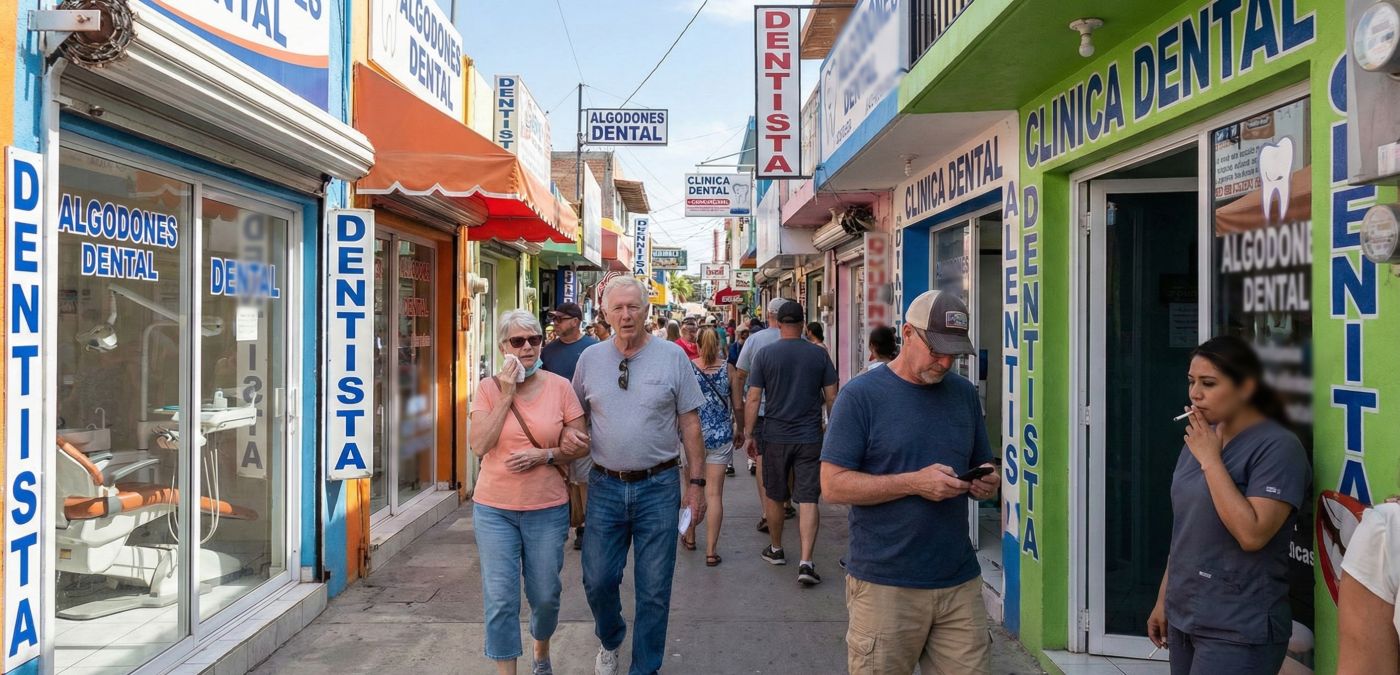
Dental crown - Prices I could actually confirm: $340 in Guadalajara at a dentist someone recommended, $580 at a place in Mexico City's Polanco neighborhood, $420 in Los Algodones (the border dental town). US price for comparison: my dentist quoted me $1,400 two years ago.
Dental implant - Here's where it gets weird. Los Algodones has signs everywhere advertising implants for $890-1,200. Important: these prices typically cover just the implant fixture and abutment, not the final crown. Full restoration (implant + abutment + crown) adds another $300-500. Mexico City dentists charge $1,500-2,100 for what they call "complete" but definitions vary - always ask exactly what's included.
Diagnostic stuff:
MRI - Quoted prices: $470 (some imaging center in Guadalajara), $680 (Mexico City), $890 (fancy place in Monterrey that specifically markets to Americans). IMSS covers this with a referral but the wait can be months.
Colonoscopy - I found a price of $720 at a private gastroenterology clinic in CDMX. Hospital Angeles website listed it at $840. No idea what IMSS charges (if anything beyond being enrolled).
Emergency room visit - This one's impossible to price because it depends what they do. One person told me they paid $380 for an ER visit that was basically just a doctor's exam and IV fluids. Another paid $720 for what sounded like a similar situation. IMSS emergency rooms are essentially free if you're a member, but you might wait hours.
Eye stuff:
Lasik - Quotes ranged from $1,680 (Mérida) to $3,400 (Mexico City premium clinic). No idea about quality differences. The cheap ones might be older technology? I tried to research this and gave up because the laser types and technical specs were over my head.
Cataract surgery per eye - $2,100 was one quote I got. $3,200 was another. Medical tourism sites say $2,400-3,000. These might not all be comparable procedures.
The impossible-to-price category:
Hip replacement, gallbladder removal, hernia repair, hysterectomy - I got a few quotes for these but the ranges were so huge (like $4,000 to $19,000 for hip replacement) that I don't feel confident listing them. It depends massively on which hospital, which city, what implants they use, how many nights you stay, and probably a dozen other factors I don't understand.
Normal birth - Someone told me they paid $3,400. Another person paid $6,100. IMSS covers it. Those medical tourism packages? Anywhere from $3,200 to $8,000 depending on the hospital tier and city.
Note: I tried to make a nice organized table for this. Couldn't do it. The data doesn't fit neatly because hospitals price things differently, include different things in their quotes, and some procedures have a dozen variables that affect cost.
IMSS - Cheap But Complicated
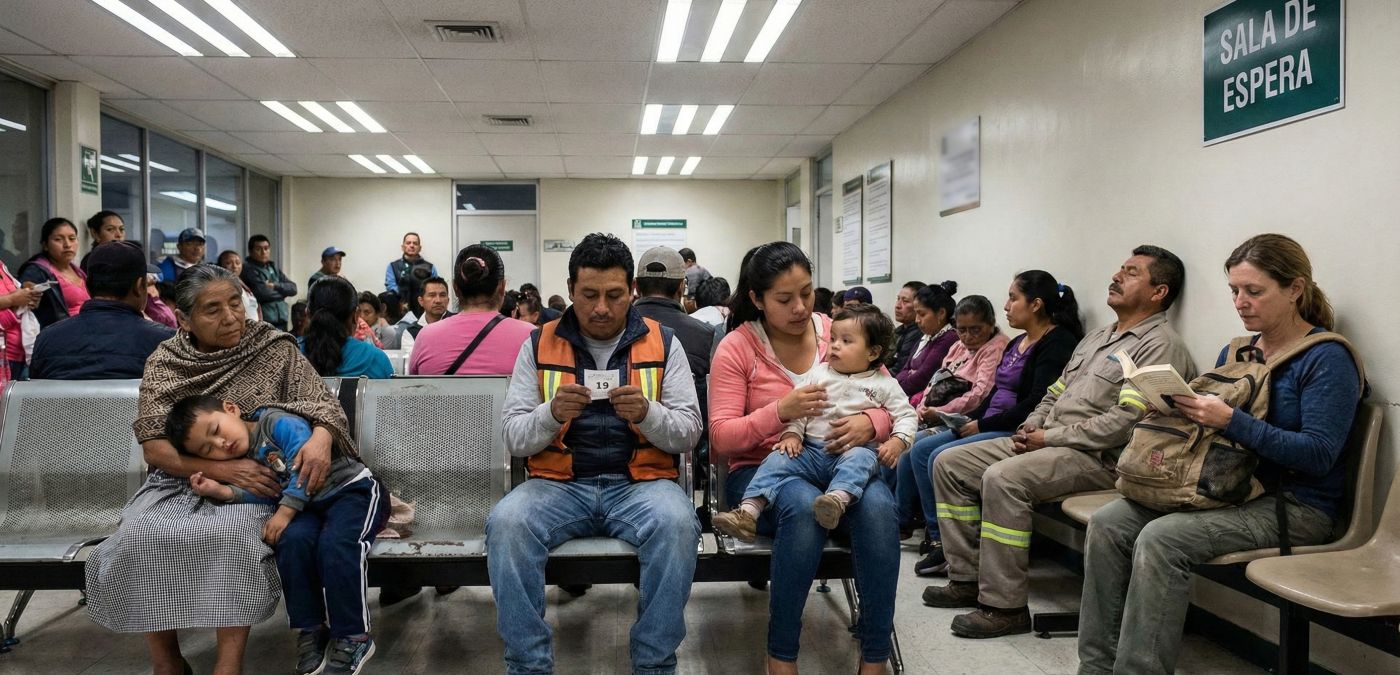
IMSS (Instituto Mexicano del Seguro Social) is the public health system. Those low prices people mention for healthcare in Mexico often assume you're enrolled in IMSS. Getting enrolled and using it effectively is where it gets messy.
Who can join:
Legal residents - either Residente Temporal or Residente Permanente - can enroll in the voluntary program called Seguro de Salud para la Familia. Mexican citizens are automatically eligible through employment or other programs. If you work for a Mexican company, you're enrolled automatically through employer contributions.
What it costs (2025 annual fees in MXN):
| Age | Annual Cost MXN | Roughly USD |
| 0-19 | 8,900 | ~$490 |
| 20-29 | 11,100 | ~$610 |
| 30-39 | 11,850 | ~$650 |
| 40-49 | 13,800 | ~$760 |
| 50-59 | 14,250 | ~$785 |
| 60-69 | 19,800 | ~$1,090 |
| 70-79 | 20,650 | ~$1,140 |
| 80+ | 21,300 | ~$1,175 |
Family members each pay based on their age bracket. The exchange rate changes so the USD amounts move around - I used about 18.2 pesos per dollar but check current rates.
Important: Coverage takes effect on the 1st of the month following your payment (IMSS regulation Article 13, Seguro de Salud para la Familia program). IMSS adjusts these fees annually based on the UMA (Unidad de Medida y Actualización), not minimum wage directly, though the two are related.
The waiting period and pre-existing condition reality:
IMSS's Seguro de Salud para la Familia excludes certain chronic and malignant diseases entirely (detailed in their official Lista de Enfermedades y Padecimientos Pre-existentes). For conditions that are covered, IMSS defines condition-specific waiting periods rather than blanket rules. Examples from their documentation:
- Benign tumors: 6-month waiting period
- Childbirth/maternity: 10-month waiting period
- Some surgical procedures: 12-month waiting period
The exact exclusions and waiting periods are in IMSS's official documents (available at imss.gob.mx). This is why new enrollees often keep private insurance or save money for the first year while their IMSS coverage phases in completely.
Wait times:
Specialist appointments can take weeks or months. I've heard everything from "got an appointment in 3 weeks" to "waited 4 months for orthopedist." Non-emergency surgery gets scheduled out months. If you need an MRI, could be weeks or months depending on the facility and urgency.
Emergency care - true emergencies get prioritized and seen quickly. Non-urgent stuff in the emergency room can mean long waits.
Quality varies wildly:
IMSS in Mexico City, Monterrey, Guadalajara - generally well-equipped, decent specialists. Smaller cities have more basic facilities and longer waits. Some IMSS doctors are excellent. Others are overworked and rushed.
Routine care, chronic disease management (diabetes, hypertension), emergency treatment, prescription medications through IMSS pharmacies - this all works reasonably well and very cheap.
Specialized care, elective procedures, anything requiring advanced diagnostics or cutting-edge treatment - wait times are long and availability varies. English-speaking staff is hit or miss, mostly miss.
If you're planning to rely entirely on IMSS, be comfortable with: bureaucracy, waiting, potentially limited English, and the reality that you might need to supplement with private care for some things anyway.
Getting an IMSS Appointment (Practical Steps):
- Enroll first - Go to your local IMSS office with residence documents, passport, proof of address. Pay your annual fee (or set up monthly payments if offered).
- Choose your clinic - You'll be assigned to a specific IMSS clinic (Unidad de Medicina Familiar) based on your address. This is your primary care facility.
- Register at the clinic - Visit your assigned clinic with your IMSS enrollment confirmation and ID. They'll set you up in their system.
- Make appointments - Call your clinic directly (phone numbers on IMSS website by location) or sometimes you can schedule online through their patient portal. For urgent issues, you might get same-day or next-day appointments. For routine care, expect to wait days or weeks.
- Specialist referrals - You can't book specialists directly. Your primary care doctor must give you a referral first, then the clinic schedules the specialist appointment.
Note: The app and online portal (IMSS Digital) work sometimes. Other times they don't. Having a phone number for your specific clinic is more reliable.
Private Hospital Tiers - They're Not All the Same
"Private hospital" in Mexico covers a huge range. The price table above splits them into mid-tier and premium, but even within those categories there's variation.
Mid-Tier Private (roughly $3,000-6,000 for major surgery):
Hospital Angeles has locations throughout Mexico. Quality is consistent. They're professional, generally have some English-speaking staff, and prices are transparent. An appendectomy at Angeles México (in CDMX) cost someone I know $4,267 in July 2024. That included surgeon, anesthesiologist, 2-night hospital stay, medications, and follow-up visit.
Star Médica is similar tier - multiple locations, standardized pricing, decent facilities. They publish price lists, which is helpful for planning.
Christus Muguerza operates mainly in northern Mexico. Slightly lower prices than Angeles in comparable cities.
Premium Private ($7,000-15,000+ for major surgery):
ABC Medical Center in Mexico City is where wealthy Mexicans and expatriates go. Excellent facilities, English-speaking staff throughout, latest equipment. You pay for it. Their published orthopedic packages list knee replacement around $20,000-25,000 USD - significantly more than mid-tier facilities.
Médica Sur, also in CDMX, similar pricing and quality to ABC. Their cardiology and oncology departments have strong reputations.
Hospital San José TEC in Monterrey (part of Tec de Monterrey) - high quality, often used for complex cases.
The in-between tier:
Regional private hospitals that don't fit neatly in either category. Hospital Puerta de Hierro in Guadalajara, for example. Very good quality, prices between mid and premium. Hospital Regional de Alta Especialidad in Bajío region. These often offer the best value - quality approaching premium hospitals, prices closer to mid-tier.
What determines where you go:
Your insurance network (if you have insurance) often dictates this. Many international insurance policies have agreements with specific hospital networks.
Without insurance, most people choose based on: (1) what they can afford, (2) procedure complexity - routine stuff at mid-tier, complicated surgery at premium, (3) language needs - premium more likely to have English throughout.
Medical Tourism - Does It Actually Save Money?
Dental tourism definitely works. Los Algodones (tiny town near Yuma, Arizona) exists basically to provide dental care to Americans. Hundreds of dental offices. I haven't been myself but everyone I've talked to who went for dental work said it was significantly cheaper than US prices. Root canal plus crown that would be $2,400-3,000 in the US costs something like $400-500 there.
Tijuana has a bunch of dental offices too, also targeting Americans crossing the border for the day.
Quality varies - I've heard both "my dentist in Algodones was great" and "the work failed after six months." Do research on specific dentists, not just the town.
Cosmetic surgery is the other big one but I know less about this. Tijuana, Guadalajara, and Mexico City all have clinics. The prices I've seen advertised are way lower than US equivalents but I can't vouch for quality or safety. Tummy tuck for $4,000-5,000 versus $12,000 in the US sounds great until something goes wrong.
Bariatric surgery (gastric sleeve, gastric bypass) - Tijuana and Monterrey have facilities that do high volumes of this for American patients. Costs seem to be around $4,500-6,000 compared to $15,000-25,000 in the US. I know one person who had this done in Tijuana and was happy with it. That's a sample size of one.
What doesn't work for medical tourism: emergency care (obviously), ongoing management of chronic conditions, anything requiring extensive follow-up, procedures where complications might need more treatment.
The all-inclusive packages some hospitals offer - surgery, hospital stay, recovery hotel, transportation - sound convenient but I couldn't figure out if they're actually a good deal or just expensive convenience. Important distinction: these packages are marketed specifically to foreign patients and priced higher than what local residents pay.
One package I looked at for hip replacement was $16,800 including surgery, hospital stay, recovery hotel, and all transfers. The surgery alone at the same hospital - if you're a local resident booking directly - was listed around $13,000. So you're paying roughly $3,800 for the hotel, coordination, and convenience. Maybe worth it if you're recovering from hip surgery and don't speak Spanish. Maybe not.
The Hidden Costs That Appear Later
This is the annoying part. You get a quote, think you know what you'll pay, then the bill comes and it's higher.
Common add-ons that appear on final bills:
- Anesthesiologist fees - Sometimes included in the quote, sometimes not. Can add $640-1,000+
- Pathology testing - If they send tissue samples for lab analysis during surgery, often billed separately. Typically $200-400
- Medications beyond "basic" - Whatever "basic" means to that hospital. Extra meds can add $100-300
- Additional hospital nights - If recovery takes longer than the quote assumed, each extra night adds $600-850
- Post-op supplies - Special bandages, braces, medical equipment you take home
Real example: Someone I know had a procedure in Guadalajara in August 2024 (not sharing which procedure for privacy). Original quote was around $5,000. Final bill came to over $6,800. The itemization showed anesthesia was separate ($780), pathology was separate ($290), extra medications ($130), one additional night ($800), and a follow-up appointment that wasn't mentioned in the original quote ($200).
I don't think they were being scammed. This just seems to be how some hospitals structure billing - they quote the surgeon and facility fee, then itemize everything else separately.
Other hospitals truly do all-inclusive quotes. You just need to ask explicitly: "Does this include anesthesia, all pathology, all medications used, post-op visits, and any additional nights if I need them?" Get that answered in writing before you commit.
Consultations before procedures:
Many specialists charge for the consultation separately from the procedure. First appointment with a surgeon to discuss the operation: $120-240, not included in surgery price. Follow-up post-op visits: sometimes included in the package, sometimes $80-150 each. Ask how many follow-ups are included.
Imaging and diagnostics:
If you need pre-operative testing (bloodwork, X-rays, ECG), that's usually separate. Lab work panels run $60-180. X-rays $45-120. CT scan $340-620. MRI $420-890. These add up.
Before my partner's hernia repair surgery, the required pre-op tests cost $387 total - bloodwork panel, chest X-ray, ECG, pre-anesthesia consultation. The surgery quote didn't include this.
Border Cities - Cheaper or Just Different?
Tijuana, Mexicali, those border towns - healthcare pricing there is weird because they're targeting Americans who can just drive across.
Los Algodones is the extreme example. Population maybe 5,000 people and apparently 300+ dental offices. It's set up entirely for day-trip dental tourism. Prices are transparent because they're competing with each other. Dental implant: $1,000-1,400 versus $4,000-7,000 in California. The better dentists there (and there definitely are some to avoid) seem to be decent quality for the price.
Hospital care in Tijuana - I've seen claims that it's 20-30% cheaper than Mexico City or Monterrey but I'm not sure that's universal. Hospital Angeles Tijuana has published prices for some stuff. Other places you have to call and ask. Some procedures might actually cost more than in Guadalajara even though Tijuana is supposedly the cheap border option.
It's hard to make generalizations because some border facilities are genuinely targeting cost-conscious medical tourists with lower prices, while others are targeting nervous Americans and charging near-US rates because they know people will pay for proximity to home.
Insurance - Do You Even Need It?
This depends entirely on your situation and risk tolerance.
Most expats either have international insurance, Mexican private insurance, or they're paying out of pocket because procedures are affordable enough that it makes sense.
International insurance like Cigna Global, Allianz, IMG - these work at private hospitals in Mexico. You usually pay first and get reimbursed, or sometimes the hospital bills them directly if they have an arrangement. Costs maybe $180-420/month depending on your age and what you want covered.
Mexican private insurance - GNP Seguros, Metlife, AXA, others. Cheaper than international plans, like $90-240/month, but more limited coverage and usually only works in Mexico. Some only work at specific hospital networks.
The calculation: If you're young and healthy, paying $2,400-5,000/year in premiums versus just paying out of pocket for the occasional doctor visit and being ready to cover a potential $10,000-20,000 emergency... the math might favor no insurance. A couple doctor visits and some blood work costs $500-700 out of pocket annually.
If you're older or have health issues or just want the security, insurance makes sense.
A lot of expats do high-deductible plans - like $5,000 deductible, which keeps premiums lower - and pay out of pocket for routine stuff but have coverage if something major happens.
I can't tell you which is right. It depends on your health, your finances, your risk tolerance, and probably a dozen other personal factors.
Does Location Matter?
Yes, but I couldn't find consistent data on exactly how much.
Lasik example: One place in Mexico City quoted me $3,680. A clinic in Guadalajara quoted $2,340. Mérida was cheaper at $1,680. But are these comparable procedures with the same technology? I don't know.
Mexico City and Monterrey seem to be the most expensive cities generally. Guadalajara is a bit less. Mérida, Querétaro, smaller cities - probably 15-25% cheaper but with fewer facilities and specialists.
Resort towns like Puerto Vallarta and Cabo have private hospitals that serve tourists and locals. Prices seem to fall somewhere in the middle - more than small towns, less than Mexico City premium facilities.
But there are so many variables (hospital tier, specific doctor, what's included in the quote) that location is just one factor among many.
What I Learned From This
Healthcare in Mexico costs way less than the US. That much is obvious.
Quick Cost Summary (USD, approximate ranges):
| Procedure | IMSS Members | Private Mid-Tier | Private Premium |
| Appendectomy | ~$0 (covered) | $3,200-4,700 | $6,800-9,100 |
| Knee Replacement | ~$0 (covered) | $11,900-15,800 | $20,000-25,000 |
| Dental Crown | Not covered | $280-420 | $580-890 |
| MRI Scan | ~$0 with referral | $420-680 | $780-1,120 |
| Emergency Visit | ~$0 | $240-480 | $520-840 |
Note: IMSS has waiting periods and exclusions. Private costs vary significantly by city and hospital.
But "cheap" is relative. If you're living on $1,800/month and need a $6,000 surgery, that's still a massive expense.
IMSS makes sense if you're a permanent or temporary resident and willing to deal with the bureaucracy and wait times. Private insurance makes sense if you want English-speaking doctors and faster appointments. Paying out of pocket works if you're healthy and have savings to cover a potential $5,000-15,000 medical event.
The frustrating part is how hard it is to get straight answers on pricing. Some hospitals list prices on their websites. Others don't. Some give quotes over the phone. Others insist you come in for a consultation first (which costs money). Medical tourism sites advertise prices that may or may not include everything you need.
I tried to make this comprehensive. It's not. There are gaps, procedures I couldn't price reliably, questions about what's included in various quotes that I couldn't answer. If you're planning medical care in Mexico, you'll need to do your own research on the specific procedure at specific facilities because the variation is enormous.
Get written quotes. Ask what's included. Assume the final bill might be 15-30% higher depending on how detailed the initial quote was. Plan for that.
Sources & Data:
- IMSS official documentation (imss.gob.mx/segurosalud-fam)
- Hospital Angeles published tariffs (multiple locations)
- ABC Medical Center, Médica Sur, Star Médica pricing data
- Patient-reported costs from expat forums and direct invoices (2024-2025)
- Medical tourism provider quotes (October 2024 - February 2025)
- Exchange rates: MXN/USD ≈18.2 (February 2025)