Editorial Team Report
With expert analysis from David Chen, Vietnam Visa Consultant
Published: October 2025 | 12-minute read
Vietnam has quietly become one of the most accessible countries in Southeast Asia for digital nomads—not through flashy visa programs or government marketing, but through steady improvements to an already affordable system.
We spoke with David Chen, a licensed visa consultant who's been processing Vietnam visa applications in Ho Chi Minh City for 11 years. Chen has handled over 2,000 applications and has witnessed firsthand how Vietnam's visa landscape has evolved.
"Vietnam doesn't have a dedicated digital nomad visa," Chen explains. "But what we have is actually better for most people: a simple, affordable tourist visa system that digital nomads have adapted to their needs."
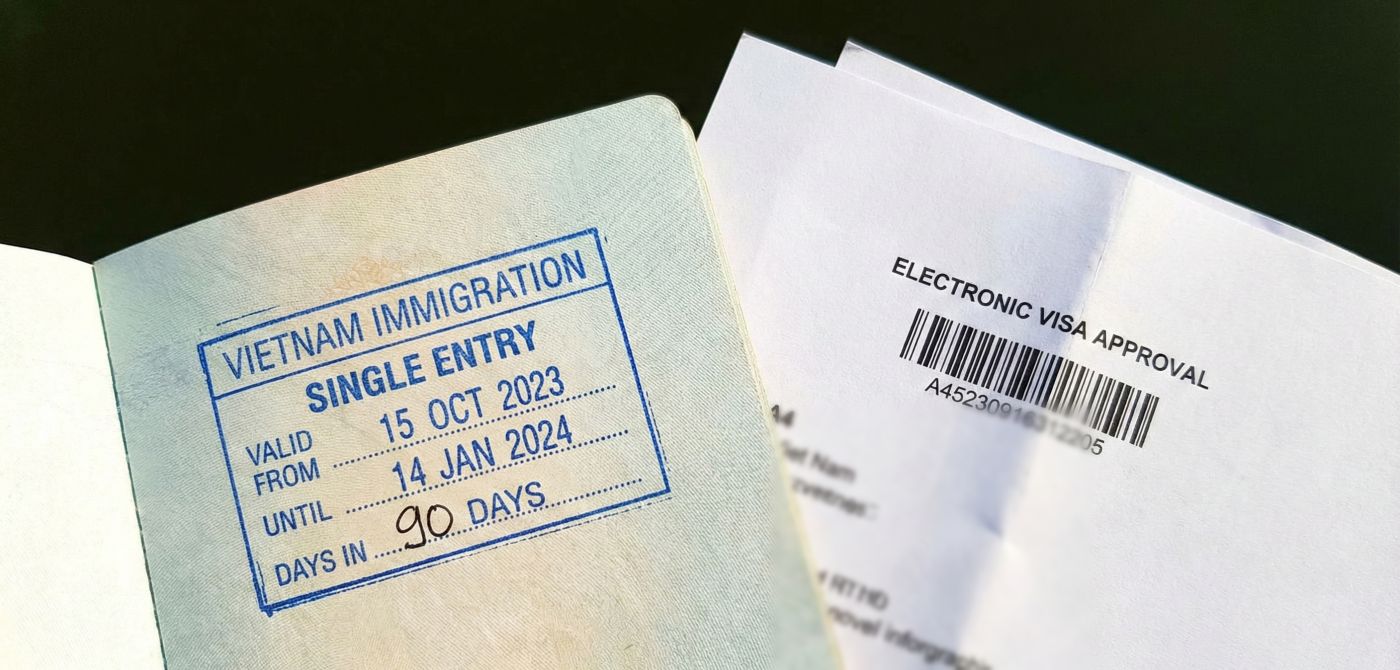
The numbers back this up. At just $25 for single-entry or $50 for multiple-entry 90-day visas, Vietnam offers one of the lowest-cost visa options in the region.
The E-Visa System: 90 Days Starting at $25
In August 2023, Vietnam expanded its e-visa program in ways that fundamentally changed the calculation for remote workers.
What changed:
- Duration increased from 30 to 90 days
- Two types available: single entry ($25) or multiple entry ($50)
- All eligible nationalities now included (80+ countries)
- One extension possible (another 90 days)
- Total potential: 180 days on tourist status
The application process is straightforward:
1. Visit the official government portal: [evisa.xuatnhapcanh.gov.vn](http://evisa.xuatnhapcanh.gov.vn)
2. Complete online form (10-15 minutes)
3. Upload passport photo and data page scan
4. Choose single entry ($25) or multiple entry ($50)
5. Pay via credit card
6. Receive approval typically within 3 business days
7. Print PDF and present at airport
Chen emphasizes an important point about timelines: "The website says 3 business days, and that's typical. But I've seen it take 5-7 days during peak periods like Tet holiday. Don't book a flight for day 3—give yourself buffer time. And any website charging more than $35-40 for single entry or $70 for multiple entry is overpricing."
Which type should you get?
"If you're staying in Vietnam the entire time, single entry at $25 is fine," Chen advises. "If you might take a trip to Cambodia, Thailand, or elsewhere and return to Vietnam, pay the extra $25 for multiple entry. It's cheaper than applying for a new visa."
The Extension Option: Adding Another 90 Days
Vietnam's system allows extending the 90-day e-visa for another 90 days, giving digital nomads a full 6 months in the country.
"The extension process is doable but not trivial," Chen notes. "Around day 75-80 of your e-visa, you need to start the extension process."
Extension options:
DIY at immigration office:
- Visit immigration in person
- Bring passport, photos, application forms
- Forms are in Vietnamese
- Multiple visits often required
- Cost: Official fees vary but typically 500,000-1,000,000 VND ($20-40)
- Time investment: 6-10 hours across multiple visits
- Processing: 5-10 business days
Through agent:
- Give agent your passport
- Agent handles all paperwork and visits
- Cost: $70-90 (includes official fees + service fee)
- Get passport back in 7-10 business days
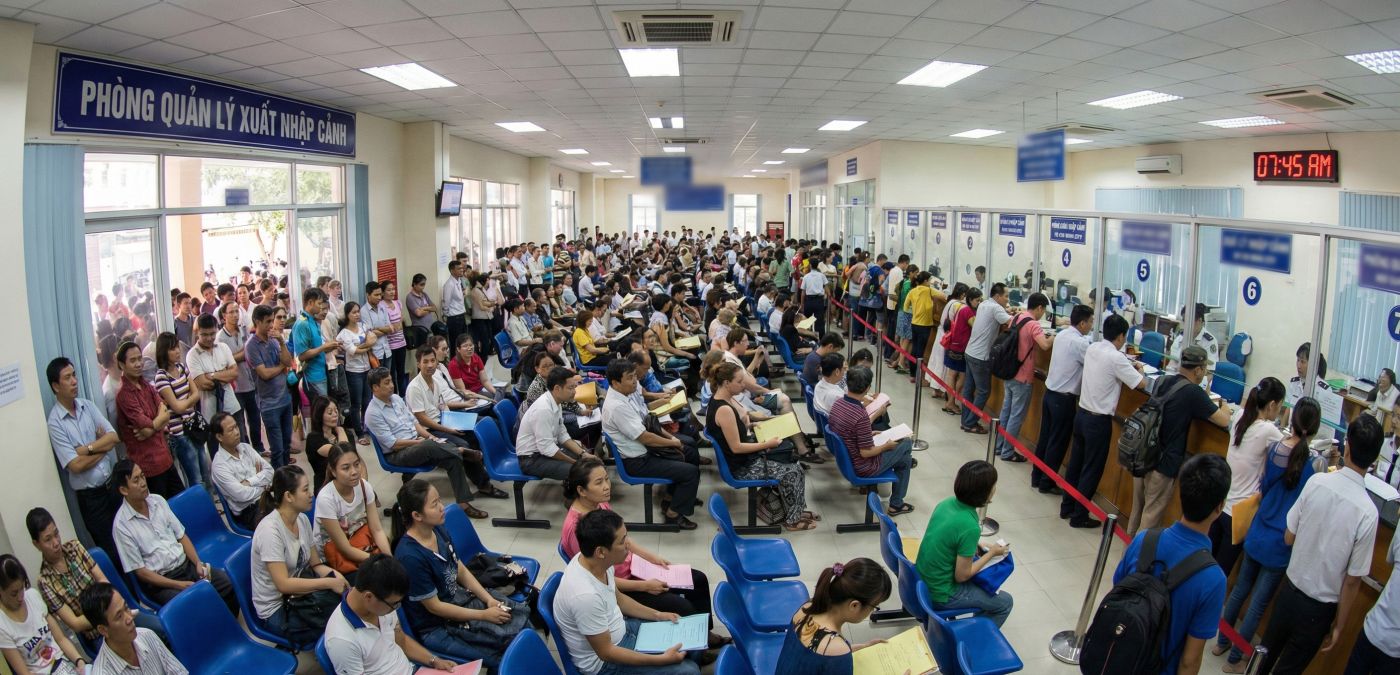
"The DIY cost is lower, but I strongly recommend using an agent," Chen says. "Immigration offices are chaotic. Lines are long starting at 7am. Staff speaks minimal English. Forms are confusing even for Vietnamese speakers. Most foreigners who try DIY end up giving up and hiring an agent anyway after wasting a day or two."
Important timing note: "Don't wait until day 88 to start," Chen warns. "Processing can take 7-10 days. If you overstay because you waited too long, you're paying fines. Start around day 75-80 to be safe."
Total cost for 6 months in Vietnam:
- $25 (single entry e-visa) + $80 (agent extension) = $105
- Or $50 (multiple entry e-visa) + $80 (agent extension) = $130
This makes Vietnam one of the most affordable long-term options in Southeast Asia.
For Longer Stays: The Business Visa Route
Digital nomads planning to stay beyond 6 months face a choice: visa runs or committing to the business visa pathway.
The business visa requires sponsorship from a Vietnamese company. In practice, Chen explains, this typically means using a visa agency's registered company for sponsorship.
"It's a gray area," Chen admits. "The agency has a registered Vietnamese business. That business 'sponsors' your visa. You're listed as a business representative or consultant. You don't actually work for them—it's a paperwork arrangement that everyone in the industry understands."
The system exists in this gray zone deliberately. Vietnamese authorities are aware of the practice but enforcement focuses elsewhere—specifically on people working for Vietnamese companies without proper permits or English teachers working illegally.
Business Visa + Temporary Residence Card (TRC)
For those committing to 1-2+ years in Vietnam, the business visa route makes financial sense.
The process:
Step 1: Get business visa (applied before arrival)
- Sponsor submits application to immigration
- You receive approval letter via email (typically 7-14 days, but can vary)
- Show letter at Vietnamese airport on arrival
- Pay stamping fee (~$25-30)
- Receive 3-month business visa
Step 2: Apply for TRC inside Vietnam
- Requires: passport, visa, sponsor letter, health check ($30-50), photos
- Processing: Officially 4-6 weeks, but can extend to 8-12 weeks
- Cost: $280-350 for 1-year TRC, $450-550 for 2-year
"Don't plan important travel during TRC processing," Chen advises. "While you can technically travel, getting back in can be complicated. Most people just stay in Vietnam during this period."
Step 3: Collect TRC card
- Plastic card valid 1-2 years
- Multiple entry/exit
- Can facilitate bank account opening (still challenging)
- Can register motorbikes
- Can sign long-term leases
Annual costs:
- Year 1: ~$600-650 (business visa + TRC application + agent fees)
- Year 2 renewal: ~$350-400
- Annual average: $475-525/year
Chen points out the comparison: "Indonesia costs $900-1,100 per year for the same 12-month stay. Thailand's various options run $400-900. Vietnam at around $500/year offers good value, though Thailand can be slightly cheaper depending on the route."
The Work Permit Question: Legal Gray Zones
Technically, anyone earning money while in Vietnam requires a work permit. In practice, enforcement is essentially nonexistent for digital nomads working remotely.
"The work permit rules target people working for Vietnamese companies or teaching English without authorization," Chen explains. "If you're sitting in a café working remotely for your US or European client, enforcement is zero. I've been doing this 11 years and have never seen a digital nomad deported or fined for remote work."
That said, the legal situation is ambiguous. Work permits require:
- Vietnamese company sponsorship (legitimate employment, not visa shell company)
- Relevant university degree and experience certificates
- Health check and criminal background check
- Processing time of 30-60 days (can vary significantly)
- Cost of $400-700 depending on processing speed
- Annual renewal
"No visa agency's shell company will sponsor a work permit," Chen notes. "It creates legal liability they won't accept. Most digital nomads operate on tourist or business visas and work for foreign clients. The legal risk is technically present but practically minimal."
Visa Runs: The Alternative Strategy
Before the e-visa expansion, monthly visa runs were standard practice. With 90-day e-visas now available, the frequency has decreased, but visa runs remain a viable strategy for those who prefer flexibility.
Popular destinations:
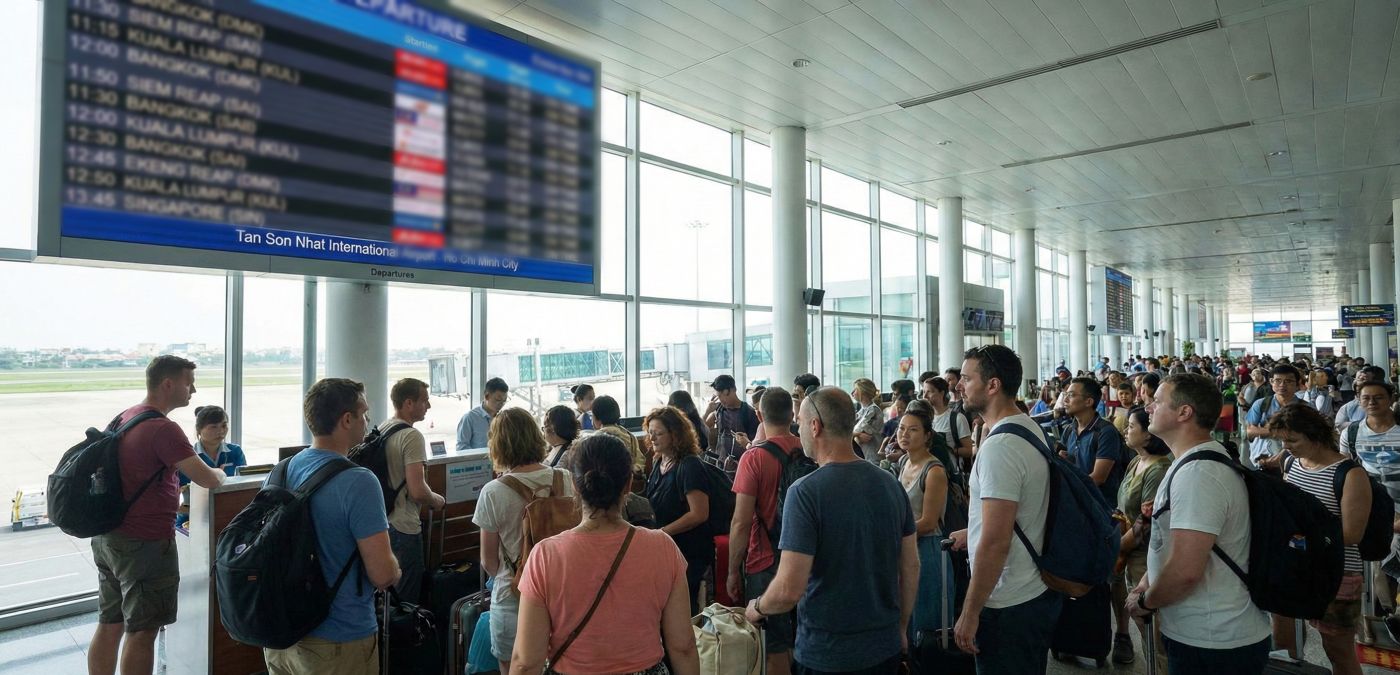
- Bangkok, Thailand (2 hours from HCMC, $150-300 return depending on season)
- Siem Reap, Cambodia (1 hour, $100-200 return)
- Singapore (2 hours, $200-350 return)
- Kuala Lumpur, Malaysia (2.5 hours, $150-280 return)
The pattern: Leave Vietnam for 5-7 days, explore a neighboring country, return on a new e-visa.
"Some people prefer this," Chen says. "They get built-in travel, break up their time in Vietnam, and avoid committing to longer visas. Annual cost runs higher—about $700-1,200 for visa run trips—but you get mini-vacations included."
Banking: Limited But Workable
Opening a Vietnamese bank account as a foreigner remains challenging.
With TRC (Temporary Residence Card):
- Vietcombank: Sometimes accepts (highly branch-dependent)
- Techcombank: More likely to approve
- VP Bank: Generally most expat-friendly
- Success rate: Still only 60-70% even with TRC
Required documents when applying:
- Passport and TRC
- Proof of address (lease, utility bill)
- Vietnamese phone number
- Work permit (some branches require, many don't)
- Patience (process can take multiple visits)
On tourist/e-visa:
- 95%+ rejection rate
- Banks generally refuse short-term tourists
- Even business visa without TRC gets rejected most places
"Most digital nomads use Wise or Revolut and just operate with those," Chen notes. "Vietnam is still heavily cash-based outside of modern cafés and hotels. Between Wise and ATMs, you can function fine without a Vietnamese bank account. The TRC helps but doesn't guarantee banking access."
Regional Differences and Processing Times
Processing times and bureaucratic attitudes vary between northern and southern Vietnam.
Ho Chi Minh City (South):
- More expats, more experience with foreign applications
- Generally smoother processing
- Better-established agent network
- Chen's recommendation for TRC applications
Hanoi (North):
- More formal bureaucratic approach
- Processing can be slower
- Fewer agents specializing in expat services
"If you're choosing where to apply for TRC, HCMC tends to be more straightforward," Chen advises. "The immigration office in District 1 processes high volumes of expat applications and the workflow is relatively established."
Cost Comparison: Vietnam vs. Southeast Asia
Let's examine the true cost over 12 months:
Vietnam:
- E-visa route (2 cycles): $210-260 depending on single/multiple entry
- Or TRC route: $600-650 (first year)
- Or with visa runs: $700-1,200
Indonesia (Bali):
- B211A cycles: $900-1,100
Thailand:
- Various visa options: $400-900 (depending on route)
Malaysia:
- Visa-free + extensions: $100-400
Philippines:
- Visa-free + extensions: $100-400
Vietnam offers competitive pricing with good balance of duration, relative simplicity, and flexibility.
Expert Recommendations by Scenario
Chen provided his recommendations based on different digital nomad situations:
For testing Vietnam (1-3 months):
"Get the single entry e-visa for $25. It's the cheapest option in Southeast Asia. Come for 90 days, see if you like Vietnam. Don't overthink it. Processing usually takes 3 days but can take up to a week, so apply at least 10 days before your planned arrival."
For one full season (3-6 months):
"Get the single entry e-visa for $25, then extend through an agent for about $80. Total cost $105 for 6 months. If you think you might leave Vietnam and come back during those 6 months, get the multiple entry e-visa for $50 instead. Use an agent for the extension—the $30-40 premium over DIY is worth avoiding the immigration office chaos."
For establishing a base (6-12 months):
"This is where business visa + TRC makes sense. Yes, it costs $600-650 for the first year, but you get legitimate residence status, can potentially open bank accounts, register a motorbike, sign proper leases. The stability is worth it. Just understand that processing times aren't guaranteed—TRC can take anywhere from 4 weeks to 12 weeks."
For long-term living (1-2+ years):
"Business visa + TRC is your only practical option for continuous stay. After the first year, renewals drop to about $350-400 annually. You're getting Vietnam residence for around $500/year ongoing, which is excellent value."
Common Mistakes and How to Avoid Them
Based on his 11 years of experience, Chen identified the most frequent errors:
1. Trusting "guaranteed" processing times
"The official website and agents quote 3 business days for e-visa. That's typical but not guaranteed. I've seen 7 days during peak periods. For TRC, the official timeline is 4-6 weeks, but I've had clients wait 10-12 weeks. Never book non-refundable travel based on 'guaranteed' timelines. Always build in buffer time."
2. Assuming DIY extensions are easy
"People see the $20-40 official fee and think they'll save money going to immigration themselves. Then they spend 8 hours over multiple days, can't read the Vietnamese forms, miss a required document, and end up hiring an agent anyway. The $70-90 agent fee includes the official fees plus their service. For most foreigners, this is money well spent."
3. Waiting too long to extend
"Start your extension at day 75-80, not day 88. Processing takes 7-10 business days minimum. If there's any holiday or backlog, it can take longer. Don't risk overstaying because you waited until the last minute."
4. Confusing e-visa types
"Single entry at $25 vs multiple entry at $50. If you might leave Vietnam and return, you need multiple entry. Single entry means one entry—once you leave, the visa is done. Many people buy single entry to save $25, then realize they want to visit Cambodia, and have to apply for a completely new visa."
5. Believing work permit myths
"Some agents promise 'guaranteed work permits' for tourist visa holders. This is either a scam or they're providing questionable documents. Legitimate work permits require legitimate employment by real Vietnamese companies willing to sponsor you through official channels. No reputable agent makes work permit guarantees for digital nomads."
6. Not tracking visa dates
"Overstay fines are $25 per day. After 15 days, you get notation in your passport. After 60+ days, deportation risk. Set calendar alerts. Track your dates religiously. Immigration doesn't send courtesy reminders."
What's Changed in 2024-2025
Vietnam's visa system has seen steady improvements:
August 2023: E-visa extended to 90 days (previously 30)
November 2023: E-visa eligibility expanded to all qualified nationalities
2024: Fee structure clarified ($25 single / $50 multiple entry)
Current 2025 status: System stable, e-visa working well, TRC processing times still variable (4-12 weeks typical)
Potential future changes:
"There are discussions about Vietnam potentially launching a dedicated digital nomad visa program," Chen notes. "No confirmed timeline or details. The government is watching how Thailand and other countries structure theirs. Don't wait for it though—the current system works fine and is already very affordable."
The Bottom Line
Vietnam offers one of the most straightforward and affordable visa situations in Southeast Asia for digital nomads who understand the system.
"The key is matching the right visa type to your timeline and being realistic about processing times," Chen summarizes. "Three months or less? E-visa at $25-50. Six months? E-visa plus agent extension for about $105-130 total. One year or more? Business visa plus TRC for around $600-650 first year. Each option is reasonably priced and relatively hassle-free compared to most countries—just don't expect everything to move as fast as the brochures claim."
The lack of a branded "digital nomad visa" hasn't prevented Vietnam from becoming a major remote work hub. Ho Chi Minh City and Hanoi both host thriving communities of location-independent workers who've figured out that sometimes the best system is the simple, affordable one that already exists—even if processing times vary and DIY options are more challenging than they appear.
At $25-50 for 90 days—or $600-650 for a full year with resident status—Vietnam delivers exceptional value without the bureaucratic complexity found in many Western countries.
Key Takeaways:
E-visa: $25 single entry / $50 multiple entry for 90 days, extendable to 180 days (total ~$105-130 with agent extension)
Business visa + TRC: $600-650 first year, $350-400/year renewals (for 1+ year stays)
Processing times vary: E-visa typically 3 days but can take up to a week; TRC officially 4-6 weeks but can extend to 12 weeks
Use agents for extensions: DIY is cheaper ($20-40 official fee) but significantly more difficult
Work remotely in legal gray zone (tolerated for foreign clients, not enforced)
Banking difficult even with TRC (use Wise/Revolut as alternative)
Best value in Southeast Asia for cost and relative simplicity
Resources:
- Official e-visa portal: [xuatnhapcanh.gov.vn](https://evisa.xuatnhapcanh.gov.vn)
- Vietnam Immigration Department: xuatnhapcanh.gov.vn
- For finding reputable agents: Check Facebook groups "Expats in Vietnam" or "Saigon Digital Nomads"